Richibi’s Weblog

Just another WordPress.com weblog

Category: Haydn

Cello Concerto no 1 in C major – Joseph Haydn

st-george-and-the-dragon.jpg!Large

     “St. George and the Dragon (c.1470) 

                Paolo Uccello

                    ________

it isn’t easy for me to leave Bach behind
whenever I start listening to him, I could 
ride his musical train forever

but the middle of the 18th Century did, put 
him aside, for about a hundred years, until 
Mendelssohn rediscovered him

Bach’s Cello Suites were themselves only 
reinstated in the 1930s by Pablo Casals,
the Classical 18th Century had considered 
Bach too fussy, his pieces, they thought, 
were technical exercises rather than 
actual entertainments, form was  
overtaking, for them, function 

there’s a wonderful book about all this,
The Cello Suites“, written by Eric Siblin, 
a Canadian journalist, which is not only 
amazingly informed and probing, but also 
beautifully written, it holds a place of 
honour on my bookshelf, along with other 
inspired, and inspiring, texts

not only was Bach set asunder, dismissed,
during the Classical Era, but all of the 
formative music also he had written, for 
cello, violin, keyboard, in other words,
the entire curriculum

which, since Bach’s reinstatement, has 
become, paradoxically, the very  
foundation for learning these instruments

imagine playing a tune with the right 
hand, then a few notes later, picking 
it up in the left hand while the right 
hand keeps on going, imagine what
that does to your fingers, never mind  
to your mind, that’s what his Two-Part
Inventions are all about, fifteen of 
them, eight in major keys, seven in
minor, consider the technical 
difficulties, intricacies, imposed 
both compositionally and upon 
the harried performer 

then Bach follows through with his 
Three-Part Inventions to top it all 
off, for the keyboard at least, and 
only for the moment – there’ll still 
be his transcendental Goldberg 
Variations” among other 
incandescent masterpieces – 
wherein one juggles three tunes at 
time, and all of them in the same 
assortment of fifteen contrasting, 
foundational, keys, the “Inventions
 – if you can do that, you’re on your 
way, one would think, to knowing 
entirely what you’re doing

but time marches on, the Classical
Era hits, Haydn takes over, not
unimpressively

the same thing happened in my 
generation to Frank Sinatra via 
the Beatles, not to mention, a little 
later, to either, with Pink Floyd

listen to Haydn’s First Cello Concerto,
note the bravura inherent in the 
composition, this is not Bach’s 
meditative music, the very Romantic 
Period is, through Classical reserve, 
expressing already its imminence, 
individual prowess is taking over 
from community, which is to say 
religious, affiliation, the same way 
the Renaissance artists, Duccio
GiottoFra AngelicoFilippo Lippi
Uccello had stood out, incidentally, 
from their brethren in the standard 
communal art schools dedicated to 
decorating the ever burgeoning 
churches sprouting out in the still
fervent European environment 

musical, though unaristocratic, 
talents, this time, were beginning, 
within German context, to flex 
their decidedly not unimpressive 
muscles, and gaining some 
significant purchase

and who wouldn’t when a Cello 
Concerto would’ve sounded like 
this, listen


R ! chard
English Suite No 3 in G Minor – Bach

suite-fibonacci-2003.jpg

   “Suite Fibonacci (2003) 

           Charles Bezie

               ________

 
before I say much more about his Cello
Suites, let me point out that Bach has
some French Suites, some English 
Suites, on top of similarly structured 
Partitas and Toccatas, the French have 
their tout de suites, and hotels have, 
nowadays, their so named luxury 
apartments 

musical suites are sets of dance pieces, 
by the early 18th Century much stylized, 
with an introductory prélude, an allemande, 
followed by a courante, which is to say, folk 
dances, the first German, the next French, 
then a sarabande, Spanish, followed by a 
couple of galanteries, court dances, 
minuets, gavottes, bourrées, then a final 
English gigue

all of the markings are in French, which
leads me to believe that all of these 
dances must’ve originated at the court 
of Louis XlVth, the Sun King, 1638 to 
1715

but the suggestion is that Europe was 
becoming an integrated community
all of these dances were eclipsed by
the Classical Period, of Haydn and 
Mozart, apart from the minuet, which 
more or less defined, nevertheless, 
that new era

the minuet will die out by the time of
Beethoven, you’ll note, to be replaced
by the waltz, which had been 
considered much too racy until 
transformed by Chopin into a work 
of ethereal art

the Strausses, father and son, gave it,
only a little later, celebratory potency,
but that’s another story


here’s Bach’s English Suite, the 3rd
for context, the French ones are a 
little too salty, as it were, they do not 
quite conform to prescribed suite 
notionshowever might their 
propositions have been, ahem, 
sweet 

meanwhile, enjoy this one


R ! chard

what’s up in Pyeongchang / Bach

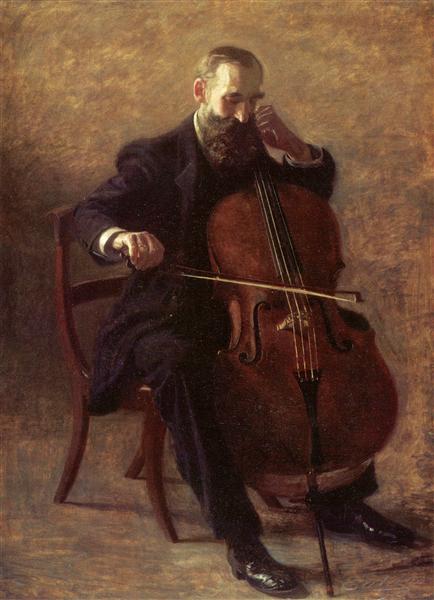
the-cello-player-1896.jpg!Large.jpg

      “The Cello Player (1896) 

              Thomas Eakins

                   ________

though I’d considered presenting all six
of Bach’s Cello Suites – your one stop
shopping for these extraordinary 
compositions – even one only of these
masterpieces floored me each time I
individually listened  

why the Suites, cause I couldn’t follow 
up on Beethoven’s Opus 5, for cello
and piano accompaniment, without 
saying more about the cello, by then 
an instrument of some significance, 
and who could argue, it’s resonance 
thrills you in your bones, in your very 
being

Frederick ll, King of Prussiaplayed it, 
earning for him tailored compositions, 
however controversial, from both 
Mozart and Haydn, but even earlier, 
Bach had composed definitive pieces 
for it, much as he’d done for the 
harpsichord, precursor to the piano, 
students of either still go to Bach for 
their basics, their intricate, exquisite, 
technical proficiency

the cello can play one note only at a
time, which means that, like a voice, 
you’re working without harmony, 
you need to make your own, 
otherwise your performance is 
boring, no one else, as far as I know,
has ever written anything else for 
unaccompanied cello, not even 
Beethoven

I find most performers lend Bach a 
more Romantic air, torrid emotion,
excesses of volume, pauses to the 
pace, ritardandos, rallentandos, 
which aren’t appropriate to the 
more genteel Baroque period,
something I usually find 
unwelcome

but in this performance, I’m sure 
not even Bach would object

I’m offering up first the Sixth Cello
Suite, D major, played by Jian Wang
someone I’d never heard of, in a 
dazzling performance in Pyeongchang
place I’d neither ever heard of, until 
only very recently

it appears both of these new kids on 
the block ought to be on the map


R ! chard

what’s up in Düsseldorf / Beethoven

tn_705x705_3

          the “Altstadt“, Düsseldorf, Germany

                  ______

from Düsseldorf, a city I’ve called 
Düsseldon’t, Düsseldreary, 
Düsselneverbother, comes a 
performance there to change, utterly,  
my mind about it, though I’d always 
known that every European city has
its extraordinary wonders, count ’em

watch this, for instance, one of those

Beethoven didn’t write string quartets
until he was ready, following in the 
footsteps of Haydn wouldn’t’ve been
easy, but Beethoven wasn’t wasting 
his time in the meanwhile, or, 
alternately, his while in the meantime
– while you consider that, listen

in his Opus 5, no 1, the first to leave  
me with much of an impression, as 
began to explore Beethoven 
chronologically, the first four 
opuses – a word I deplore, but its
equivalent plural, opera, seems 
to me so pretentious – seemed, 
indeed again, to me long, tedious 
and academic, a student delivering 
exercises  

then the Opus 5, no 1 hit, and blew 
me right out of the water, he verily, 
Beethoven, thrust the metre right  
out of the ballpark, propelled the  
music – who ‘ld ‘a’ ever thunk it –  
right off the page 

marvel, I urge


there was also a restaurant in 
Düsselwhatever I really loved,
it served an improbable 
assortment of schnitzels, the 
Altstadt 

we embraced, the staff and I, 
when I had to eventually, and 
finally, leave, to go back home, 
to Canada, I’ll always remember, 
never ever forget, their grace


R ! chard

String Quartet in F major, opus 77, no 2 – Joseph Haydn


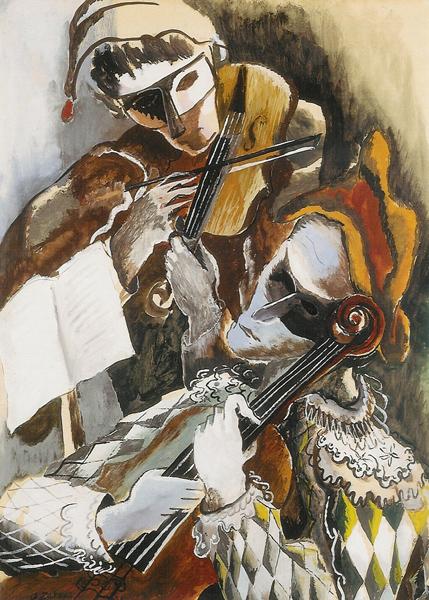
harlequins-violinists-hidden.jpg!Large.jpg

   Masked Harlequin Violinists (1944) 

              Ossip Zadkine

                  ________

the Opus 77, no 2, of Haydn is the last
full string quartet of his, his very last  
remaining unfinished, the Opus 103,
written in 1803

Haydn died in 1809, the Opus 77, no 2
was composed in 1799, he would’ve 
been 67

but by then, he had established the 
form that music would take for the 
next over two hundred years

call, response, and recapitulation is 
the house that Haydn built, and verily 
cemented, you can hear it in our own 
period’s Love Me Tender“, for 
instance, if you’ll also permit me here
its irresistible elaborationto today’s 
top hits, like my own most recent 
favourite such contemporary iteration,
released in 2014, Photograph

we could be listening otherwise to 
Bach right now, counterpoint, 
fugues, intricate, linear music, 
however powerfully transcendental, 
instead of recurring music, call,  
response, as I said, and 
recapitulation, something like how 
a clock works

but already Haydn is testing the 
waters, in the Opus 77, no 2, the
andante, a step up from an adagio, 
is in third place, something we 
haven’t heard before, and not, to 
my mind, especially effective, like 
his mixture of tempos in the Opus 
54, no 2, which was disconcerting, 
however masterfully resolved we 
find those to be in this very Opus
77, no 2notably in the second 
movement’s “Minuet, Presto – Trio”, 
where the tempo change is nearly 
imperceptible  

art works on contravention, but 
the affronts are to established 
conventions, which are very 
hard to overturn 

watch Haydn here continue to 
do just that, for better or for 
worse


R ! chard

psst: listen to Bach hereincidentally,  
          put his largo, or slow movement, 
          right where he wants to, at the 
          very top of the bill, does it work,    
          you tell me, a trivial pursuit,  
          you’ll ask, I say not, you are    
          defining your own aesthetic  
          sensibility, something 
          profoundly, think, important, 
          who it is, with perspective, you 
          want to be   
       

String Quartet, opus 77, no 1 – Joseph Haydn

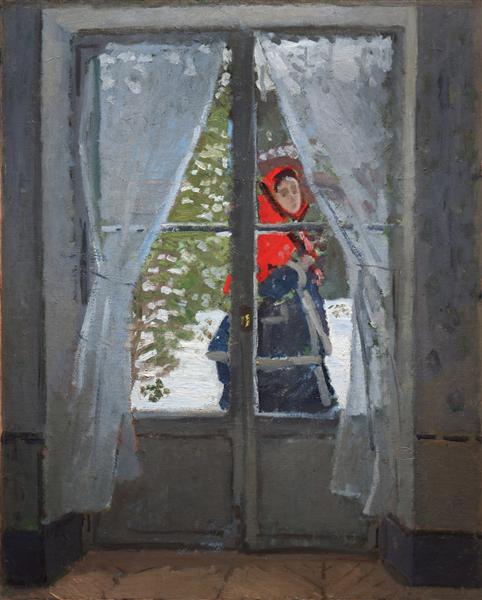
the-red-cape-madame-monet.jpg!Large.jpg

      The Red Cape (Madame Monet) (c.1870) 

              Claude Monet

                    _______

                                              for my mom

that’s a lot of Haydn, I said to my mom, 
when I saw the list of my transmittals in
her hotmail, hm, I wondered, maybe it’s 
too much

then I said, but it’s like when we’ve 
toured, for instance, our European 
art galleries, me propounding on 
the paintings, as I am wont, however 
incorrigibly, to do, but now, note, you 
can tell the difference between your 
Monets and your Klimts, however 
similar their perspectives

or like your tour guide taking you
recently through Argentina, 
highlighting spots, in the space of 
a month only, the same amount of 
time I’ve spent for the music of 
Haydn

pronounced, incidentally, I specified, 
like “hidin'” in English, not “maiden”, 
just sayin’

I gathered that she’d ‘ve sensed by 
now, if she’d been listening, which she 
said she had, mornings over her 
coffee, what a string quartet is, four
movements, different tempos, fast
at first, a joyful introduction, 
followed by a lament, then a spirited 
third movement, for countereffect, 
then a big fourth movement finish

also, the internal structure of each 
movement would’ve been internalized,
theme, a counter theme, a 
recapitulation of both, or either, all of 
it, probably unconsciously, which is 
how art fundamentally works till you
meticulously deconstruct it

the string quartet is the work of Haydn, 
the house that Haydn built, from 
peripheral aristocratic entertainment, 
like modern day artists sporting their 
wares in noisy restaurants, to the 
glamour of taking on, in concert halls, 
Europe, Brunelleschi did a similar, 
sleight-of-hand thing with his dome 
in Florence for its oracular Cathedral

remember that the string quartet lives 
on as a form, where no longer does 
the minuet, for instance, nor the 
polonaise, nor even the waltz, not to 
mention that concertos, and  
symphonies have become now  
significantly subservient to movies, 
secondary players


watch the instrumentalists here live 
out, in Haydn’s Opus 77, no 1, their 
appropriately Romantic ardour,
something not at all promoted in 
Haydn’s earlier Esterházy phase, to 
raise their bow in triumph, as they 
do at the end of most movements
is already an indicationnot at all 
appropriate for the earlier princely 
salons, that times have changed

Haydn was a prophet, but also an
elder, with an instrument to connect 
the oncoming, and turbulent, century 
to the impregnable bond of his 
period’s systems, the legitimacy of 
the autocratic, clockwork, world, 
Classicism, the Age of Reason, the 
Enlightenment, for better or for 
worse

we are left with its, however ever 
ebullient, consequences

enjoy


R ! chard

String Quartet in C major, opus 76, no 3, “Emperor” – Joseph Haydn

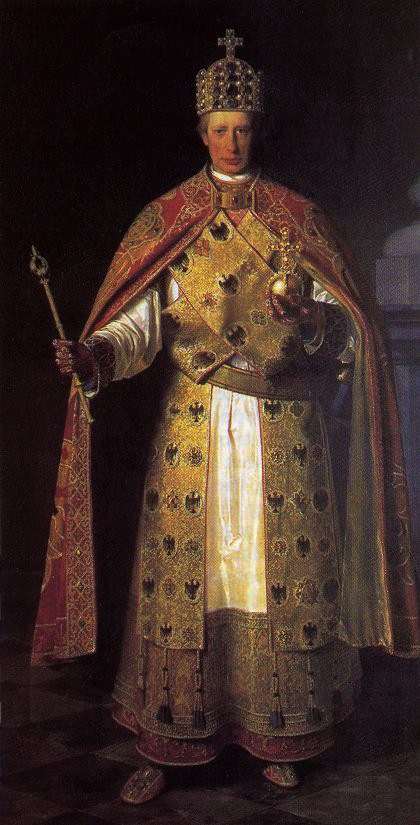
Ludwig_Streitenfeld_001.jpg

    Francis II as Holy Roman Emperor (1874)

          Ludwig Streitenfeld

               _____________

Haydn’s String Quartet, opus 76, no 3
is nicknamed the Emperor cause the 
second movement, the poco adagio;
cantabile, is a recapitulation of an 
anthem Haydn had earlier written for 
Francis ll, the Holy Roman Emperor
– not, incidentally, for Napoleon, the 
Emperor of the moment, who was to 
defeat Francis lleventually, at the 
Battle of Austerlitz, December 2, 1805, 
thereby dissolving that Holy Roman 
Empire, which had been established 
by Leo, the very Pope, lll when, on 
December 25th, 800, which is to say 
preceding Austerlitz by a thousand 
years, he crowned Charlemagne its 
Emperor 

Haydn must’ve been a monarchist


you’ll recognize that second movement
as the present day anthem of Germany

but listen to how Haydn makes it glisten, 
explicitly, with articulations and filigree 
that render it utterly irresistible

the adagio is usually the moment that
remains immutable, if the composer
is doing hir stuff, it’s the one you walk 
home singing, the faster movements,
however histrionic, are nearly a dime 
a dozen, though ever nevertheless 
often dazzling 

this adagio is utterly Romantic, though
I’m sure Haydn didn’t know what he 
was doing, cause despite their push
against the democratic surge, even 
monarchists, princes, dukes, dutiful 
composers, were finding, and voicing, 
their personal, and individual, which 
is to say, their democratic, opinions, 
however aristocratic their pedigree

artists had done a similar thing when 
their personalities began to single 
themselves out as especially gifted 
when the Renaissance was 
happening, it was now music’s hour, 
individual voices were staking their 
claim, Haydn’s manifestly superior 
based on talent and, after widespread 
economic affluence, audience appeal, 
Haydn’s commercial boots were made 
for walking, and he filled them both
magnificently and incontrovertibly

the poco adagio; cantabile is not 
courtly music, it reaches for not
merely elegance, but the heart,
we’ve entered another 
transformational generation, 
something like the revolution 
that triggered change in the 
cultural upheaval of the1960s 

our first step then was the Beatles, 
theirs was Haydn, or rather Elvis
Presley shoring up the Beatles, 
Beethoven was more aptly John,
Paul, George and Ringo 


but watch the rapture on the players’ 
faces, Francis ll would’ve been 
appalled, much like parents in my 
generation facing the pill, drugs, 
unorthodox sexual couplings, and, 
of course, raucous and unruly rock 

music

today, under the spell of the 
Romantic Period, and encouraged
by that very Sexual Revolution, the
Calidore String Quartet’s Elysium
their evident blissemotionally 
manifest, and utterly arresting, sells 
tickets, for better orhopefully not, 
for worse

but you call the shots, to decorum or 
not to decorum, that is the question

watch, wonder, listen 


R ! chard

String Quartet opus 74, no 1, in C major – Joseph Haydn

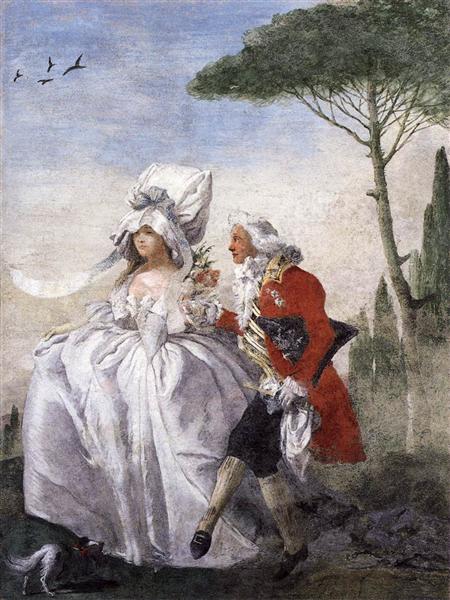
minuet-in-villa.jpg!Large.jpg     

         Minuet in Villa (c.1791)  

                Giovanni Domenico Tiepolo

                                _____________

                                          for my father

the Opus 74, along with the Opus 71, were
written as a unit, to deliver to the English 
public for presentation, if the opus numbers 
differ, it’s probably to do with publication 
dates, the 74‘s being later than the earlier
but they fit the bill together, batches of six
string quartets for Haydn’s opuses up until
now being the standard, each opus here 
comprising only half the normal number, 
just three

Haydn’s sponsor, Prince Nicholas Esterházy
had died, leaving his son, Anton, to preside, 
but being tone deaf, the descendant fired 
the orchestra, however until then illustrious 
the fact that these works were no longer,
therefore, court pieces but intended for 
larger, paying, audiences, changed the 
dynamics, Haydn is not only peripheral 
music at an aristocratic court any longer
he’s the host, and you can hear it

fermatas, where the note, or the pause, 
are accentuated, deliver drama, so does 
volume, and sudden tempo changes

therefore the Romantic Period

but, interestingly, the Classical 
foundation remains, the established 
structure – a musical statement, an 
elaboration, a second musical, 
related, statement, in usually a 
complementary key, it’s own 
elaboration, then a recapitulation 
of either, or both

the minuet, incidentally, stalwart
still, holding on to the very end of 
the 18th Century, still applies, 
sure enough, though residual 
sign of the earlier Classical 
supremacy, even as that era was 
inexorably disintegrating

music is an entertainment, it 
inspires, however so incidentally
though it ever, perhaps even 
intentionally, makes you often, 
indeed, cry, it’s needed, even in 
the direst circumstances, for 
courage, however ironically, 
however contrapuntally, in any 
particular moment, it might even 
seem cynical so to arouse spirit, 
inspiration, I mean the French had 
just turned the world upside down, 
and here was sparkling creativity

Haydn was doing his stuff, keeping 
us musically integrated, speaking 
music instead of politics, turning 
bad situation into pearls, keeping 
the world going, the very stuff of 
oracles
  
listen


R ! chard

String Quartet opus 71, no 2, in D major – Joseph Haydn

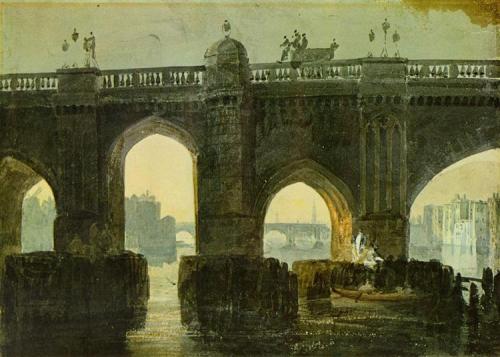
old-london-brige.jpg!Large

    “Old London Bridge

          J.M.W. Turner

              ________

in the spirit of juxtaposing two items of the 
same genus but growing from different 
trees, let me put together for comparison 
two versions of Haydn’s delightful Opus 71,
no 2, in D major, one by a quartet of ladies 
from “South Korea”, the other a same 
number of males from the “UK”, as 
indicated in either case on their videos

their Trondheim Chamber Music Festival
Competition was held last year, 2017,
it’s irrelevant who won on this particular
challenge, both are brilliant, so I’ll leave 
it up to you, the girls, the Esmé Quartet
the boys, the Maxwell – I think it might 
even come down to your sexual 
inclination, though both, as the host of 
the musical “Cabaret” would say, “are 
beautiful, life is beautifuleven the 
orchestra is beautiful“, indeed

the Apponyi Quartets, requested and paid 
for by Count Anton Georg Apponyi, after 
Haydn’s sponsor, Prince Nicholas Esterházy,
had died and left his son, Prince Anton, with
Haydn on his hands, whose orchestra he 
forthwith disbanded, being no aficionado of
music, Haydn was left to peddle his wares  
in London, England, where he became an 
undisputed success, not surprisingly, 
would think, after their having to handle the 
dour and, if you’ll forgive me, unimaginative, 
and uninspired Handel

the Esmé, I found, was sharp, acerbic, 
succinct in their first movement, but 
the Maxwell took over in their melting,
verily discombobulating adagio, a 
sensuality that seemed to evade the 
women’s more electric, crackling  
performance

the girls caught up, however, in the
final “allegretto”, where they killed it

like I said, it’s a toss-up, you choose


R ! chard  

Mozart / Haydn in 1790

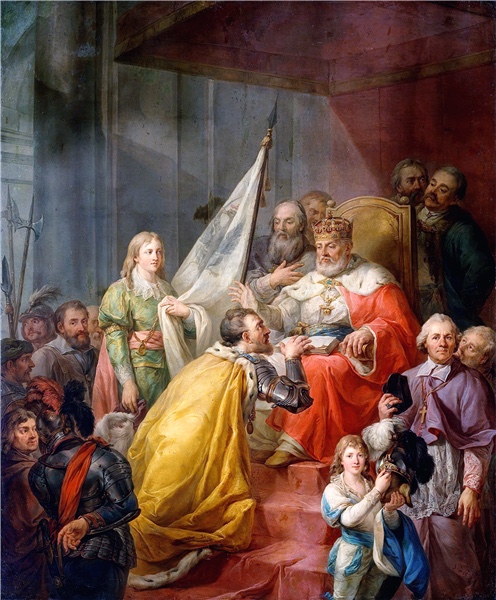
fullsizeoutput_3fe.jpeg

                                 “Prussian Homage (1796)

                                       Marcello Bacciarelli

                                           ____________

it’s 1790, a year after the French Revolution, 
and both Mozart and Haydn are peddling 
their wares, Mozart to the King of Prussia, 
Friedrich Wilhelm ll, who’d commissioned 
some string quartets, as well as piano 
works for his daughter, but wasn’t paying 
Mozart off for them, where Haydn with the
help of Johann Tost, was hustling his stuff
in very, of all places, Paris 

Haydn’s, incidentally, own Prussian Quartets,
dedicated to the same King of Prussia, were  
sold to two different publishers, one in
Vienna, the other in England, commercial
transactions left essentially, for all it might 
matter to us, for lawyers, and potentates, I
expect, eventually to have resolved

it is my habit to juxtapose two things always
to be able to see each more critically, 
determining my favourite sharpens my 
aesthetic pencil, one looks more closely at
what distinguishes one work from the other

therefore Mozart’s String Quartet no 22 in 
B flat major, KV 589, up against Haydn’s 
no 53 in D major, opus 64, no 5, “The Lark”, 
both written in the same year

it’s like comparing apples with oranges,
different fruit from the same nevertheless
genus, my favourite being lichee, so go 
figure

it’ll be up to you to find your especially
preferred nutrient 

I‘ll just point out a few differences that
immediately set apart these, however 
similar, masterpieces for me, Mozart 
remains utterly Classical, relying on 
the established, by now, conditions of 
the string quartet, an entertainment for 
nobility, nothing at all controversial, 
where Haydn with his soaring notes 
for the first violin, followed by 
arabesques that define a personal 
agony, introduces drama into the 
equation, a music that speaks of 
sentiment, is pointing already towards 
the future, though I suspect he could 
never have imagined where, in the 
very next generation, Beethoven 
would take it

to look back, to look forward, that is 
the question, it’s not always an easy 
one 

but this is where art speaks to us, 
reminding us of our tendencies, 
defining, truly, eventually, who we 
veritably are, according to our 
individual choices, preferences, 
for better or for worse, rendering 
the world an ever effulgent garden 
rather than a dour mausoleum


R ! chard