Richibi’s Weblog

Just another WordPress.com weblog

Category: dramatic monologues

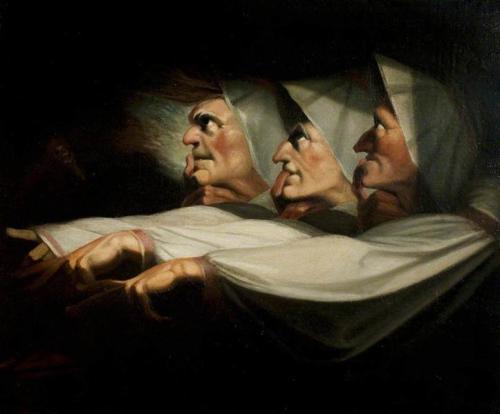
“The Kingdom of Scotland vs the Weird Sisters”

macbeth-act-i-scene-3-the-weird-sisters-1783(1).jpg!Large

    “‘Macbeth’, Act I, Scene 3, the Weird Sisters (1783) 

           Henry Fuseli

               _______

if you thought The Kingdom of Denmark 
vs Hamlet was fun, you’ll love The 
Kingdom of Scotland vs the Weird 
Sisters“, U.S. Supreme Court Justice
Ruth Bader Ginsburg presides, with
the assistance of four other eminent
American judges, over the case in 
which the defendants, the witches 
who encounter Macbeth, are accused 
of concocting the murder of Duncan, 
King of Scotland, by that unsuspecting 
Thane of Glamis, soon to be Thane of 
Cawdor, not only predicting itbut 
verily perpetrating it

double, double, toil, indeed, and 
trouble, topical allusions flypithy, 
witty, pungent, delightful late night 
comedy fare, but of a more esoteric,
effete order 

watch, utterly enjoy


R ! chard

the Kingdom of Denmark vs Hamlet

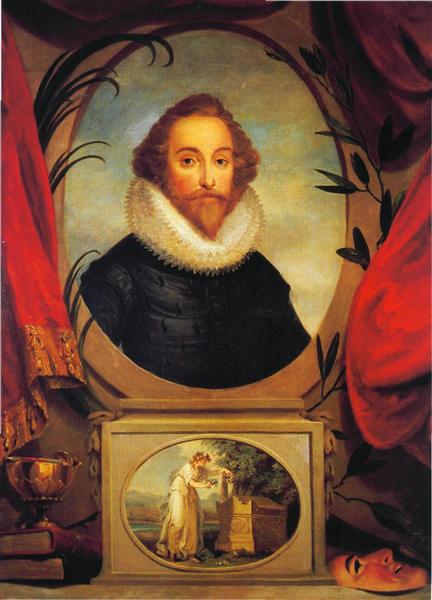
ideal-portrait-of-shakespeare.jpg!Large

  Ideal portrait of Shakespeare (c.1775) 

         Angelica Kauffman

____________

since I’m on the subject of Hamlet
here‘s the most fun production 
I’ve seen since I can remember, 
the trial of said Hamlet before 
the High Court of the Kingdom 
of Denmark vs Himself, for the 
murder of Poloniuschief 
counsellor of the new King, 
Claudius, after the death of 
Hamlet, père, brother to Claudius, 
Greek, nearly, already, tragedy

Anthony M. KennedyAssociate 
Justice of the Supreme Court of 
the United States, presides, 
Abbe Lowell, counsel for both 
Jared Kushner, and Ivanka Trump
recently in the matter of Russian
interference, argues for the 
defense, while Jessie K. LiuU.S. 
Attorney for the District of 
Columbia, is the prosecution

the stakes are high, not only for
Hamlet

the participants put on quite 
show, however erudite, they 
all deliver in utter spades

you’ll relish the surprisingly 
multifarious quotations you 
might not, you thought, ‘ve 
got, of Shakespeare, you’ll be 
amazed to find that you’re not 
that much out of touch with 
these not so daunting, after 
all, considerations

much art, in other words, is only 
as far away as one’s curiosity, 
one’s acknowledgement, much 
of it is already in our system, in  
our cultural DNA, all that’s   
needed to take it in is our 
attention

watch


R ! chard

how to read music – Cello Sonata in D major, opus 102, no 2 – Beethoven

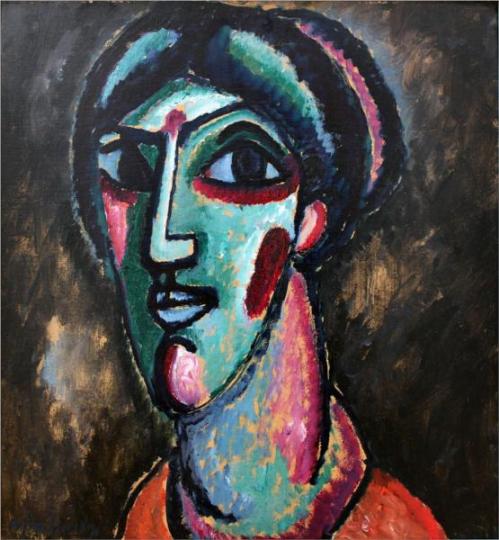
head-in-black-and-green-1913.jpg!Large

     “Head in Black and Green (1913) 

            Alexej von Jawlensky

                    ___________

the line of music, the essential melody, 
is not resolved in Beethoven until several 
bars from the beginning in his Fifth Cello
Sonata, one note follows another without 
any specific reference to what preceded it 
but the tempo, and the voice, which is to 
say, its tonality

there is ever, however, though perhaps 
sometimes eccentric, a harmony, a 
convincing argument, we are speaking 
the same language

as in reading, one follows the musical 
line for those several bars, hanging 
onto each note for meaning, spotting 
even commas, semi-colons, periods, 
however unconsciously, until one 
reaches the end of the paragraph,
made evident by the recapitulation

therefore music
 
which doesn’t only, however, 
recapitulate, here, but elaborates, 
adding depth, dimension, local 
colour, to the already intricate 
story

Beethoven is challenging the very 
idea of music in this composition
much as later the Impressionists 
did, for instance, when they 
upended the entrenched idea of 
merely representational art – 
process I saw reverberating in my 
very own 1950’s, ’60’s, when even 
Monet, people objected, could’ve 
been managed by their children

Picasso, of course, was, at the time, 
nothing less than a joke, not to 
mention any of the Surrealists, or – 
gasp – the Expressionists, see
above


I prefer the very early cello sonatas  
of Beethoven, for their verve, their 
energy, the second movement, the 
Adagio con molto sentimento 
d’affetto” in this late oneoverdoes 
it, I think, a little, it’s like sitting with 
someone you can’t leavewhose 
sorrow is immense, and which you 
can barely handle, but must, out of,
if nothing else, chivalry, or common,
and insuperable, one hopes, human
compassion
consider, and duly, 
thus, proffer, ideally, grace

who hasn’t been there


R ! chard

String Quartet in F minor, opus 95, “Serioso” – Beethoven

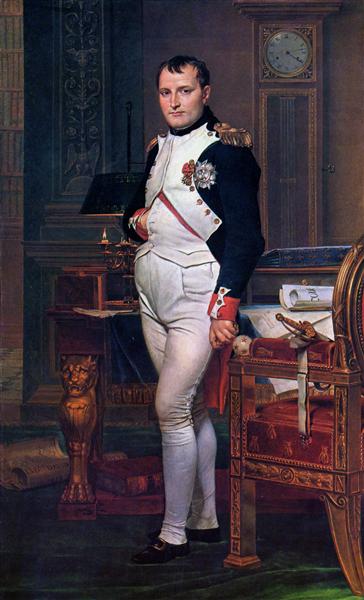
napoleon-bonaparte-in-his-study-at-the-tuileries-1812.jpg!Large

Napoleon Bonaparte in his Study at the Tuileries (1812) 

      Jacques-Louis David

              __________

first of all, let me resolve an issue I’d 
brought up recently, can there be music 
without repetition, recapitulation, of an 
initial musical idea 

no, I emphatically now state, otherwise 
one has a sentence, prose, thus 
reiteration must define as we 
understand it, music

until, of course, I’m made to eat my 
words

secondly, and to the present point
Beethoven’s 11th String Quartet, was 
nicknamed Serioso“, imagine how 
far that label would get one nowadays
but it was a different era, where fun,
levity, wasn’t, creatively, an essential 
component, that only began to happen, 
modestly, in the mid-19th Century, then 
full on in the 20th, after the First World 
War, see the Charlestonfor instance, 
Charlie ChaplinFred Astaire and
Ginger Rogers  

the 11th is the last string quartet of 
Beethoven’s Middle Period – and if 
you think this one is serious, wait
till you hear his Late ones

but don’t let me scare you, they are 
transcendental, very epiphanies,
you’ll verily leave the planet 

note that the music you’re listening 
to in the Serioso is not initially 
cadenced, a line of notes deliver, 
rather, a sentence, which is later 
restated, there are more than the 
four Classical tempi, also, to divide 
the movements, but several, which 
display, nearly indiscriminately, 
much like in literature, or movies, 
variety of emotions, here
however, without the words, one, 
even, specifically called serioso”,
delivered, expressed, spoken, in 
the language of, however, music

listen

I hope you’ll enjoy  


R ! 
chard

psst: note that there are no words in
          the Charlie Chaplin either, but 
          the information is transmitted 
          through the eyes, not the ears

at the movies – “Phaedra”

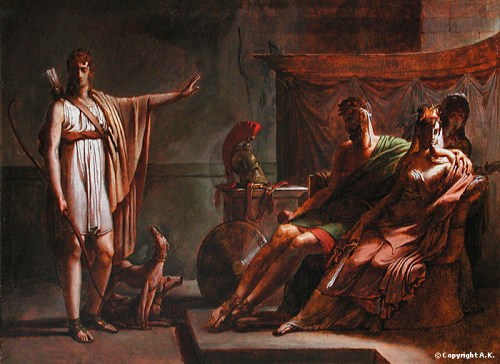
phaedra-and-hippolytus-1802.jpg

     “Phaedra and Hippolytus (1802) 

            Pierre-Narcisse Guérin

                   _____________

Phaedra, according to Greek myth, fell
in love with her stepson, and, of course,
ruined, for everyone, everything 

she’s been represented in music by
composers from, at least, Rameau,
1733, to, here, now, Benjamin Britten,  
1976by way of even Tangerine
Dream, 1973, however peripherally, 
and the hits just keep on coming

in literature, the story goes back to 
Euripides, 480 – 406 BCE, through
Jean Racine, 1639 – 1699, poet at 
the court of Louis XlV, the version 
that I studied in French Literature,
along with, in English, Shakespeare,
who was doing courtiers, rather, 
and royalty there, then, incidentally, 
instead of the Continent’s iconic 
Mediterranean figures – it remains 
my favourite play in my mother 
tongue, next to, for me, its only 
other equal, Cyrano de Bergerac

but I’d never seen a production of 
Phaedra until this searing, 
modern, rendition, set in, relatively 
contemporary, Greece, London, 
and Paris, with the irrepressible, 
the irresistible, Melina Mercouri
torrid temptress, the very goddess 
Herahereand Anthony Perkins
perfect as her suitor, a youth still, 
pulsing with a young man’s 
unbridled intentions

sparks fly, from moment to 
incendiary moment – I had often 
to pause to catch my breath – 
portents of an inescapable, and 
eventually epic, indeed mythic, 
apocalypse

watch, if you dare


R ! chard

Piano Sonata no 17, opus 31, no 2 “The Tempest” – Beethoven

tempest-on-the-northern-sea-1865.jpg!Large

    “Tempest on the Northern Sea (1865) 

             Ivan Aivazovsky

                  __________

                               for Judy, who “glimpses“, she says,
                                   “a kinder world, that [my] missives
                                          provide” – thank you, Judy                            


just as I was being called on the 
carpet for my constant returns to 
Beethoven, none other than Glenn 
Gould should show up, in my 
cavern of wonders, to absolve me, 
or at least to stand stolidly by my 
side

let him talk

had I written, however, his 
observations, I’m sure you’d’ve  
balkedhe’s a product, after all,  
of the priggish pretensions that  
prevailed in my neck of the woods 
at the time, Southern Ontario, a  
product of British Imperialism  
of which I am myself, I avow,  
incontrovertibly subject, but due  
to the strength of his celebrity,  
one is likely to listen to Gould  
more attentively, I’m not 
sufficiently yetsuspect,  
significant, nor influential
 
he is, one way or the other, I concur,
absolutely right

about his Tempest“, though, I’ll say, 
even object, as Stravinsky and John 
Cage did, according to Gouldabout 
the commanding Beethoven, that 
Gould is dripping in Romantic
sentiment here, his rubato in the 
first movement tests the limits of   
our forbearance, and his second  
movement is so slow as to have 
one fall off the page

but his last movement, the allegretto,
is brilliant

Gould’s idiosyncratic, dare I say, 
eccentric, performance will 
throughout, nevertheless, 
astonish, indeed electrify, even,
I’m sure, inspire, watch, listen

and thanks ever, especially, for 
dropping by 


R ! chard

psst: here’s another version of the 17th,  
          to my mind, less self-indulgent, but 
          you be the judge, don’t think about 
          it, just ask yourself which one  
          would you want to hear a next time,  
          that’ll be your, gloriously personal,   
          reply

          enjoy

twice upon a dirge – Beethoven / Chopin

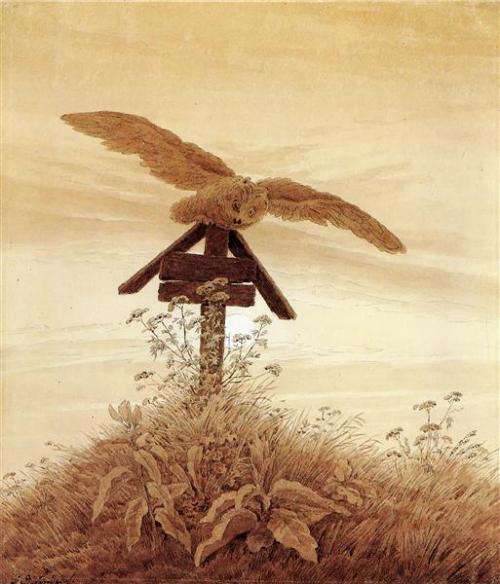
owl-on-a-grave-1837.jpg!Large

   Owl on a Grave” / “Eule am Grab (c.1836 – c.1837) 

          Caspar David Friedrich

                   _______

following my nose rather than 
my intellect in my exploration 
of musical treasures, like a very 
Aladdin uncovering at the click 
of my password a cave full of 
priceless wonders, I might find 
stuff out of sequence, but gems
nevertheless, and I can’t just 
whisk by without acknowledging 
them, however peripheral to my 
main task  

it’s like heading towards the Eiffel
Tower in Paris, and not stopping 
at the Arche de Triomphe

though I’d debated so soon 
presenting these two pieces, 
not because of their chronology 
especially, though also that, but 
mostly because of their dour 
content, I’ll point out that the 
move from Classicism to 
Romanticism is the transition 
from dance music, delightful 
music, to drama, passion, 
powerful emotions, dirges, 
therefore, are not out of place, 
however mournful

thus the two most famous 
funeral marches, Beethoven’s,
Chopin’s, the third movement 
in either of their home sonatas

the clincher for me was the 
immaculate performance of 
the Chopin herea revelatory 
moment, though the Beethoven
significantly earlier, the tune, 
1801, 1837, is nevertheless 
unimpeachable, however still 
underdeveloped – four variations 
only in the first movement, for 
instance, and all of them 
elementary – the caterpillar had 
not yet become the butterfly, the 
apple blossom the apple

note that each movement in the 
Chopin, apart from the last, has
two distinct tempi, executed 
effortlessly and nearly 
imperceptibly, a total of six, you 
can’t see, you can’t hear, the 
seams as you listen, which, with 
its virtual therefore episodes, 
conflicting and tortuous 
emotions, constitute collectively 
a drama, a narrative, music has 
become literature

the last movement of the Chopin
moves beyond even tempo – 
Beethoven’s also, incidentally, 
nearly – creating therefore 
very challenge to it, both trying 
to transcend tempi, an area to 
closely watch

Beethoven’s Piano Sonata no 12

Chopin’s Piano Sonata no 2

take your pick

both are supremely, mark, 
instructive


R ! chard

January 30, 2018

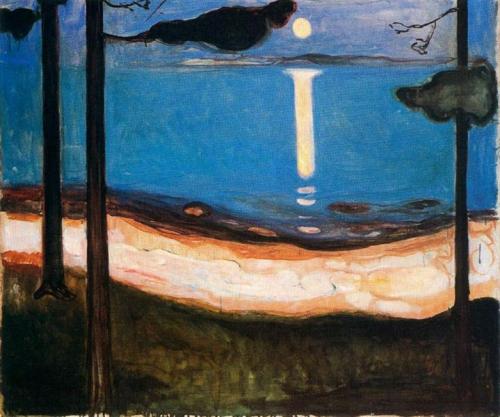
moon-light-1895.jpg!Large

        Moon Light (1895) 

               Edvard Munch

                    ________

my mom texted me this morning that
the moon would be  “BLOODY RED IN 
COLOUR….because “, she added, “earth
🌏 will be between sun and moon …last
happened 152 years ago ….moon closest
to earth 🌏

I haven’t told her yet that from my 
window I’ll be singing, as the moon  
rises above the mountains in the 
east, Casta Diva“, Norma’s song 
to the moon

chaste Goddess, she appeals, who 
bathes these sacred trees in silvery 
light, bless us with your grace, we
are not not in need of it

maybe you’ll sing along


Norma is a Druidic priestess, 
representing her community, which 
has been overtaken, and is now ruled,
by the Romans, she bears already, 
however, two children of a Roman 
military official, Pollione, who has 
fallen for her maid, Adalgisa, sparks 
fly in every direction, both personal 

and political, Adalgisa ‘ll keep the 
kids eventually, and both Norma and 
Pollione will go the pyre, the very 
height of Romantic fervour, check it
out, it’s extraordinary, with Joan 
Sutherland in this, dare I say, 
classic performance

but first of all, Casta Diva itself, by  
the inimitable Maria Callas 

and may the moon be your guide


R ! chard

on “Song to the Moon” – Antonin Dvořák

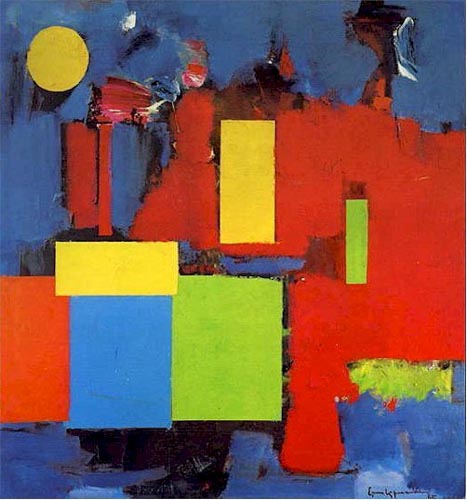
rising-moon-1964

   “Rising Moon (1964)

          Hans Hofmann

              __________

the moon was out last night, grand
upon the starlit evening, either 
waxing or waning, I’m not sure, but
not full, a gibbous moon, above the 
buildings that scrape, in my big city 
neighbourhood, in the very Cubist 
manner, the night sky, see above

I’d been listening to Renée Fleming
singing Dvořák‘s Song to the Moon
in my head since I’d seen her do it, 
on television, in a summer evening 
concert at Schönbrunn, Vienna, some
few days ago, sheit, had been utterly, 
sublimely, enchanting, I’m a Cancer, a
moon child, I speak to the moon

to the moon, I said, moon in the dark
heavens, who steal into every home
and hearth at night, find my beloved
and tell him what is in my heart, rapt 
as I was in the spell of my special
planet, my personal orb, and the 
enveloping Dvořákian magic, though 
there’s been no beloved lately, just 
trailings of the latest one who broke, 
of course, my heart, which gives more 
pathos, however, incidentally, to my 
singing, I’ve giddily gathered

at home, I found Renée Fleming doing 
the piece on the Internet, entirely as 
splendidly, earlier, at London’s Royal
Albert Hall, September, 2010

listen

R ! chard

Puccini on poets

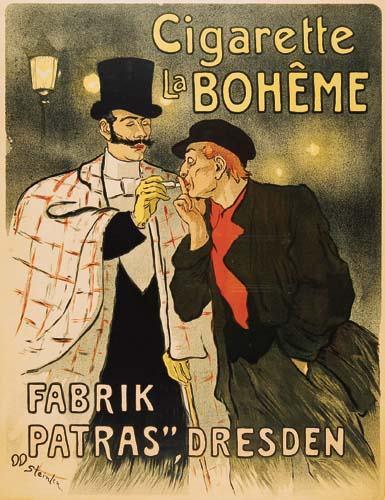
cigarette-la-boheme-1879

                   “Cigarette La Bohême (1879) 

                             Théophile Steinlen

                                        ______

with a friend today over lunch I told 
her that we’d watched, my mom and 
I and a mutual friend, La Bohème“,  
an Australian production of it, Baz 
Luhrmann directing, a man we both 
knew, at my place last Sunday, we 
were all wowed by it, I extrapolated 

the only opera I’ve ever seen, she 
said, was La Bohème

where did you see it, I asked, and 
when  

with my first husband, she replied,
in Vienna 

was it wonderful, I inquired  

it was, she answered, I had on a 
long dress, my husband was in 
coat and, essentially, tails, we 
walked up a very long staircase, 
I  remember

coincidentally, the first time I’d 
seen “La Bohème was also in 
Vienna, I can’t remember the 
staircase, couldn’t remember what  
I wore, can’t even remember where 
I was sitting, what I remember, as
though through a telescope, darkly,  
was Mimi and Rodolphe looking for   
the key she’d lost, on their knees   
on the floor, in the dark cause her  
candle ‘d gone out, he’d put his out
surreptitiously too to  join her 

your little hand is so cold, he sings,
when he, unforgettably, finds it 

in this production, Rodolphe has  
found the key but conceals it 
from Mimi until she sees it in his 
eyes, he pretends to return it but 
instead manages to hold her 
hand 

your little hand is so cold, he 
sings, again unforgettably

there’s nothing to fear, he 
continues, the moon is out, let’s
get to know each other

who am I, he asks, to start the 
conversation, I am a poet, he 
declares, and proceeds to tell 
us what it is to be a poet 

you’ll be utterly enchanted

tell me about a world, I ask,  
without poets, tell me about  
a world without poetry 

where would we be without 
dreamers, I wonder, where would 
we be without dreams

watch here, and wonder

Richard