Richibi’s Weblog

Just another WordPress.com weblog

Category: concerts to ponder

Cello Concerto no 1 in C major – Joseph Haydn

st-george-and-the-dragon.jpg!Large

     “St. George and the Dragon (c.1470) 

                Paolo Uccello

                    ________

it isn’t easy for me to leave Bach behind
whenever I start listening to him, I could 
ride his musical train forever

but the middle of the 18th Century did, put 
him aside, for about a hundred years, until 
Mendelssohn rediscovered him

Bach’s Cello Suites were themselves only 
reinstated in the 1930s by Pablo Casals,
the Classical 18th Century had considered 
Bach too fussy, his pieces, they thought, 
were technical exercises rather than 
actual entertainments, form was  
overtaking, for them, function 

there’s a wonderful book about all this,
The Cello Suites“, written by Eric Siblin, 
a Canadian journalist, which is not only 
amazingly informed and probing, but also 
beautifully written, it holds a place of 
honour on my bookshelf, along with other 
inspired, and inspiring, texts

not only was Bach set asunder, dismissed,
during the Classical Era, but all of the 
formative music also he had written, for 
cello, violin, keyboard, in other words,
the entire curriculum

which, since Bach’s reinstatement, has 
become, paradoxically, the very  
foundation for learning these instruments

imagine playing a tune with the right 
hand, then a few notes later, picking 
it up in the left hand while the right 
hand keeps on going, imagine what
that does to your fingers, never mind  
to your mind, that’s what his Two-Part
Inventions are all about, fifteen of 
them, eight in major keys, seven in
minor, consider the technical 
difficulties, intricacies, imposed 
both compositionally and upon 
the harried performer 

then Bach follows through with his 
Three-Part Inventions to top it all 
off, for the keyboard at least, and 
only for the moment – there’ll still 
be his transcendental Goldberg 
Variations” among other 
incandescent masterpieces – 
wherein one juggles three tunes at 
time, and all of them in the same 
assortment of fifteen contrasting, 
foundational, keys, the “Inventions
 – if you can do that, you’re on your 
way, one would think, to knowing 
entirely what you’re doing

but time marches on, the Classical
Era hits, Haydn takes over, not
unimpressively

the same thing happened in my 
generation to Frank Sinatra via 
the Beatles, not to mention, a little 
later, to either, with Pink Floyd

listen to Haydn’s First Cello Concerto,
note the bravura inherent in the 
composition, this is not Bach’s 
meditative music, the very Romantic 
Period is, through Classical reserve, 
expressing already its imminence, 
individual prowess is taking over 
from community, which is to say 
religious, affiliation, the same way 
the Renaissance artists, Duccio
GiottoFra AngelicoFilippo Lippi
Uccello had stood out, incidentally, 
from their brethren in the standard 
communal art schools dedicated to 
decorating the ever burgeoning 
churches sprouting out in the still
fervent European environment 

musical, though unaristocratic, 
talents, this time, were beginning, 
within German context, to flex 
their decidedly not unimpressive 
muscles, and gaining some 
significant purchase

and who wouldn’t when a Cello 
Concerto would’ve sounded like 
this, listen


R ! chard
what’s up in Belgrade, Serbia – Pepe Romero

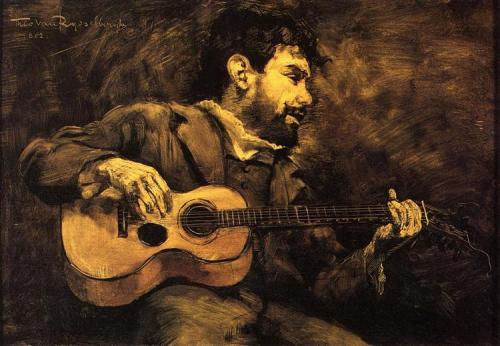
dario-de-regoyos-playing-the-guitar-1882.jpg!Large

   Dario de Regoyos Playing the Guitar (1882) 

          Theo van Rysselberghe

                 ______________

                                                          for Donna

struck by the intimacy, the emotional 
resonance of the guitar, more outward,
more confessional, than introspective, 
like the cello, I wondered at the reasons,
speculated merely, but with, to my mind, 
unobjectionable conclusions finally, just 
this side of actual proof of my, however 
provisional nevertheless, conclusions

the guitar, I thought, when a friend 
wrote about her especial appreciation 
of it, is to both North and South 
Americans a much more integral part
of our history, cowboys carried them 
out on the range, be it American or 
Argentinian

why, I wondered

well, I figured, it doesn’t have, first 
of all, a bow, and it’s easy to carry,
a piano would, of course, be right 
out of the question

and later in the evening, around a 
fire, a cowboy can wrap his very
soul around this metaphor he’s 
holding, and speak of his love and 
his loneliness

you could try the same thing with a
mandolin, maybe, but it has, I think, 
too playful a string to be ever so
meaningful and intimate

it seems, as well, that you can play 
more than one note at a time on the
guitar, the thumb and at least one 
other finger, to achieve harmonies 
other instruments, including the 
cello, can’t – I could never play two 
notes at a time, for instance, on my 
flute when I was flaying it 

though I recently found out you can 
play two notes together, at a time,
though with great difficulty, on the 
violin, which could shoot all of my 
theories into the water

stay tuned


listen to Pepe Romero, meanwhile,
astound you with first of all Rodrigo’s
“Concierto de Aranjuez” – you’ll melt 
at the adagio – then with Francisco
Tárrega’s “Memories of the Alhambra”
a piece that’s already written deep in 
your bones, I promise you’ll

quiver

enjoy


R ! chard

up my eccentricities / the Ides of March

ides1

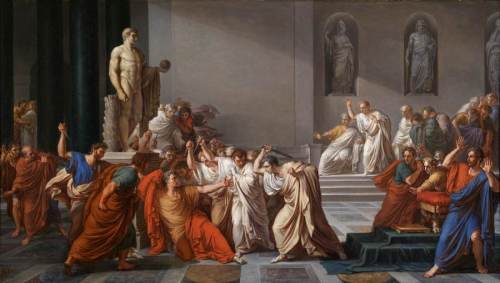
        “The Death of Caesar (1798) 

               Vincenzo Camuccini

                      ___________

in looking up a requiem to commemorate 
the Ides of March, today, a date imprinted  
on our collective consciousness since 
Shakespeare’s “Julius Caesar”, act l, 
scene ll –

    Soothsayer:   Beware the Ides of March.

    Julius Caesar:   What man is that?

    Marcus Brutus:   A soothsayer bids you beware the Ides of March.

    Julius Caesar    Set him before me, let me see his face.

    Cassius:   Fellow, come from the throng, look upon Caesar.

    Julius Caesar:   What say’st thou to me now? Speak once again.

     Soothsayer:   Beware the Ides of March.

    Julius Caesar:   He is a dreamer, let us leave him. Pass.

– I found an entirely appropriate work,
though with more contemporary, and 
consequently more immediate, 
associations 

but first, let me say more about both 
Julius Caesar and Shakespeare

Caesar died on the Ides of March, 
notoriously, and ignominiously – 
though ruthless in his own way, 
not to mention also flamboyant,  
Caesar had been a ruler conscious 
of his constituency, and therefore 
socially responsive, giving, for 
instance, citizenship to residents 
from far away, a contentious issue 
still nowadays, and support for 
veterans, another hot political 
topic

he was also the lover of Cleopatra, 
among apparently many other trysts, 
not to mention, it has been suggested, 
of King Nicomedes lV of Bithynia

regardless, he is the template for 
modern rulers, eclipsing Alexander
the Great by a long shot, who else 
has a very month, July, named after 
him, apart from Augustus, Caesar‘s
heir and successor

his complete literary works have only 
recently come out in English, an
apparently, and most undoubtedly,
significant enterprise, Caesar would 
be, of course, subjective, therefore
probably indifferent to, or more 
unforthcoming about, his less savoury
excesses – he’d apparently cut off the 
hands of soldiers he had conquered,
something he never mentioned  

should we consider the impunity of our 
own 21st-Century autocrats – who will
blithely destroy communities with 
lethal chemical agents, and even, in
like manner, specifically target 
individuals – with less condemnation
and horror

nobody cared, by the way, about the 
Ides of March, until Shakespeare 
suggested, for all time, that we 
should beware of it

and we’ve been doing so ever since 


March 11th, 2011, was the date of the
Japanese tsunami, the earth shook, 
thousands died, the devastation was 
unimaginable, including nuclear 
radioactive explosions

Tōru Takemitsu‘s Requiem, written
in 1957, though not specifically 
related to that national tragedy, is
not at all unrelated to their agony

and through the power of music to
bring souls together, manifestly, 
here and now, his thoughtful
evocation, however dissonant, 
however arhythmic, however 
unhinged from Western Classical 
musical precepts, which might 
very well, I remark, be the point, 
brings souls, if you’ll listen
demonstrably together


R ! chard

psst: did I mention that the words 
          “Tsar” and “Kaiser” are 
          derivations of the name 
          Caesar

comparing divas

diva-i.jpg!Large

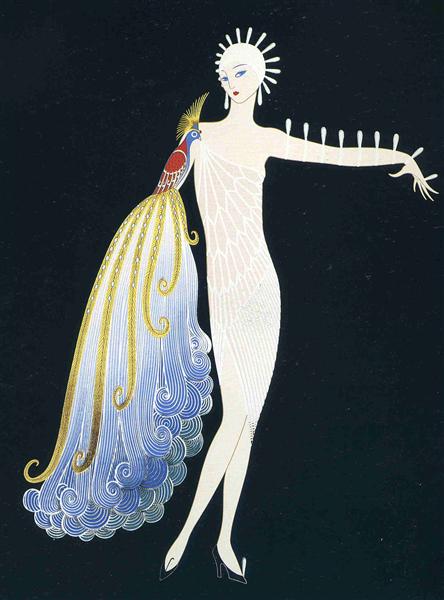
        Diva I 

             Erte

             __

comparing two extraordinary performances,
as I am wont to do with any coupled exhibits,
which render always more than the sum of 
their parts, let me let you consider an 
historical record of a legend already with 
that of one who is about to become one,
Bette Midler, 1971, doing the Continental 
Bathsopposite Vesselina Kasarova at the 
Schwetzinger Festspiele, 2005

the voices in either case are impeccable,
the only difference is the context, you 
choose what you’re into

but let me tell you that Vesselina Kasarova
doesn’t give an inch, she puts on a show 
that makes your jaw drop, trust me, it all 
depends on your mood

Vesselina comes from a different epoch,
despite her contemporary production,
polite, flirtatious, modest, the 18th
Century

but her staccatos, followed by verily,
and however improbably, organic 
legatos, indeed fervent, and  
unmitigated, fermatas, are stunning,  
a touras they say in such instances,  
de force, indeed de maîtrise, de  
mastery, wait till you hear the final 
moments of her surely definitive 
Glück, utterly, and incontrovertibly, 
astounding

Bette is brash, in your face, needs to 
get the attention of guys in towels, 
1971, intent on more prurient 
peregrinations than merely watching 
superstars, however in the making, 
strut their show-stopping stuff

both Vesselina and Bette achieve, I 
think, their goal, each strikingly, and 
unforgettably, each declares herself 
indestructible, a very force of
propulsive nature

watchwatch, which, in your opinion, 
delivers

ouch, both, either, I think

enjoy


R ! chard

by special request, more Tina

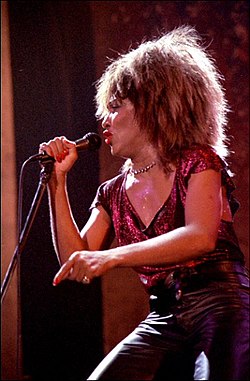
250px-Tina_turner_21021985_01_350

  Tina Turner performing in Norway, 1985

             __________

                                                  for Norm

shortly after my most recent post, a 
friend, as avid as I am about Classical
music, but who also lived through our
own golden age of music, and throbbed 
as I did to its pounding rhythms, sent 
me this video of one of Tina’s greatest 
hits, Proud Mary

not to mention that my inbox lit up at 
the same time with equally corroborative 
applause from a host of other, apparently
also fervid, admirers


it was the best of times, it was the worst 
of times, everyone did everything with
anyone then, and was impeded only    
by hir own personal inhibitions

therefore Studio 54and even more 
glamorous Manhattan party outlets, 
the Paradise Garage, Les Mouches, 
warehouses full of carousers, and 
Bette Midler was showcasing at the
Continental Bathsif you were 
wanting a less frenzied, though not 
at all uneventful, evening, or night
  
London had it’s comparable Heaven, 
nowhere was not having its bacchanals

the era would come down crashing, 
never to be put back together again,
of course, as a soothsayer I knew 
was then prophesying, but while it 
lasted we revelled, and had Tina 
Turner, among other, as incendiary, 
oracles telling it like it was, is, listen

 
Beethoven would’ve been proud of 
Tina, incidentally, note the adherence 
to Classical conditions, tonality, tempo, 
and repetition, art is about doing your 
own stuff around those imperatives, or, 
if you can, busting through them

Tina might not have burst through, but  
she sure knew what to do with her 
perimeters, which is to say, knock them
right out of the ballpark   

wow, watch, what a woman


R ! chard

psst: thanks Norm

“I Can’t Stand the Rain” – Tina Turner

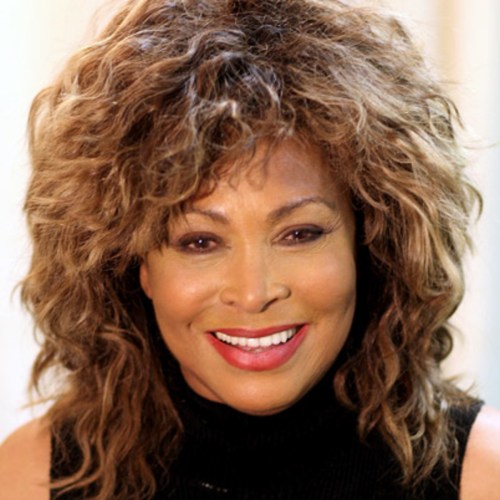
tina-turner-9512276-1-402

                Tina Turner                     

                       ______

finding it difficult lately to endure the
late winter, early spring, besetting 
our, however, not unbearable yet, 
unpleasant meteorological conditions, 
Tina Turner picked it up for me with 
her irresistible rendition around her 
perspective about such intemperate
weather, tightly wound, in my 
instance, with emotionally resonant 
considerations

call me Tina, I cried, and burst into
earnest collaboration, ever so, as 
much as possible, mellifluously

won’t you too, haven’t you, for that
matter, already, join, joined in


R ! chard 

Cyprien Katsaris in Budapest

Katsaris-Cyprien-01

       Cyprien Katsaris

               ________

if there’s only one concert you see 
this week – I would’ve said this year 
but I have way too many irresistible 
concerts to promote – make it this 
one, like none I’ve ever seen before, 
Cyprien Katsaris, who wowed us in 
my last encomium, delivers, not one, 
but two concertos, when emotionally 
I can usually deal with only one

but you can pause between the pieces, 
like I did, to wipe a tear or two away 
after the adagios, which remind me,
always, of my beloved, John

but that’s another story

Katsaris starts with an improvisation,
which he elucidates as an art form 
much more expertly than I would, 
then delivers stunning rendition of
his mastery of that gift 

though I couldn’t identify the first part
of it, the melting melody in the last 
section of his homage to, essentially, 
the Romantic Period, rushed back 
memories for me of a piece I could 
never forget, the music from Fellini’s 
heartbreaking masterpiece La Strada 
– listen, listen – right out of Romantic 
Period idioms, its very story evenlike 
Dickens’ Oliver Twist“, his Little Nell 
from the The Old Curiosity Shop“, 
staples of my adolescence, married  
to a nearly mythic lyrical invention 

let me add that improvisations have 
been an integral part of concertos for 
a very long time, the cadenzas, an 
interpolation by the performing artist, 
hir riff, a strutting of hir stuff, late  
in the, usually final, movement, a 
consequence, incidentally, of the 
more forward, individualistic, 
18th-Century progression towards 
individual rights, some left to the 
performing artist, but many 
prescribed by the composer himself,
where, here, I must, gender sensitive 
myself, unceremoniously interject to 
explain my deference to the
designation above, himself“, to male 
merely composers, who were then the 
only ones, however culturally ignobly, 
to nevertheless shape our quite, 
think, extraordinary musical trajectory, 
for better, of course, or for worse

in this instance, I suspect Katsaris 
wrote his own cadenzas for the 
Mozart, notice his arm at the end of 
the first movement fly up in an 
especial transport, and in the last 
movement, watch his very 
exuberance mark the spot, but 
couldn’t put it past Mozart to have 
written something so historically 
visionary

Bach, incidentally, wasn’t doing 
cadenzas, so don’t look for them 

the two concertos that follow the 
improvisation, Bach’s, my favourite 
of his – you’ll understand why when 
you hear it – then Mozart’s 21st – 
everyone’s favourite – are both 
played transcendentally 

consider the difference in period, 
the earlier Baroque, with Bach’s 
notes skipping along inexorably,
the pace required by the 
harpsichord, which didn’t have 
hold pedals to allow notes to 
resonate, the music moves along
therefore nearly minimalistic tracks, 
a pace, and musical motif, that don’t 
stop, they keep on chugging, until 
they reach their destination, their,
as it were, station, or even their

stasis

Mozart’s music is as effervescent,
but conforms to a different cadence,
where a theme is presented, then a
musical, and contrasting, second,
with recapitulation, sometimes
merely partial, which is to say that
the call and response dynamic of 
the dance, or for that matter, by 
extension, modern ballads, is  
being established, codified, and 
elucidated

an era has intervened

then as an encore, Katsaris delivers,
not a cream puff, but Liszt, of all 
people, we’re used to performers
giving us trifles at this point, but not
Katsaris

then to top it all off, he plays the Chopin 
you thought you’d never ever hear again, 
but here immaculate and utterly 
inspirational

the orchestra alone performs after the 
intermission, works by Ravel and Bizet,
surprisingly similar, I thought, the two
composers, in their musical idiom, the 
use of the winds as metaphors, for 
instance, for originality, eccentricity, 
unmitigated poetry within the context 
of what is not unnatural

neither is either composer adverse to 
atonality, they work in textures, instead 
of melodies, all of which is very 
Impressionistic, see of course Monet
and others for historical reference

did I say I want to be Cyprien Katsaris 
when I grow up, well there, it’s said,
he’s lovely 


R ! chard

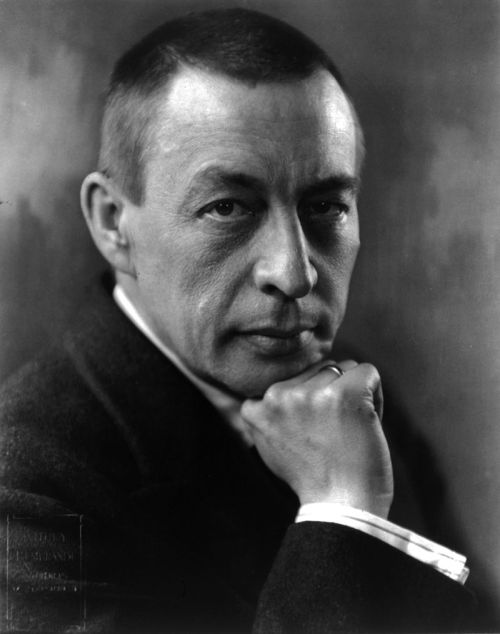
an interjection – Rachmaninov’s Piano Concerto no 3, opus 30

Sergei_Rachmaninoff_cph.3a40575

Rachmaninoff in 1921 (photographed by Kubey Rembrandt)

______________


for Barbara


a friend wrote today about memories of her 
uncle, a violinist, insisting on the right 
pronunciation of Rachmaninov, “with a soft
ch, as the c in cello. It drove my Dad crazy“, 
she said, which led me in a response to both 
his Second Piano Concerto, which she’d 
specifically mentioned, and to what I 
think is like comparing oracles with 
oracles, his Third

it seemed a wonderful time to shed light 
on some of the things I’ve been explaining
about Haydn

I spoke, even in a recent transmittal, about 
the idea of extending tempi, from its 
Classical four, to, through variations in a 
single movement, more than four, and
found Haydn to be awkward, as he 
experimented, unimpressive

listen to what Rachmaninov does, however,  
in every movement here, take it from its 
base through variations in tempi to leave 
you reeling with emotion

the adagio, the middle movement, for 
instance, starts off slowly, continues apace, 
then finds itself embroiled in a whirlwind of
sentiment it finds difficult to control, before
returning, with a nearly audible sigh, to its 
distressed slower, and defining, rhythm

there’s a story here, a narrative, and all the 
permutations of a drama, a reckoning

watching also the performer, Cyprien Katsaris,
the soloist, and marvelling at the speed of his 
fingers, I wondered, should a performer be 
impeded by hir conductor, for not acquiescing
to untoward advances, for instance, a recently 
significant consideration, raise the beat by one 
point merely on the metronome, a novice might 
be undone in a very minute, in a blur of 
distraught acciaccaturas, arpeggios, and 
discombobulated trills

a great player must consequently play the 
piece in practice at a quicker pace to ensure
an immaculate, ever, presentation, the work 
of a consummate, and immutable, artist

think about it, and watch, indeed marvel,
at this extraordinary performance


R ! chard 

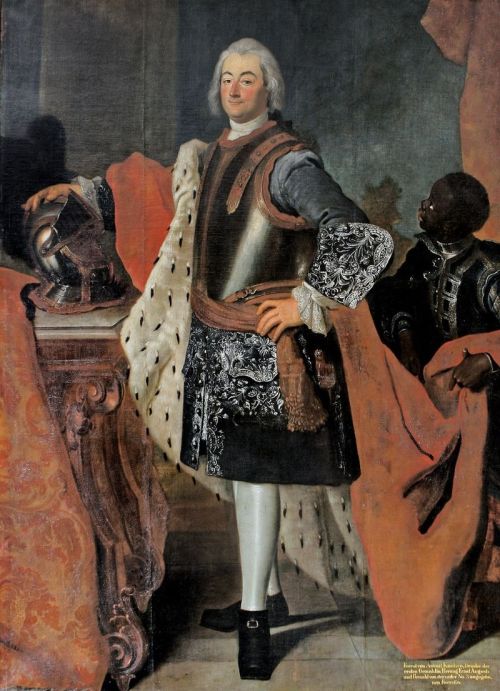
Partita no 2, BWV 1004 – J.S. Bach

Leopold_von_Anhalt-Köthen_(1694_-_1728).jpg

         Leopold von Anhalt-Köthen

                      __________

if I haven’t spoken much about Bach
until now it’s that, although he is at 
the very start of our modern music,
having in fact set up its very alphabet,
the scale we’ve been using since, he 
is nevertheless as different from our 
own era in music as Shakespeare is 
to us in literature, both are stalwarts,
but we no longer say, for instance, 
thee or thou, nor write in iambic 
pentameter, nor do we dance 
gavottes at court, nor congregate 
at church to hear cantatas

the turning point is the Enlightenment,
also called the Age of Reason, when 
the concept of God was being 
questioned, if not even debunked, and
the mysteries of nature were being 
rationally resolved, handing authority
to knowledgeable individuals instead
of to popes

by the time of Mozart and Haydn, a
secular tone was gradually pervading 
all of the arts, devoid of any religious 
intentions, sponsors were private 
rather than clerical  

Bach had indeed been hired by a prince,
Leopold of Anhalt-Köthen, but was 
appointed court musician at his ducal 
chapel, Nikolaus l, Prince Esterházy 
wanted Haydn’s music, rather, for his 
court entertainment, and for himself 
as well, incidentally, as a fellow baryton 
player

Mozart was also employed by a prince,
but left when he wasn’t being payed 
well 

times haven’t changed much, see 
Trump, for instance

after the French Revolution, there was
not much call for religious music, 
human rights took the place of God, 
liberté, égalité, fraternité, and all that, 
not to mention the American Bill of 
Rights, and that’s the route we’ve 
been following ever since, for better 
or for worse 

but hey, we’re still reading Shakespeare,
and still listening to Bach, and loving 
both of them, some of us

here’s some more Bach for old times’
sake, his Partita no 2 for solo violin

a partita is just a series of dance suites 
– an allemande, a courante, a sarabande, 
a gigue, and a chaconne, in this case – I 
don’t think anyone other than Bach ever 
wrote some, but his are sublime

it’s kind of like my calling my own 
stuff prosetry, for whatever infinity 
that word might ever deliver, though
no one else might ever use that term
again

listen also to a transposition of its
celebrated last movement, the 
Chaconnefor left-hand piano, in 
this instance, as transposed by 
Brahms, a precursor to Ravel’s 
Concerto in G major for the Left
Hand, written for Paul  
Wittgensteinan already 
accomplished pianist – the much 
more famous philosopher, 
Ludwig‘s, brother – who’d lost his 
right hand during the First World 
War, and who’hopefully be 
inspired, by such positive 
reinforcement

art, music, poetry thrives on such 
heartfelt expressions of sympathy,
compassion, communion

art is the faith that we rely on now 
that God/dess is gone 


R ! chard

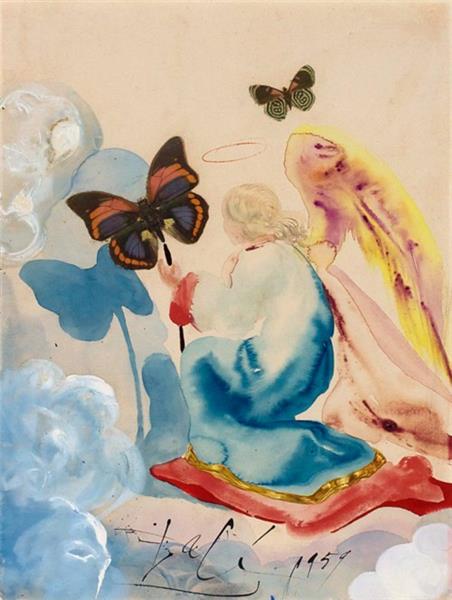
Easter Oratorio – J.S.Bach

easter-angel-1959.jpg!Large

   “Easter Angel (1959) 

          Salvador Dali

               _______

                                  for Elizabeth, 
                                      who needs an oratorio right now,
                                           and who takes great comfort, 
                                                 she tells me, in this music


if The Seven Last Words of Our Saviour 
on the Cross is not a divertimento, it 
nevertheless didn’t come out of nowhere,
and a clue to its inspiration lies in the 
eventual transposition of the orchestra 
only piece to, a few years later, the piece 
with voice, its oratorio

Haydn had heard his original composition
rendered in a nearby provincial town, where
they’d added lyrics, however saccharine, to
the score, and he thought it entirely effective 
and appropriate, had new less sanctimonious 
lyrics composedand gave us what we now 
hear

oratorios go back quite a while, not 
surprisingly, they are quintessentially 
religious music, meant to inspire, a 
familiar convocational ploy, Bach and 
Handel made them especially immortal
in the early 18th Century

listen to Bach’s Easter Oratorio to see,
to hear rather, the connection to Haydn,
though you might not even notice much
significant difference, they’ve as many 
movements more or less, nine for Haydn,
Bach’s has eleven, but all the forces are 
the same, and in the same order

that Bach’s oratorio would be more 
joyous is not surprising, the occasion for 
the Easter Oratorio is one of celebration,
where The Words is more lugubrious, it 
describes a portentous demise, dance 
rhythms therefore are not in the former 
inappropriate

its dances, however, are rather gavottes
and sarabandes instead of the later 
minuets, a not not instructive alteration 
when you think that minuets not much
later than Haydn had become waltzes,
more about that later

in the Easter Oratorio“, the story is told
by the singers, whereas in The Seven 
Last Words“, the music is doing the 
telling, secured by the fact that the piece
was originally written without singers

The Words is more dramatic, more
use of contrasting volumes and tempi,
the piano hadn’t been invented at the 
time of Bach, long notes couldn’t be 
accommodated on the harpsichord,
which determined the pace of the plot,
the piano allowed with its soft pedal 
a moderation in volume, and with its 
hold pedal a moderation of a note’s 
resonance, which allowed for more 
expansive expression, which led 
eventually, nearly inescapably, to 
the Romantic Period, after passing, 
of course, through, Mozart and
Haydn

but listen to what Bach can do 
without these later interventions,
proof that a poet can inspire with 
merely matchstick, the second 
aria itself – My soul, the spice that 
embalms you shall no longer be 
myrrh – for soprano and baroque 
flute, spare as it is instrumentally, 
is manifestly entirely worth the 
priceless price of admission 


R ! chard