Richibi’s Weblog

Just another WordPress.com weblog

Category: concerts to ponder

Bruch Violin Concerto in G minor‏, opus 26

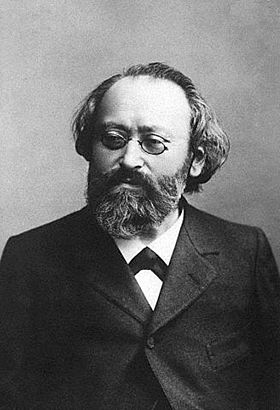
Max Bruch

Max Bruch

______

still under the spell of the captivating
Akiko Suwanai, it didn’t take me long
to search out this enchantress further

as a follow-up to the perhaps tonally
discomfiting Berg I earlier highly,
nevertheless, recommended, I found
this utterly thrilling Bruch

Max Bruch, a Late Romantic, a
composer of the full flowering of the
Romantic Age, before Brahms, for
instance, Impressionism and the turn
towards social grievances rather than
the merely personal, Karl Marx, and
the rush towards isms, Capitalism,
Fascism, Communism, even indeed
Impressionism – is famous for
especially his Violin Concerto in G
minor
, his first of three, and Kol
Nidrei
, a setting for the introduction
of a Jewish service, suggesting
Bruch might’ve been Jewish, which
he wasn’t

I’ve always been indifferent to the
Kol Nidrei“, perhaps because I’m
an utterly lapsed Catholic

but the Violin Concerto is something
else

listen

Richard

psst: compare the Bruch to the Berg
for powerful historical insight
into the evolution of music in
the West

“The Voice”‏

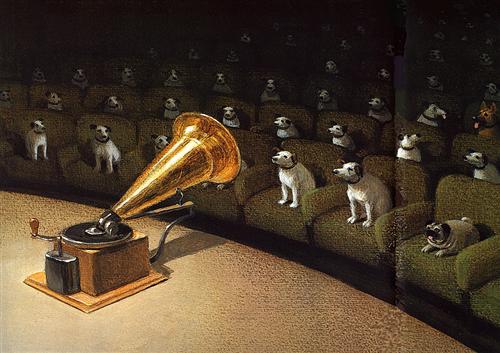
"Their Master's Voice" - Michael Sowa

Their Master’s Voice

Michael Sowa

_______

The Voice, a program which has gone
international from its roots in, of all places,
Holland, in 2010, sets out to find big talent
among its contenders

and several can really contend

the contestants are not necessarily local,
a Canadian, for instance, Leona Philippo,
won the Holland competition in 2012,
bravo Leona

the program has proliferated, counting
replications around the world, from, if
you can believe it, Afghanistan to
Australia, Croatia to Cambodia, Canada
to, even, Azerbaijan, I’m not alone in my
enthusiasm, music, it appears, binds the
world

blind auditions are held, wherein the
contestant sings before four eminent
judges whose faces are averted, but
who’ll individually turn should that
voice stir, excite, inspire

should more than one turn, the singer
must choose the mentor who’ll move
him, her, or them along, duos are
eligible, see here already for an
example

each judge ends up with twelve acts

in the battle rounds, the judges divide
their teams into couples, who’ll sing
the same song against each other,
leaving the team with six, judges are
allowed to steal two from the other
three teams who might’ve lost out,
after which the rules become too
byzantine for me to get into, you’ll
have to watch to figure it out, all
available on your computer

my pick of the UK battle rounds pits
Classical Reflection, ethereal twins,
against Emmanuel Nwamadi, a
chthonic, elemental force, they sing
Mike and the Mechanics’ – who,
honey – “The Living Years”

at “La voix”, from Québec, Dominic
Dagenais and Liana Bureau show you
how to incontrovertibly sing “Sing”

hey, as Liana would say, do it

wow, and wow

watch

Richard

Alban Berg Violin Concerto‏

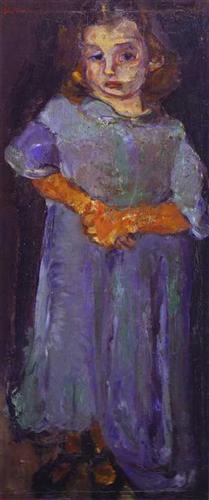
"Little Girl in Blue," - Chaim Soutine

Little Girl in Blue (c.1934-c.1935)

Chaim Soutine

________

though Apollo had offered the two
complimentary symphony tickets
he’d scored to my sister and my
mom, my mom bowed out and
suggested I, an adept, should
instead go along, though I needed
to know more about the content,
who and what would be on, no
one knew

meanwhile my sister, preferring not
to leave her husband alone, opted
to cede her ticket to Apollo so he
could accompany me

after some research, when I gushed
that Akiko Suwanai would be playing
Beethoven’s Violin Concerto in D
minor – his only one, I cried – Apollo
reconsidered, would, he said, come
along, my enthusiasm having struck
apparently a reverberant chord, a key,
maybe his D minor

once at the concert, to our surprise
and delight, my sister and her
husband, under the spell also of that
maybe bewitching key, had got rush
tickets for essentially, as it were,
a song, so that serendipitously we
all attended the superb performance
together

Dad does concert tickets too, my
sister exulted

Suwanai was transcendent, lifted me
from my seat at the very first touch of
her exquisite bow, I floated, though it
might’ve been also the magic chocolate
I’d bought at the corner, this is Vancouver
after all, known also, not inappropriately,
as Vansterdam

you’ve heard rapturous versions of
Beethoven’s Violin Concerto on at
least one of my earlier blogs,
Anne-Sophie Mutter’s there, Joshua
Bell’s
, but I couldn’t get any of Akiko
Suwanai’s renditions on the Internet

found instead for you this wonderful
Berg
, also his only violin concerto

Berg is of the Second Viennese
School, along with Schoenberg and
Webern, this is no longer Beethoven,
the advent of the First World War in
the Western world had fundamentally
altered everything, the arts were
reflecting this transformation, idioms
were abandoned in every creative field,
as well as in borders and forms of
government, rudiments were being
questioned, tested, see what Soutine
does, for instance, to traditional
representation above, to perspective,
colour, proportions

you’ll note that Berg’s Concerto
doesn’t stipulate a key, part of the
disintegration musical theory was
undergoing, twelve-tone music,
rather than the traditional eight,
was eliminating the subordination
of sharps and flats within scales,
atonality became dominant,
sounding a lot like the cacophony,
I think, of Twentieth-Century traffic

you won’t mistake however the
utterly Romantic sensibility beating
through Berg’s composition, midst
all the discord and the dissonance
you can’t miss his pulsing and
ardent heart, his wistful, dare I say,
heartstrings

there are two movements to the
concerto, the first representing life,
the second death and transfiguration,
Berg had written this, his last work,
for Alma Mahler’s daughter, Manon,
after she died of polio at the age of
18, Alma Mahler had been Gustav
Mahler’s wife, a musical giant, Berg
dedicated the piece, he wrote,
“to the memory of an angel”

Berg died later that same year,
Christmas Eve, 1935, he was 50

Richard

psst: the first part of the programme
had been a bust except for a
lovely piece for violin and koto

what’s a koto, I asked Apollo

it’s what you wear when you’re
coldo, he replied

a koto is a bit like a xylophone,
but with strings instead of
wooden bars, the performer
had dressed in traditional
Japanese garb for the special
Japanese occasion
“La voix”‏

Quebec, Canada’s distinctly French
province, produces disproportionately
for its size extraordinary talents

La voix“, it’s version of “The Voice”,
vaunts proudly and confidently
performances of the very highest
calibre

worth noting, as showings that could
make your day, listen to Karine and
Mathieu
rival Willie Nelson‘s original
version of the wonderful “You Were
Always on My Mind”

or watch what Annabelle and Lili-Ann
do to the indomitable Tina Turner‘s
“River Deep, Mountain High”

you tell me who’s hot

Sundays on TVA

Richard

Freedom

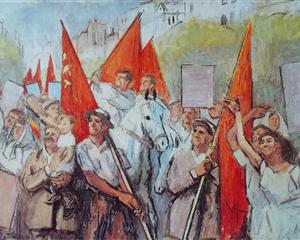
Alexandru Ciucurencu - "May Day in Freedom" (1958)

May Day in Freedom (1958)

Alexandru Ciucurencu

__________

two events took place after the fall
of the Berlin Wall, which have
remained cultural landmarks since,
nothing much comes close to their
historical significance, music to
declare a new world order

on December 25, 1989, Leonard
Bernstein conducts Beethoven’s
Ninth Symphony at the
Schauspielhaus in the former
East Berlin, it is remembered as
the “Freedom Concert” for having
replaced the word “Joy” in
Schiller’s poem during the “Ode
to Joy”,
the vocal novelty of the
Ninth, also its triumph, with the
word “Freedom”, a whim of the
conductor, not inappropriately

on July 21, 1990, Roger Waters
puts on The Wall“, Pink Floyd’s
20th-Century counterpart for the
Beethoven, the clarion call to do
away with barriers, fences, it’s
hard to dismiss its prescience
when the piece had been written
eight years earlier, seven years
before the fall of the Wall, as
though Pink Floyd had been
prophetic

like Beethoven had been, not
at all coincidentally here
, in
his own day

both concerts are beyond
description, extraordinary

just click

watch for unexpected guest
appearances in either of,
everywhere, the very highest
quality

Richard


February, 2015

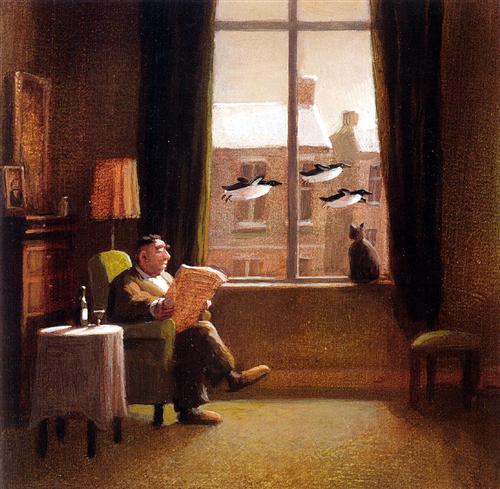
 "February" - Michael Sowa

February

Michael Sowa

_______

rather than a pictorial representation of
February, more snow over a picturesque
village, February in February is a
February of the mind, the mood, the
cocoon, the armchair, the paper, the cat
at the window watching penguins fly

or, extrapolating, watching pigs fly,
maybe

happy February

Richard

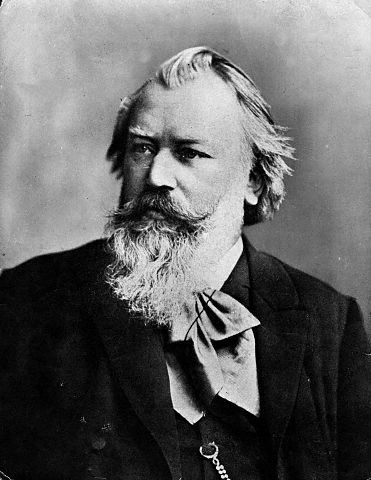
Horn Trio in E-flat Major, opus 40 – Johannes Brahms

Johannes Brahms

Johannes Brahms

__________

if I’ve been away from my perhaps too
abundant, Cornucopian indeed sometimes,
post of late, not as ubiquitous in your
hotmail, it’s because I’ve been following
not six but six and half courses at
Coursera, which have taken up a
considerable amount of my time, all of
them fruitful except for that half, which
apart from some smoke still from its
lingering ashes in the form of belated
comments on what were personally
pertinent fora, forums, I’ve committed to
the cellar of wasted money, despite its
being free, time itself being, according
to my father, hard currency

The Fiction of Relationship
Introduction to Philosophy
Revolutionary Ideas: An Introduction to Legal and Political Philosophy
Søren Kierkegaard – Subjectivity, Irony and the Crisis of Modernity
From the Repertoire: Western Music History through Performance
Philosophy and the Sciences

the half will remain unnamed for its
being, to my mind, inferior, not worth
not only recommending but even
mentioning, or, worth not only not
recommending but neither mentioning,
take your pick

but from “From the Repertoire” we were
offered this week to investigate Brahms’
Horn Trio in E-flat Major, opus 40
, entirely
worth looking into, I thought I’d pass it
along

it was composed in commemoration of
Brahms’ mother who’d died not much
earlier, a cello could replace the horn,
stipulated Brahms, even a viola for
fear of later horns being too brassy,
incommensurate with the intent of the
dedication however passionate some
of its musical argumentation, much
more abstract than that of Beethoven,
you’ll note, though still nevertheless
ever melodic

he has as well a more heraldic tone,
consequently, by extension
earthbound, rather than Beethoven’s
more transcendental ruminations
,
both remaining equal, however, ever,
in, in each his realm, their grandeur

Richard

the Tonys‏

the Tony Award Medallion

the Tony Award Medallion

______________

this is why I love the Tonys

this is why I love Broadway

this is why I love New York

just click

Richard

parsing art – John Caged‏

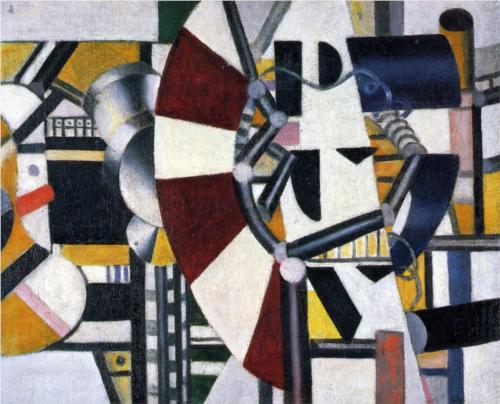
Fernand Léger - "Les éléments mécaniques"" (1920)

Les éléments mécaniques (1920)

Fernand Léger

_________

more John Cage, if you dare

just click

with, if you can believe it, Garry Moore,
I’ve Got a Secret“,
a trip down memory
lane

also ads for Winston, and Bufferin, very
Andy Warhol, thrown in, entirely the
1950s

Richard

parsing art – a response to my mother

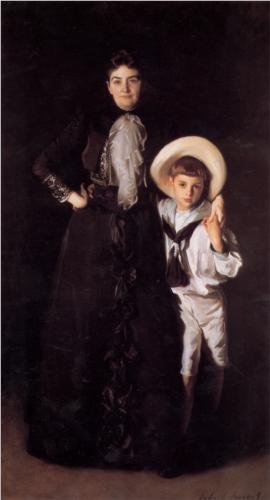
JohnSinger Sargent - "Mrs Edward L. Davis and Her Son Llivingston" (1890)

Mrs Edward L. Davis and Her Son Livingston (1890)

John Singer Sargent

______

about John Cage my mom writes,

“Hi Rick…..

When you called I had written the message but not sent it….I am trying again..

I cannot see people spending $100 or more and wasting almost 8 minutes of their time
to watch that crap…..

As for David Hockney…..well…..not my style….but for your sake I hope a lot of people like it…..

See you at 6 p.m……will give you enough time to digest what I said…..All my love….MOM….XXXX”,

most uncharacteristically, the last time
she used an epithet was when I landed
some Schönberg on her, which she
returned promptly and categorically,
that was some fifteen years ago, even
maybe twenty

bravo, Mom, for your robust opinion,
that’s what art’s about

but I’m reminded thereby that art is not
just for effetes, pretenders to arcane
insights, it’s for all of us, not getting it
is not necessarily our fault, sometimes
the artist is obtuse, even trite

what is true should be clear, I believe,
to everyone, which is why I ever adhere
to art, art cannot be anything other than
true, manifestly, else it falls apart

love you, mom

Rick

psst: if you’ve got quarters, please bring
some over tonight