Richibi’s Weblog

Just another WordPress.com weblog

Category: concerts to ponder

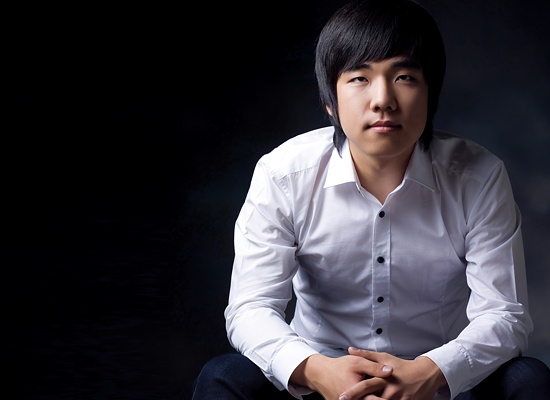
at the XVth International Tchaikovsky Competition‏ – Jeung Beum Sohn‏

 Jeung Beum Sohn

Jeung Beum Sohn

_________

in the second slot, on the second day,
Jeung Beum Sohn knocks the
competition to date right out of the
ballpark, his every interpretation is
not only flawless, but a revelation

his ostinatos, his agitatos, his
diminuendos, accelerandos, his
every stirring tremolando, are
precise, nuanced, utterly convincing,
his essential spirit more oracular than
merely ever only entertaining

can anyone win after such a
performance

I am impetuous, in my enthusiasm
I’ve promoted it seems already
undeserving contestants, all of
which have nevertheless excited
my undiluted appreciation, though,
apparently, ultimately unwarranted

it appears this competition is
holding out for utter stars,
wondrous elucidators of our
still profoundly influential cultural
heritage, in a manner I deem, and I
use the words advisedly,
determinedly transcendental

check it out

Richard

at the XVth International Tchaikovsky Competition‏ – June 16, 2015

Emmanuel Rimoldi

Emmanuel Rimoldi

__________

perhaps was I precipitous in my prompt
appraisal of a promising participant on
the first day of the XVth International
Tchaikovsky Competition, for every
other pianist, but two, was not
unequal to the plaudits I’d earlier
pronounced for this powerful
preliminary performer

it appears there are, indeed,
several

after an egregious error in her
Beethoven, a rhythmic miscalculation
that erupts like breaking wind at a
formal function, and needs to be
recovered by something, someone,
who will, which will, overwhelm the
unwelcome air, Maria Mazo quickly
rallies and delivers a Beethoven
you’re not likely to forget, followed
by a bouquet of other marvellous
concoctions

but Emanuel Rimoldi eventually
wins the day, June 16th, to my mind,
with a resplendent, and revelatory
Mozart, followed by other equally
dazzling interpretations

check them out

Richard

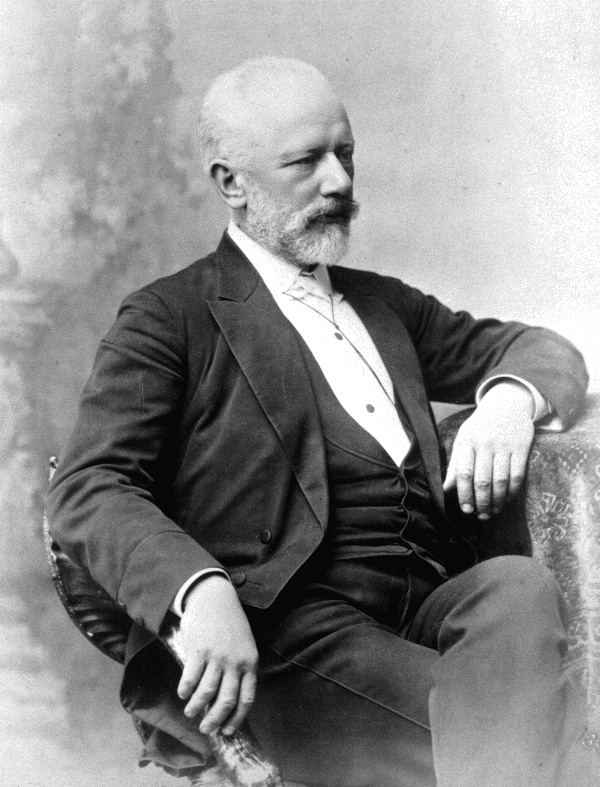
the XVth International Tchaikovsky Competition‏

Pyotr Ilyich Tchaikovsky

Pyotr Ilyich Tchaikovsky

(1840 – 1893)

________

my musicologist friend alerted me to the
fact that since the 15th of this month, and
onwards till the 3rd of July, the XVth
International Tchaikovsky Competition
is
on, at which point I raced to my position,
got a front row seat, for you as well
should you decide to join me, at the gala
opening
, check it out, performed in the
Bolshoi Hall of the Moscow Conservatory,
in, of course, Moscow, no less

you’ll be reminded of the monumentality
of Tchaikovsky, his melodic sense, his
emotional power, his subtlety

also Russia’s

the introductory “Capriccio”, conducted
by Vladimir Fedoseyev, is rousing,
probably the best you’ll ever hear, though
it should’ve been called “espagnol” rather
than “italien”, I’ve always thought, there’s
even a redoubtable tambourinist – how
Spanish is that – you’ll want to watch out
for, however far from Spain he might, in
his quenched enthusiasm, seem

Tchaikovsky’s “Mélodie”, op. 42, no. 3,
played in all innocence by a 14-year-old,
a cherub in the guise of already an angel,
follows

the concert suite from his “Nutcracker”,
mastered by a 13-year-old with the
command of a prodigy, after that

you’ll remember Daniil Trifonov from
the 13th Rubinstein Competition, which
he won, accompanying a soprano here,
but you’ll also see him bring down the
house with his last two movements of
Tchaikovsky’s iconic 1st Piano Concerto

why would they have left out the
thunderous, wonderful first, I wonder

Daniil also won the last Tchaikovsky
Competition, the 14th, also in 2011

most of the program is in Russian,
with some considerations for a
perhaps interested English audience,
thanks to Valery Georgiev, a conductor
of considerable note, not at all the
vagrant here that he seems

my musicologist, who speaks everything,
understands the Russian, but it’s not
difficult to understand, the message
is one of harmony and peace

the opposite of war is not peace, they
are saying, it’s art, and specifically
here music, these are here actions to
unite, beyond borders, beyond creeds,
beyond even transgressions

they signal out Van Cliburn, who plays
all, incidentally, of Tchaikovsky’s 1st

I signal out Eurovision, the Tchaikovsky
Competition
, now in its XVth year

watch

Richard

the flow (with a representative performance of Bach)

"The Kitchen"  - Pablo Picasso

The Kitchen (1948)

Pablo Picasso

________

having forgotten that I’d left a candle
in the kitchen, I thought, is that what
you’re going to strike me with,
Alzheimer’s

and then I thought, who’s you

certainly not some Creator with a
white beard and a vengeance, or
even, for that matter, without a
vengeance, even empathy, a
buddha, a guardian angel

no, “you” would be the order of
things, the flow

I spread my arms, and ceded to
it

to be one with the flow, I thought,
that’s the Force, there was no
getting around it

to be at one with the Force,
listen

then I remembered the chicken
drumsticks in the ginger cherry
sauce I’d left in the oven

which turned out nevertheless
perfect

Richard

psst:

for perfect coconut rice,
1 cup of coconut milk,
available in most high-end
food stores, one of water,
one of rice, of course, your
pick, bring to a boil, lower
heat, simmer covered for
45 minutes, an hour, or as
soon as you remember
you left it on the stove,
turn off heat, add a
tablespoon of butter, lime
juice

serve with chicken
drumsticks in ginger
cherry sauce

and, of course, wine

“fried bread” – me

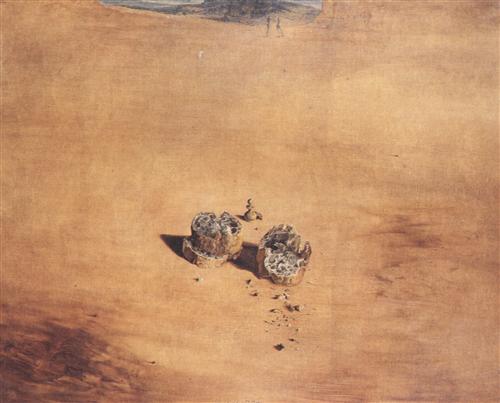
  "Two Pieces of Bread Expressing the Sentiment of Love" - Salvador Dali

Two Pieces of Bread Expressing the Sentiment of Love (1940)

Salvador Dali

_____

for my mom, who wanted the recipe

fried bread

to

1 1/2 cups of flour, pick a flour, any
flour

add

1/2 tsp salt, and
1 1/2 tsp of baking powder

I would think that eliminating salt
would give you merely a blander
bread, therefore salt is not
essential

and not adding baking powder
would simply produce a flatter
fry, therefore, theoretically, also
optional, but I’ve yet to test
these suppositions

though the recipe calls for 1 cup of
warm water, I’ve found that so much
water added to 1 and 1/2 cups of
flour makes the dough too limp and
unmanageable, so I recommend

1/2 cup of warm water

though water density, hard, soft,
probably depends on where you live

knead in more water by degrees if
your dough remains too dry

I also added

1/4 cup of grated Romano cheese, and
1 ample tbsp of fresh thyme

to the mix last night, though I’d
considered fresh basil, let it rise 20
minutes in a warm spot under a dry
cloth while I watched Sweden win
Eurovision 2015 from Vienna, rolled
out circles between two sides of a
piece of sealing wrap, folded over,
with extra flour between if needed,
the wrap helps to not make a mess
of your counter, made three large
rounds of dough out of my mix for
hearty slices, though less robust
portions would be, I’m sure, just
fine

fried each patty in up to

1/4 cup of oil, avocado had been
recommended, also coconut or
grape seed since, but I introduced
it only as needed not to overwhelm
either myself or the pan

flipped the cake once when the
top was becoming plump and
seemed to be breathing, when
the underside had become
golden brown

let the other side fry till equally
crusty and golden

had some last night with
Kaiserschinken, Kaiser’s ham,
and a firm Italian cheese,
Parrano Robusto

also a glass of cheap white wine

delicious

Richard

on watching broth boil‏

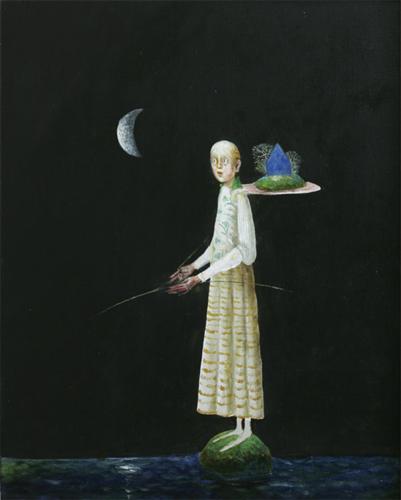
 "The Night of the Water Searcher" -  Stefan Caltia

The Night of the Water Searcher (2005)

Stefan Caltia

_______

though my friend whom I’d advised to
watch water boil probably didn’t heed
my suggestion, on the grounds that
she didn’t have the patience, much
as people who won’t do yoga do
despite the evident benefits, not
even myself for that matter, I’ve
continued to watch not only water
boil, identifying its myriad
permutations, but broth as well for
its incidence in homemade soup,
rice and, inadvertently lately, hot
toddies

before it erupts into a boil, a froth
will foam forming miniature bubbles
each the colour of rainbows until
they pop from the pressure that’s
built beneath them

Annie Lennox was on, I’d purchased
the video from iTunes of her latest
superb concert, to spend a quiet
evening while the chicken bones,
herbs and vegetables simmered

I haven’t yet even considered
watching anything simmer though,
certainly not yet broth

therefore Annie Lennox

her concert, “Nostalgia“, was a
recollection of blues greats that each
and every one of them had meaning,
roots in my, our, experience, songs
like Georgia“, “Summertime“, “It’s
Just the Nearness of You
“, “You
Belong to Me

I broke down at I Can Dream, Can’t I“,
needed lots of Kleenex

a song is a milestone, anchoring us to
our memories, to who we were then,
each time we hear it, over and over
again, like a chronological refrain,
informing us, each time, who we’ve
become, who we’ve been, if you don’t
remember the time or the place, each
fading in the distance, you remember
the feeling, how you incorporated the
meaning, made it fit you and your
particular ache, made you believe
this song must’ve been written for
you, however outlandish, however
improbable the idea, however
nevertheless real

Proust did the same with a crumpet,
a “madeleine”, dipped in tea, which
opened up for him remembrances
of afternoons at his grandmother’s
imprinted unconsciously on his
senses, and revived inadvertently
by a distant, but unexpectedly
related incident, a time warp

such is also the magic of music,
a means of keeping your soul
together

such is also art

Richard

psst: my eventual cheeseburger
soup, if you can believe it,
with ketchup, mustard, and
even dill pickles, turned out
to be delicious, a wonderful
accompaniment to an
evening of cozy, if
bittersweet, reminiscences

on odes

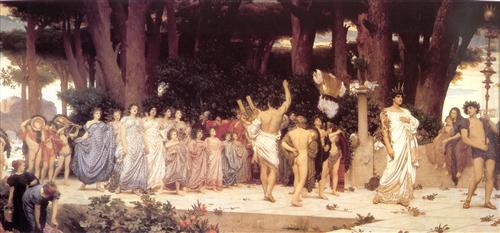
                          "The Daphnephoria" - Frederic Leighton

The Daphnephoria (c. 1875)

Frederic Leighton

________________

odes, with their suggestion of music
– despite a history of merely words
spoken in the intervening interim,
counting on meaning and rhythm
without music’s attendant tonality –
go back to the Greeks, the Seventh
Century, BCE, Sappho, for instance,
one of history’s most honoured
women poets, surely quite an
achievement for her in an age of
predominant, indeed
disenfranchising, masculinity

the ode was meant to accompany
tributes to people, events, things,
thereby acquiring an element of
acclamation and praise within its
dimensions, Pindar, ca 552 – 442
BCE, wrote odes for heroes of the
original Greek Olympics, for
instance

by the time of Horace, 65 – 8 BCE,
odes had become stylized,
independent of music, here’s one,
not inappropriately in this season’s
vernal context, to spring

odes remained spoken throughout
their resurrection in the wake of the
rediscovery of the Ancient World
during the Renaissance, onwards
through some famous Romantic
ones, Shelley, for instance, Keats,
up to even this one, by Stanislaw
Barańczak
, which I found in the
New Yorker
, April 20th, a gem, I
think, and in the very spirit of our
Age of Irony

Plywood

O plywood, second best to the real stuff,
believe me, one day I will say “Enough”

to my stooping shoulders, my slouched spine;
my sloped shape and your stiff boards will align,

and you’ll see how my backbone will unbend
and I’ll be standing straight until the end

of my makeshift but rectilinear
prayer, one stiff-backed as a chest of drawers

when we shove heavy furniture around;
I will rise from the dead, though on what ground

and which I, I don’t know; I’ll stand erect,
though my vertebrae’s hierarchic sect

won’t outlive plywood, no, it just can’t win
against that vertical eternity, so thin

and yet so sturdy in its ersatz pride;
as if the moon had shown me its dark side,

I lean, my ear glued to a cupboard’s back,
and I can hear its hollow and exact

hymn to its own cheap immortality;
no, wait, I still can straighten, still can be

square with this upright world (you knew I could),
just as plumb as four planks of real wood.

Stanisław Barańczak

(Translated, from the Polish,
by Clare Cavanagh and the author.)

__________

though you mightn’t’ve caught an “Ode”
in the title, the clue to its essence is in
the initial “O”, an acclamation

and yes, “O, Canada” is therefore also
an ode, as would be most anthems

incidentally Beethoven put the music
back into the form with his incendiary
use of Schiller’s poem for his vocal
triumph in his ninth Symphony, An
die Freude
“,
the Ode to Joy,
incomparable in this rendering for
an improbable 10,000
, yes 10,000, just
click

Richard
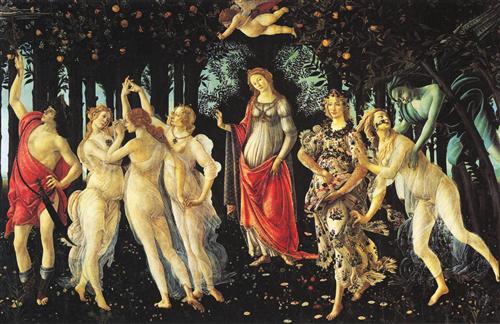
Beethoven’s tribute to spring

Sandro Botticelli - "Primavera"

Primavera (1478)

Sandro Botticelli

_________

if there’s a musical work to perform for
spring what Botticelli‘s Primavera
does with painting, celebrate it, that is,
for the ages, it must be Beethoven’s
“Pastorale”, German for “Pastoral”,
Symphony, usually referred to thus,
with the accent on the last “a”

the composition is expressly narrative,
Beethoven even sets the scene for every
movement, five of them

1 Awakening of cheerful feelings upon arrival in the countryside
2 Scene by the brook
3 Merry gathering of country folk
4 Thunderstorm
5 Shepherd’s song; cheerful and thankful feelings after the storm

he is manifestly using music as language,
descriptive language, you can nearly hear
the flowers grow, you can most definitely
imagine them, you bristle at the crack of
thunder

the subject isn’t specifically spring, but
the spirit is undeniably so, the spring of,
indeed also, the spirit, the buoyancy of
youth

it’s 1808, Beethoven is at the height of
his euphoria, his admiration, and
celebration, of physical nature, he’s
sowing his wild oats

later he’ll address the metaphysical,
but for now he’s still bursting with
unmitigated life, his spring

Richard

psst: see also his “Spring” Sonata, opus 24,
for still more, though less familiar,
vernal, purportedly, magic, Beethoven
didn’t name the sonata, his publisher
did, which is why the “Pastorale”
Symphony
sounds more springlike
than this other more direct, apparently,
offering

which had never been there, essentially,
Beethoven’s primary, anyway, intention,
however lovely the eponymous, the
titular, work
might have in comparison
proven to be

you be the judge, listen

R

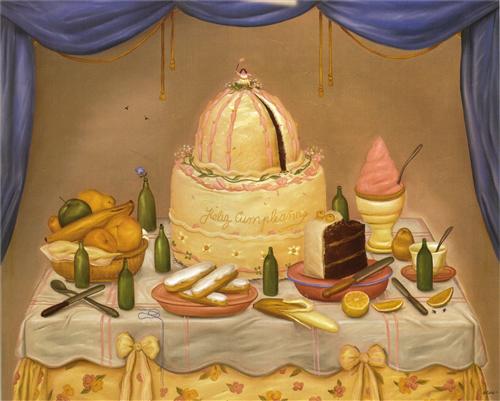
a birthday wish

  "Happy Birthday"- Fernando Botero

Happy Birthday (1971)

Fernando Botero

_________

a friend of mine was eighty today,
she’s gone off to London to celebrate,
she didn’t want anyone to make a fuss

a fuss, I said, it’s your eightieth birthday,
one should make a fuss, she’s gone to
London anyway

from this side of the ocean, and indeed
from this side of the continent, it seemed
nevertheless remiss of me not say
something

but as in Hallmark cards, sometimes
the message is better in someone
else’s words, in this case Bob Dylan’s
but sung by Joan Baez, just click

May God bless and keep you always
May your wishes all come true
May you always do for others
And let others do for you
May you build a ladder to the stars
And climb on every rung
May you stay forever young
Forever young

May you grow up to be righteous
May you grow up to be true
May you always know the truth
And see the light surrounding you
May you always be courageous
Stand upright and be strong
May you stay forever young
Forever young

May your hands always be busy
May your feet always be swift
May you have a strong foundation
When the winds of changes shift
May your heart always be joyful
May your song always be sung
May you stay forever young
Forever young, forever young
May you stay forever young

Bob Dylan

happy birthday, dear friend, may you
live forever

Richard

Paganini’s First Violin Concerto – Akiko Suwanai‏

Jean Auguste Dominique Ingres - "Niccolo Paganini" (c.1819)

Niccolo Paganini (c.1819)

Jean Auguste Dominique Ingres

_____________

for Apollo, who alerted me to my error

having egregiously misspelled “Akiko”
in my recent commentaries about Ms
Suwanai, since, however, corrected, I
can only heap upon her greater praise
now for again an immaculate
performance of, this time, Paganini’s
First Violin Concerto
, itself an event,
as atonement

not only does she play this thrilling
masterpiece
with precision and
consummate artistry, this is the
performance with which she wins
the Tchaikovsky Competition, the
one Van Cliburn had secured so
illustriously back in the late Fifties,
at the height of Soviet Communism,
she in 1990, moments only after its
fall, a full, now, 25 years ago

it astounds me that such a talent
would’ve taken so long to reach my
ears, which have been attuned to
Classical music and its
peregrinations for as long as I can
remember

then again there was no ticker tape
parade for Ms Suwanai when she
triumphed
, the world has changed,
it seems such excellence is no longer
so universally paraded, not even
much advertised

the Paganini Violin Concerto was
composed around 1818, late
Beethoven, early Chopin, Paganini
defines for the violin the Romantic
Period, what Chopin did for the piano,
Beethoven had given them the push

if you can get past your astonishment
you’ll note that the foundation of the
piece
is Classical, tight tempi, tonality,
no discordant notes, and repetition
always of the themes, still the triple
pillars of our understanding of music,
its Trinity, despite some strong forays
into their deconstructions, see, for
instance, the haunting George Crumb

what Paganini adds to Classicism is
personality, Romanticism, same as
Beethoven did, and at about the
same time

aristocratic formality was giving way
to the voices of the crowd, some highly
articulate, representative, formidable,
as the shackles of servitude fell with
the French Revolution and human
rights became central, and
indomitable

Richard