Richibi’s Weblog

Just another WordPress.com weblog

Category: concerts to ponder

the wall

colors-for-a-large-wall-1951.jpg

   “Colors For A Large Wall (1951)

       Ellsworth Kelly

          __________

talking about walls, isn’t it only a few
years ago we were tearing one down

here is Roger Waters and several
other outstanding guest artists, in 
very Berlin, July 21, 1990, celebrating 
its demise

a little earlier, C***mas, 1989, only
moments after East Germans had 
been allowed to visit West Germany,
essentially giving way to the 
dissolution of the barrier, Leonard
Bernstein conducted Beethoven’s
Ninth Symphony, changing the 
word “joy” from the title of Schiller’s 
poem, appropriated by Beethoven 
for his great fourth choral movement, 
to “freedom”, giving new meaning, 
and new life, and new inspiration,  
to Beethoven’s always resounding 
nevertheless masterpiece

how soon we’ve forgotten

Richard

psst: let’s paint the wall

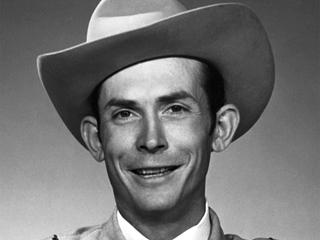
“Hank Williams: The Show He Never Gave”

hank-williams-1

                        Hank Williams

                              _______

halfway through The Last Picture Show
recently, a celebrated movie from the early 
Seventies I was watching, about the early
Fifties, I was sidetracked by the Hank  
Williams soundtrack till I was out and out 
stopped by its fervent Cold, Cold Heart 

I put the film on pause 

another love before my time, I warbled,
made your heart sad and blue, and so 
my heart is paying now, I wallowed, for 
things didn’t do, in anger unkind words
were said, I rued, that made the teardrops 
start, why can’t I free, your doubtful mind, 
I fretted, and melt your cold, cold heart 

but I wanted to hear Hank Williams do
it too, live if I could, and lo and behold 
got it

but listed as an option among other 
options nearby was also a longer  
feature purporting to be a 
representation of a concert he 
never  gave the night, December 31, 
1952, he died, the movie is called,
not inappropriately, Hank Williams:
The Show He Never Gave

the actor who plays Williams steps
right into his shoes, he’ll break your 
heart, you’ll need a lot of Kleenex

one of he best film biographies I’ve 
ever seen 

watch it

Hank Williams died of a heart attack
on the night of December 31, 1952

he was 29

may he rest in everlasting peace

Richard

in recognition of Prince

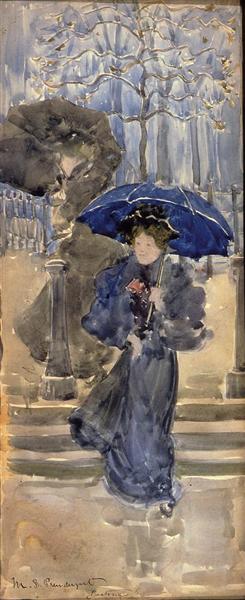
ladies-in-the-rain.jpg!Large

Ladies In The Rain (1893-1894) 
 
         Maurice Prendergast
 
                _____________
 
 
trying to find a musical representation

of me for a love recently lost, but with
whom the interaction is nevertheless
cordial, for a letter I was writing him,

cordially, and which I would sign me,

I hit upon Prince’s Purple Rain“, I never  
meant to cause you any trouble, never 
meant to cause you any pain, perfect, I 
thought, I only want to see you laughing 
in the purple rain
 
how else can one love
 
I remembered that Prince was a hero, 
an angel, a prophet, an epiphany of the 
late Twentieth Century, some voices are
indelible, incandescent, illuminating,
avatars of love
 
 
note the pace of Pink Floyd, the 
hypnotic, messianic even, tempo,  
note the elements of the prophet


Richard


“Rhapsody on a Theme of Paganini” – Rachmaninov‏

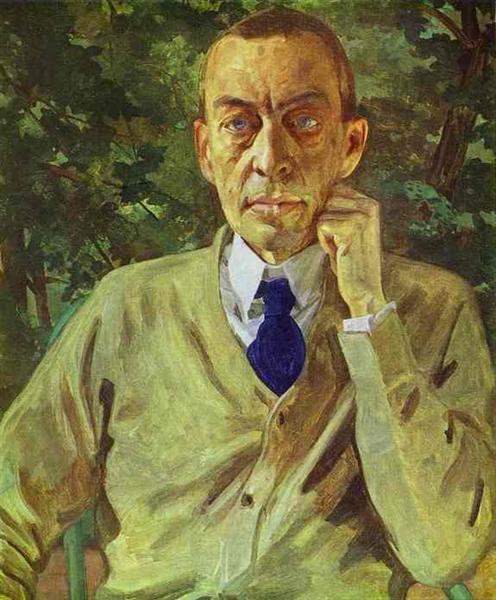
portrait-of-the-composer-sergei-rachmaninov-1925.jpg!Large

 
                                      Konstantin Somov
 
                                              _________
 
 
no one plays Rachmaninov better than
Rachmaninov, of which we’ve got aural
representations though no visual live
performances
 
but here’s a Rhapsody on a Theme of 
Paganini to knock your socks off, in 
all its kinetic, electrifying energy
 
you might remember Daniil Trifonov
from my coverage of the XVth 
who has gone on to achieve a 
stunning international reputation, 
entirely, I submit, deservedly
 
watch him set the piece on fire, at 
pace I find faster than most, with 
nevertheless all the requisite 
dexterity, indeed prestidigitation,  
necessary to weave the intricacies 
of Rachmaninovian sound into 
apposite magic, that magic 
Rachmaninov would surely ‘ve 
looked for
 
check them both out
 
 
Richard

“Easter Oratorio”, BWV 249 – Johann Sebastian Bach‏

ascension-of-jesus.jpg!Blog

 
                                    El Greco
 
                                      ______
 
 
                        for Martha and Chris, who still go to Easter 
                        Mass, and whom Martha calls therefore  
                        relics 
 
                        and for Staf and Annemie, who live in 
                        presently beleaguered Belgium, and 
                        who must, at this time of distress, 
                        need our prayers
 
 
having long ago lost track of the Christian
calendar, I only this week found out 
Sunday ‘d be Easter, therefore Friday
Good Friday, not that this would much 
change my daily routine, but it set me 
perusing pertinent art, I knew I could 
count on Bach for an oratorio, and sure 
enough I found it
 
an oratorio, as I earlier explained, is an
opera without sets or costumes, usually
associated with religious services, but 
Bach had one for every Sunday and 
every Christian feast day
 
after an instrumental introduction, 
reminiscent of Handel, I thought, 
Bach’s “Easter Oratorio” slips into a
lovely adagio, notable for its exquisite
oboe obligato, where the innocence 
and purity of that wind defines the 
movement
 
the ceremonial pomp of the earlier 
section then returns to include 
chorus expressing triumph, the 
realization that the Lamb of God 
has returned
 
but soon enough, Mary, the soprano 
of a quartet of singers, each of the 
four singing according to their own – 
alto, Mary Magdalene, tenor, Simon 
Peter, bass, John the Evangelist  
voices, and accompanied by an 
utterly transcendental transverse 
flute, sings 
 
      “My soul, the spice that embalms 
       you shall no longer be myrrh. Only
       a crown of laurels can soothe your 
       anxious longing.”  
 
and knocks your socks off 
 
 
this week at market, stuffing my 
organic red pepper and a bag of 
handcrafted chips, barbecued,
designer, into my bagat their 
express counter, collecting my 
coins, my receipt, my change 
purse, my wallet, and last but not 
least, of course, my self, I sensed 
something of mine drop, looked 
dutifully aroundcould find 
nothing, wondered, and made to 
go
 
excuse me, sir, I heard behind me, 
you dropped something
 
a little boy, an urchin, blond hair, 
blue eyes, right out of Charles 
Dickens, I thought, eight maybe,
nine, held out a quarter, apparently 
mine
 
why thank you, I replied, enchanted
 
and you know what, I asked, I’m 
going to give this back to you, and 
put the quarter back into his hand
 
the last time I did something like 
that, I saw an angel, I remembered
but that’s another story
 
thank you, he said back, gleaming
with the maturity of his interaction, 
though I’m not sure he wasn’t 
himself in fact also a very angel
 
 
later I thought I should’ve sent him 
for a crème brûlée, a piece of carrot 
cake, a pastry, or something, and 
berated myself for the paucity of 
my recompense
 
 
but there is a link to Easter in my 
tale, the idea of hope, revival, 
regeneration, in the possibility of
goodness reentering the world, a
task inherited by the children, and 
whom we must not lead astray
 
apart from its more traditional 
associations, for perhaps the less 
observant, people of other creeds 
and faiths, if Easter means anything 
still, or has ever, it is about just that, 
hope, revival, regeneration, nor must 
we ourselves betray those ideals   
 
happy Easter 
 
 
Richard

Piano Concerto no 1, opus 15‏ – Beethoven

 "A New Year's Nocturne, New York" - Childe Hassam

A New Year’s Nocturne, New York (1892)

Childe Hassam

_________

for the past several days, I’ve been
humming the first two movements
of Beethoven’s First Piano Concerto,
the opus 15, being carried away by
the exhilarating energy of its
initial, adamant and authoritative,
dazzling and irresistible “allegro
con brio”,
followed by the melting
beauty of its contrasting counterpart,
the meditative and enchanting “largo”,
the final “rondo – allegro sostenuto”
is coming along, but by that time I’m
out of wind and lost in wonder at
Beethoven’s already accomplishment,
the final movement is like the
strawberry on top once I’ve had the
prerequisite cheesecake, verging on
anticlimactic, however thrilling

his First is actually his second piano
concerto, written in 1797, but
composed after his opus 19, written
in 1787, not published until 1801,
either way a new voice was evident

Beethoven’s music was written for
a larger stage, no longer the salons
of the aristocracy, nor, for that matter,
the pews of the fragmenting Christian
Church, the growing middle class
was becoming able and willing to
spend and splurge on frivolities and
entertainment, theatres, concert halls
were popping up, and prospered

Beethoven had to dazzle a
heterogeneous crowd, no longer
just a circle of familiars

listen

and watch, Leonard Bernstein is
spectacular

this is my New Year’s Eve Vienna
performance no matter who is
doing it there this year, nor, for
that matter, that it wasn’t even
performed for New Year’s Eve,
for me, it catches fire, inspires,
it is my New Year’s resolution

I hope it’ll do the same for yours

cheers

Richard

December, 2015‏

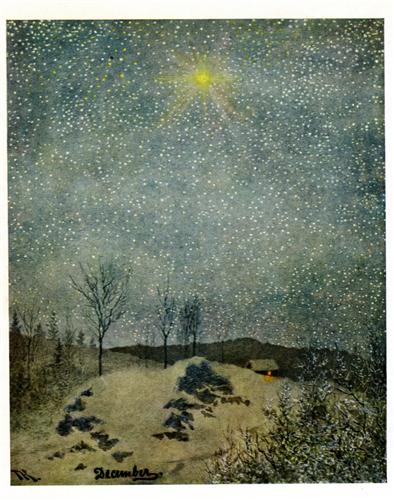
"December" - Theodor Severin Kittelsen

December (1890)

Theodor Severin Kittelsen

__________

for Susan

several years ago, a friend of mine
invited me to a concert, Sir Edward
Elgar
‘s The Dream of Gerontius“,
to my mind, a double mountain to
cross, both English and ceremonial,
this is not music you can dance to,
nor even dream on, but music that
demands your allegiance, as well
as your attention

to my mind English music, nearly
an oxymoron, remained stagnant
from Purcell, 1659 to 1695, to the
Beatles
, 1960 to 1970, with very
few exceptions, never managing,
mostly, to hold, even, a tune

ceremonial music suffered much
from its rigid partisan bent,
whether political or religious, try
singing La Marseillaise or
The Stars and Stripes if you’re
not of those nations, you are
instantly sidelined, a mere
spectator, try How Great Thou
Art
at a party, however
inspirational

but the ticket was free, my friend
couldn’t think of anyone else she
could invite who’d enjoy the show,
she’d received the tickets in a
bundle

Gerontius, an old man – you’ll note
the Greek root, geron, as in
gerontology” – is dying, fears the
other side, friends comfort him and,
in particular, a priest sends him on
his way, that’s act one

act two, he’s on the other side,
wherein the dream of being on the
other side, should he still be alive,
or the actuality of being on the
other side, confront him, have I
died, he wonders

I could tell you something about
that

an angel appears to lead him to,
the programme boasted, no less
than God eventually, in a burst,
for the occasion, of musical
pyrotechnics

well, I wondered, let’s see what
they’re going to do with that

it was unforgettable, though my
friend was somewhat more
equivocal, perhaps not as intent,
quite yet, as I was, about meeting
her divine

in search of something lately to
commemorate the several recent
worldwide atrocities, I quickly
settled on the only work I could
think of, apart from anything,
of course, by Bruckner, to mourn
appropriately

I found this extraordinary production
from no less than London’s St Paul’s

though not an oratorio, according
to the composer’s strict intentions,
Elgar‘s The Dream of Gerontius“, a
concert piece, is played here in a
church, an Anglican, indeed,
cathedral, despite the flagrantly
Catholic story being told, Elgar had
converted to Catholicism, the piece
transcends, however, religions

an oratorio, incidentally – not to be
confused with Ontario, the Canadian
province – is an opera conceived
without sets or costumes, usually
associated with significant religious
occasions

the text of “Gerontius” is taken
from a poem of Cardinal John
Henry Newman
, 1801 to 1890,
a Catholic convert himself, only
recently beatified, as a matter
of fact, not yet, however, for
insufficiency of miracles, it
would appear, canonized

The Dream of Gerontius is
Cardinal Newman‘s retelling of
Dante‘s Divine Comedy“, our
original tour guide through
Purgatory, Heaven and Hell,
Newman‘s take on it is
particularly poignant, Elgar‘s
musical accompaniment not
any less

the conjunction of divine,
composer, sacred venue and
superior performers is an
extraordinary occasion,
despite, not least, a
scratchy recording, the
experience here is
profound

bring your solemnity

Richard

by the way: December is the end of
the year, 2016 is already act two, are
you ready to meet your own God/dess

what’s happening in Poland

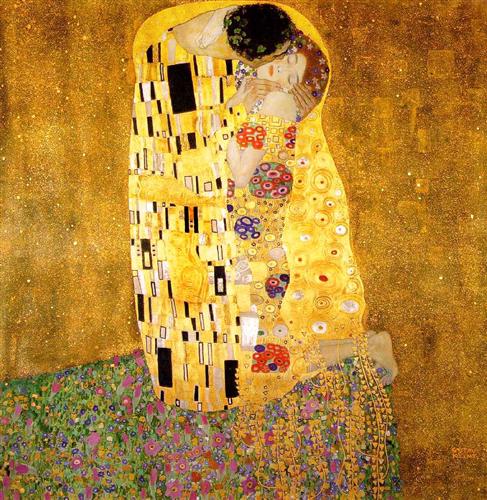
"The Kiss" - Gustav Klimt

The Kiss (1907-08)

Gustav Klimt

_______

last night, most unexpectedly,
someone I know sent me this, I
wondered if it was because of
the music, the message, or the
performance, consequently I
assumed everything

Mateusz Ziółko won the Voice
of Poland
contest in 2013, it’s
fun, despite the language
barrier – the adjudication being
all in Polish – to watch also,
during the evaluation, the judge
in blue fall apart, come entirely
undone, be unabashedly smitten,
from nearly the very first note of
this riveting audition, then spend
the rest of the show trying to get
herself back together again

much as I did, in fact, without
a camera

quiver too, enjoy

Richard


“Let’s Face the Music and Dance”‏

"Hot Jazz" - Frank Kline

Hot Jazz (1940)

Frank Kline

_______

having watched a superb interpretation
of this classic Nat King Cole number on
“So You Think You Can Dance” recently,
a show I havent missed since it started,
I went looking for a performance of the
song I could sink my teeth into, and
Fred and Ginger, however wonderful,
could not give me the immediacy I was
intent on discovering, I needed words,
not action, “Let’s Face the Music and
Dance”
from the heart

though I’d heard of Diana Krall, I hadn’t
anywhere yet identified her, if ever I’d
even heard her

she took my breath away, knocked my
socks off, I want to go to Rio, where
she sang this song, just click

once I’d heard this piece on free Internet
video, I ran, didn’t just walk, albeit on the
comfort of my own sofa, to iTunes and
bought the whole show for what turned
out to be essentially a song, $4.99
Canadian, wow

turned out I could’ve got it for free as
well right there by running instead to
Google, had I not been so impetuous,
smitten

Live in Rio is a revelation, and I don’t
even like jazz, but I liked this show
enough to make me want to fly to Rio,
make my own Bossa Nova, maybe even
meet my own Ipaneman

though Diana Krall, incidentally lives
right here in Vancouver, she says

note, in passing, the connections to
Classical music, you’ll want to count
tenuti, for instance, and rubati,
accelerandi
and rallentandi, while
you’re at it

note also the Classical imperatives,
tonality, tempo, and repetition, which,
you’ll find, haven’t much changed in
the 21st Century, though rhythm is a
lot more fluid, flexible, now, not so
rigid

the group is a variation on the string
quartet, now comprising double bass,
guitar, percussion, and piano, with
voice thrown in

an orchestral back up makes us ready
for a concerto, where here we have a
set of independent pieces held
together, however solidly, by mere
mood

and, of course, Diana Krall’s vocal
and interpretive magic

listen, be smitten

Richard


“Il Silenzio” – Nini Rosso‏

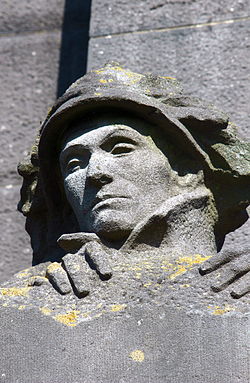
the Yser Memorial - Nieuwpoort, Holland

the Yser Memorial

Nieuwpoort, Holland

___________

the year before last when my mom and I
were in Belgium, we stayed at a wonderful
bed and breakfast, Ter Brugge, in a place
called Jabbeke, a village near Bruges, our
intended sightseeing destination, cause
I’d read in the prospectus that they served
fresh eggs from their very own chickens in
the morning, and where there turned out to
be fresh fruit also from their very own
orchards

not to mention the hearty, convivial
welcome in the manner of the countryside –
the restaurant across the street, five stars
nevertheless, however improbable in so
nestled and remote an area, even let us
bring back cash instead of the unaccepted
credit card we were proffering, and wouldn’t
accept a compensatory tip when the next
day I returned to oblige

try that in your own urban back yard

more companionable still were our hosts,
Staf and Annemie, who’d faultlessly drive
us several kilometres away to the bus stop
every morning to the city, and pick us up
across the street there every night, so
we could spend, without impracticality,
each day in Bruges

and every morning we’d meet up with a
couple from England as we waited, who
were staying in a trailer park nearby,
and who’d trek to Ypres by bus to honour
their countrymen who’d died there

somehow we never thought, my mom
and I, of going to either Ypres or
Passchendaele, despite our, especially
her, particular interest

we learned from them that every day,
every day, however improbably, since
the end of the First World War, there is
a commemoration to honour the fallen
soldiers

today I learned that in a cemetery near
Maastricht in Holland, every single fallen
soldier there has been adopted by a family
who’ve been minding their graves ever
since

makes one wonder about our own
beloved

on Liberation Day each year, May 5th,
throughout Holland, there is a formal
commemoration at the end of which,
since 1965 when it was commissioned,
someone plays Il Silenzio

listen

Richard