Just another WordPress.com weblog
Category: Beethoven
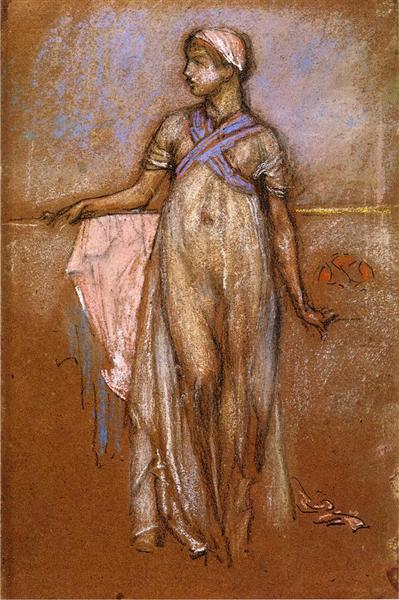
_____________
a trio is a group of three instrumentalists,
most often a piano, a violin, and a cello,
in our Western musical tradition
but it is also a musical form, like a waltz
is, or a prelude, or a nocturne, a trio is
a sonata, essentially, but written for
three instruments, not one, nor two,
consisting of more than one segment,
or movement
though I’ve presented trios as trios to date,
sonatas for three instruments, here’s a piece
for three instruments but in one movement,
though segmented, admittedly, as variations,
see above, a similar collection of rhythms
and styles, brought together by a common
essential element, a game audiences played
back then, and still do even now, trying to
distinguish the individual variations, before
falling prey to their enchantment
R ! chard
_________
the best way to sharpen your aesthetic pencil
is always to put one thing up against another,
then decide which you like best, the outcome
is never right or wrong, it is quite simply a
function of your aesthetic sensibility, the
more you exercise that taste muscle, holding
one element up against another, to compare,
the more you develop an informed, if not ever
conclusive, opinion, which develops eventually
into, if not authority, at least wisdom
what do you want to be when you grow up,
I asked myself in my very early teens, I
want to be wise like my grandmother, I
answered, have I reached my goal, you
tell me, though it is still, and ever will be,
my quest
Beethoven’s “Archduke“, also a trio, his
which do you like best, there is no correct
answer, but your choice will tell you a lot
about yourself
enjoy
R ! chard
________
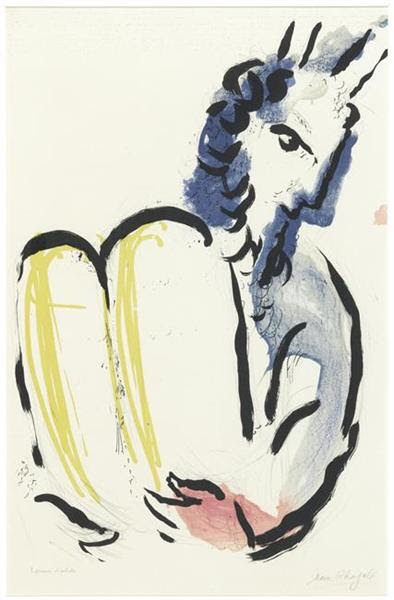
Beethoven’s Opus 111 is, to my mind,
the equivalent of the Sermon on the
Mount, or Moses’s rendering of the
Ten Commandments, see above, in
our post-Christian world, the world
where God is dead and where we’re
all left to our own devices for better
or for worse
Beethoven confronts a Listener,
who is, or is not, there, pleading
for meaning, purpose
the first movement is rebellious,
despite, ever, his reverence for
his abstract Interlocutor, bowing
before, heeding, this self-anointed
Adjudicator, the Deity we fashion
for ourselves
we are witness to this interchange
the second movement is more
subservient, pleading more
rationally, less explosively, his
case, we hear this too
there are only two movements,
dichotomies, war, peace, man,
woman, chaos, order, none of
them a choice
Beethoven says to exist, to be,
itself, encompasses its own
glory, that is our grace,
whether or not there is a
hereafter
R ! chard
psst: thank you so much for your
participation, however
intermittent, in my Month
of Sonatas, I am not only
grateful, but honored, by
your presence
_______
from the very first few notes of Beethoven’s
we understand we’ve entered an entirely other
reality, the melody is unorthodox, not a lyric,
but, talking against the grain, the beat,
become a sentence, we are witness to
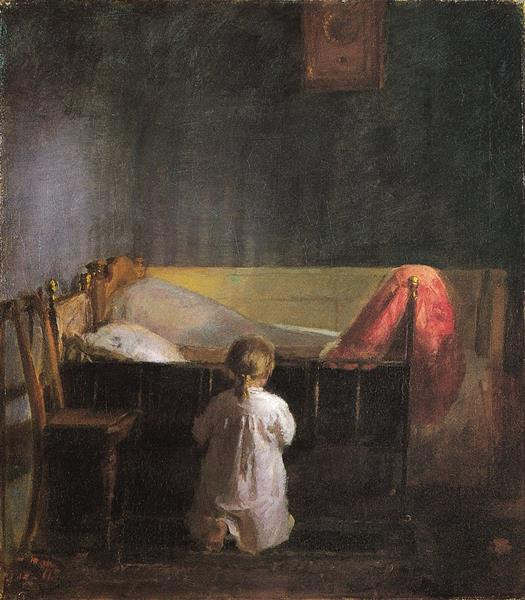
Beethoven addressing the infinite,
Beethoven at prayer, see above
the notes are clear, concise, naked,
happening, again, against the beat,
profoundly intimate, arhythmic,
unadorned, unadulterated, they are,
consequently, prophetic, not only
entertaining, but a moral code, a
metaphysical example of our role
in the shared fate of our nebulous
universe
Beethoven says we must believe
in our own beauty, our worth, it is
our only salvation
it is a mighty revelation
R ! chard
_______
we’re reaching the end of November, with
only three sonatas to go, which will be
devoted to Beethoven’s last three, they
exist in their import, impact, beyond
whatever’s been since, or before,
recorded
treatise on the physical possibilities
of a piano, its breadth of tonal range,
the scope of possible volumes, soft,
loud, not to mention its ability to, in
one instrument, play all the scales,
his following three sonatas, evolved
from the physical to the metaphysical,
“To be, or not to be”, he might as well
be asking, much like Shakespeare
there’d been metaphysical works before,
Bach’s cantatas, Handel’s Messiah, but
this metaphysics was of another order,
there’d been a revolution in France, the
Christian God had been there even
made illegal, Christians sent to the
guillotine, see Poulenc’s formidable
of that
Beethoven’s prayer, his evocation, in
his last three works for solo piano,
were to the Entity that might, or might
not be, out there, “To be, or not to be,
that [remained] the question”
the miraculous is that Beethoven, with
profound humility and respect, notes
that are clear, concise, and
straightforward, confronts the Entity
with nothing but his unadorned self,
at a loss in a sea of meaning, even
suffering despair, presenting, as an
argument the evidence of his life,
his art, his manifest and irrevocable
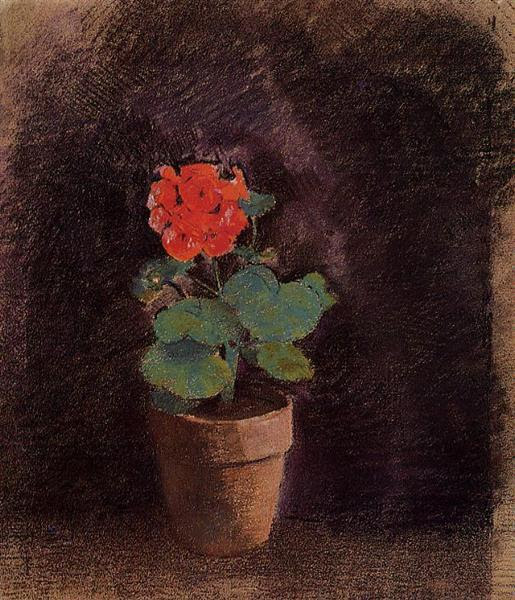
being, much as a flower would,
could it speak, no more, admittedly,
no less, but nevertheless a flower,
see above, and there is, Beethoven
says, glory in that
ponder
R ! chard

________
Johannes Brahms is pretty well the last of
the great Romantics, 1833 – 1897, he wrote
when he was not quite twenty, with the
same bravura as Beethoven, let me point
out, his sonata has five movements, a sign,
as I’ve said before, of bristling confidence
as a form grows from its original, pristine,
shape, it can only grow by evolving,
becoming something, eventually, that it
wasn’t, by dint of breaking all the rules,
transgressing
style becomes the manner in which a
work is transformed from its integral
state into something more decorated,
more intricately designed, like adding
lace to a perfectly adequate collar, or
making a soufflé out of an egg
but who wouldn’t, won’t
a point is reached where style overcomes
substance then, and becomes the focus
of the entertainment, one watches the
bravura
sonata, hasn’t the emotional appeal
that I’d heard in the earlier Romantics,
that would keep me rapt to the end,
the draw for me is the prestidigitation,
the manual dexterity, which is like
watching someone fly through the
air with the greatest of ease, but be
not otherwise moved, see above
but that’s me, and that’s to my mind
incidentally, since this is Brahms’
this is probably the last of the
great Romantic sonatas, after
which Impressionism
R ! chard
________
though there are other, and quite significant,
composers who fit into this category,
Beethoven, Schubert, and Chopin pretty
much define, all by themselves, the
Romantic Period
Chopin composed only two sonatas of note,
plus one more that is overlooked for being
an early, student effort, not up to the
standard of his later ones, Chopin, rather,
wrote mostly shorter pieces, nocturnes,
études, preludes, polonaises, and more,
that later became the very stuff of his
reputation
Schubert wrote enough sonatas that he
could be compared to Beethoven, indeed
it can be difficult to tell one from the other,
much as it can be difficult to tell Haydn
from Mozart, products in either case of
being both of their respective eras
when I was much younger, a guest among
a group of academics, where I’d been invited
by the host’s wife, a co-worker, what I knew
of Classical music, in the large sense, which
is to say comprising all of the musical periods,
Classicism, Romanticism, Impressionism,
and beyond, was all self-taught
is that Beethoven, I asked the host, about
a piece of music he’d put on
that’s Schubert, he replied, aghast, as
though I’d just farted
I blushed, deep red, confounded
Schubert, having great admiration for
Beethoven, took on many of the older
composer’s lessons, four movements
instead of the Classical three, for
instance, and many of the technical
tricks of his forebear
but there’s an essential component of
their styles that marks one from the
other, an easy way to tell them apart,
Beethoven always composes against
the beat, Schubert following it
listen to the first few notes of Beethoven’s
“Pathétique”, for instance, the beats are
erratic, confrontational, the mark of a
revolutionary, Beethoven was brashly
proclaiming his worth, he had something
to prove
Schubert, who was essentially playing
for friends, just wanted to entertain
them, which he did in spades, without
bombast or bluster
D959, for example, no swagger, no
ostentation, delivering nevertheless
something quite, and utterly,
enchanting, everything following,
unobtrusively, the beat
enjoy
R ! chard

_______
to say, I’ll try to make it clear and simple
first of all, hammerklavier is the German
word for piano, more specifically, klavier
means keyboard, hammer is a hammer,
what strikes the strings that make the
notes sound, rather than pluck them,
as in the harpsichord
the harpsichord had gone a long way, from
fortepiano to pianoforte, through to,
eventually, our modern piano
into his late stage, he’s not only telling
a story but delivering a thesis, on the
depth and range of the piano, not only
technically, structurally, but also
metaphysically, for that time
listen to the adagio sostenuto, the third
movement, Beethoven transports you,
moments after the first few notes have
been struck, into a meditation
adagios had been only emotional until
then, sentimental
this one’s a precursor to the adagio of
his last piano sonata, his no. 32, so
profound I want them to play it at my
funeral, it’s like looking in a mirror,
but more about that only later, maybe
I remember turning a corner in the
Louvre – I’d been overwhelmed by
the quantity of works, stopped only
briefly before famous representations,
the “Mona Lisa”, for instance, more
historically interesting to me than
aesthetically, dusty, it seemed, with
age – and coming upon the “Venus
de Milo”, shimmering, breathing
apparently, see above, and being
transfixed forever
that someone, centuries ago,
millennia, could create something
so beautiful, so transcendent, so
timeless, full of grace, who’d have
someone, centuries later, be
mesmerized, made me believe
in beauty as a saving grace
this is what happened to me with
always happens
may this happen to you
incidentally, this version is the first
one I ever heard of the piece, a
gift from, if I may be indiscreet,
an Austrian lover, for my birthday,
way back when, the early Seventies
it has served me well
R ! chard

________
both have three movements, fast, slow,
fast, Beethoven still doing Beethoven,
each only about a year apart, 1804,
1805, listen to them side by side, from
movement to movement, the moods
in either are much the same
I’ll point out, however, that the second
are linked, there is no pause between them,
Beethoven is making clear that the sonata
is an integral whole, not a collection of
disparate elements
what does that mean, it means that
Beethoven is creating a literature, not
only tunes, but a story, with beginning,
middle and end
compare in art with the triptych, see above,
with artists delivering more than individual
paintings, but a narration
both arts, music, painting, are meant to
transcend their original ends
enjoy
R ! chard

______
Beethoven’s piano sonatas are divided in
three sections, Early, Middle and Late,
indeed, the last of his Early sonatas is
the early ones are all still highly influenced
by his illustrious predecessors, Mozart and
and Haydn, and derive, however
idiosyncratically, from the Classical Era,
though there are notable differences, his
addition of a fourth movement, for instance,
instead of the standard three, an upstart
strutting his stuff, asserting his potent
individuality
with the Middle sonatas, Beethoven is well
on his way to defining the Romantic Period,
nearly single-handedly, the works are bold,
expansive, lush, powerful, a story is told,
movements are chapters in a book, a book
of metaphysical dimensions
with the Late sonatas, Beethoven will leave
the planet, deliver musical revelations
compositional issues apply, which I won’t
get into, for being abstruse, but you can
already hear in his Middle sonatas the
powerful voice of a musical prophet
the name, it straddles the Classical and
Romantic Periods, at home in the salons
of the nobles, but dazzling as well for the
new audiences that are flocking to the
flourishing concert halls
and we’re only at the start of his Middle
Period
stay tuned
R ! chard

 Richibi's Weblog