Richibi’s Weblog

Just another WordPress.com weblog

Category: Beethoven

my reply to BookInhabiter, a.k.a. Brain

a reader writes

“Hello Richard,
Recently I’ve been watching up on many dance competitions. I knew of the existence of piano competitions but never thought that they would be filmed. I must listen to the top contenders. How did you hear about this competition?”

here is my, admittedly extended, answer, with pertinent links

Richard

_____________


I haven’t missed So You Think You
Can Dance
“,
Brain, for 11 years, so
we’ve probably been watching the
same “many dance competitions”

“piano competitions” aren’t much
different, just another art, judged
here by professionals throughout,
rather than entire publics

the competitions are fierce, to a
person the competitors are world
class

the music is often sublime, utterly
transcendent, though more rigorously
intellectual than popcorn – pace
Mozart – this puts some people off

much as you probably find covers of
songs you like, I go out looking for
sonatas, string quartets, concerti I
already know of and admire, I check
out the big names, Chopin, Beethoven,
Rachmaninov, see what might be up

the Internet abounds with nearly
anything you might want to find, the
only obstacle is the quality

the Van Cliburn competition, from
Houston, was dreadful, enough to
put me off it, but looking for musical
counterparts to pieces of interest, I
found the Rubinstein one in Tel
Aviv
offering sterling performances

I quickly flew across the globe,
virtually, of course, speaking

the experience has been well worth
it, I heard miracles of music, haven’t
had so much fun since reading Proust,
in French of course, but you must
understand I’m an inveterate egghead,
totally chronic

this week I started Edward Gibbon’s
The Decline and Fall of the Roman
Empire”
, text and, to my delight,
audiotape, its reader is extraordinary

check out the Chopin Competition
for, up to this point anyway in my
investigation, only Chopin, but he’ll
do for a significant while, his music
is consistently breathtaking

I’ll also check out the Russian
Tchaikovsky Competition, which Van
Cliburn made famous for us in the late
50’s
, by winning it, despite the rancours
of the Cold War, with a still paramount
rendition of Tchaikovsky’s own
monumental First Concerto

wow, I’ve been hooked ever since

thanks for stopping by my blog, Brain,
you’ll find, incidentally, a lot of excellent
performances highlighted there, several
of the best, in fact, from the most recent
Rubinstein Competition
, none of which,
to my utter consternation, managed to
win

other recommendations follow, check
it out

I think your blog is wonderful, keep
it up

Richard

Steven Lin


we’ve reached the finals at the Arthur
Rubinstein International Piano Master
Competition
, the 6 remaining of the 16
contestants, after a second piano solo
round, were, none of them, ones I
would’ve selected, to my profound
irritation

a friend expressed such disgust after
Germany beat her favoured Brazil in
a recent soccer match

will you keep on watching, I asked,
she’d already been watching

I opted to also do the same

it‘s like soccer, I suggested, but for
nerds, for her to get my picture

with his second performance, of
Beethoven’s exhilarating 1st Piano
Concerto
, after a rousing Brahms
Piano and Strings Quartet, his opus
25
, during the first of the Finals
round, Steven Lin knocks the ball,
I think, right out of the ballpark

and into the very ages, watch, I
predict, this guy outright fly

Richard

Ran Dank

Mount  Everest

Mount Everest

_________

though I’d only just listened to a full
recital at the Rubinstein Piano
Competition
, a peek at the next
performer’s program, left me unable
to not watch another, Ran Dank would
be playing, along with four pieces of
Chopin, three mazurkas and his A flat
major Polonaise, itself a towering
musical monument, Beethoven’s
“Hammerklavier”, the very pinnacle
of piano music, nothing surpasses in
majesty and stature the
“Hammerklavier”, the Mt. Everest of
music, a competent reading will
change your life, it is that good

Ran Dank doesn’t disappoint, I left
the planet

Richard

from Beethoven to Pink Floyd


in juxtaposing inadvertently recently
Pink Floyd’s “Dark Side of the Moon”
with Beethoven’s String Quartet no 14
in C# minor, opus 131
, I was once again
struck by how one resembled implicitly
the other, both had achieved structurally
an operatic concert, an original musical
form for each their epoch, a piece of
instrumental music – with, even with
Beethoven eventually, voice – see his
9th Symphony for that – in the form of
opera

stay with me

songs started off as ditties, see, for
instance, in our time, She Loves You“,
the Beatles, in Classical music that’s
the equivalent of a Mozart sonata,
quick, easy to hum along with, and
spirited

then MacArthur Park came along, in
1968, with a song twice the length,
seven minutes and some, of anything
heard before, check out Jimmy Webb,
Richard Harris, and the process

that sounds a lot like Beethoven, I
thought, throw in extrapolations of
symphonic proportions and that
sounds a lot like Beethoven too,
saying, this is not just pretty, people,
it’s potentially momentous, listen

Sgt. Pepper’s Lonely Hearts Club
Band
then put several compositions
together, without breaks, to give us
the first concept album, an
uninterrupted flow of various musical
ideas held together by an, however
inexplicit, theme

or MacArthur Park“, in other words,
amplified

in 1826, it had been Beethoven’s 14th,
where all this started out, no one had
ever done this sort of thing before,
confounded so intimately contrasting
musical forms, but he’d got it from
the Christian Mass

thus Beethoven, a secular prophet

and thus, in his eminent footsteps,
Pink Floyd, solely, among
contemporary artists, addressing
God

it all seems nearly inevitable today,
but it was 1968 then, a time of, if
you’ll recall, revolution

and all of these had been, for better
or worse, once again, our rallying
cries, anthems, towards a better
world

Richard

“I’ve Got a New Attitude”‏


as the Beatles once sang, Roll Over Beethoven

I’d been touching up my blog, specifically my
Elizabeth Barrett Brownings
, which WordPress
had to my dismay defaced, when one of my
submissions, the XXXlst, gave me the choice
of his Appassionata or Patti LaBelle, to
accompany me on the dishes, my ritual
homage to Sisyphean labour before the
limitless

both are electrifying

but I opted for a change, the effect of, maybe,
springtime, chose Patti, who’d awakened by
her very name a world of magical memories
for me, even inspiring me to find finally a
long lost friend, an ardent fan, then, of Patti

I looked for an appropriate, concert, length,
enough to finish my dishes, this is what I
found

I’ve been hooked on divas ever since

I hope you’re also enjoying them

Richard

psst: more Patti

Beethoven, piano sonata no 15, opus 28‏


Beethoven’s piano sonata no 15, opus 28,
the Pastorale, is all about nature,
efflervescence and spring, one of my very
favourites, I call it his Johnny Appleseed
Sonata

in this instance, something I’ve never
experienced before, Tomoki Sakata made
me feel as though I were his instrument,
responding to his fingers, something
entirely transcendental, but with
rushes running up my spine

Classical music indeed

watch

if you dare

Richard

Beethoven – piano sonata no 7, in D major, opus 10, no 3‏

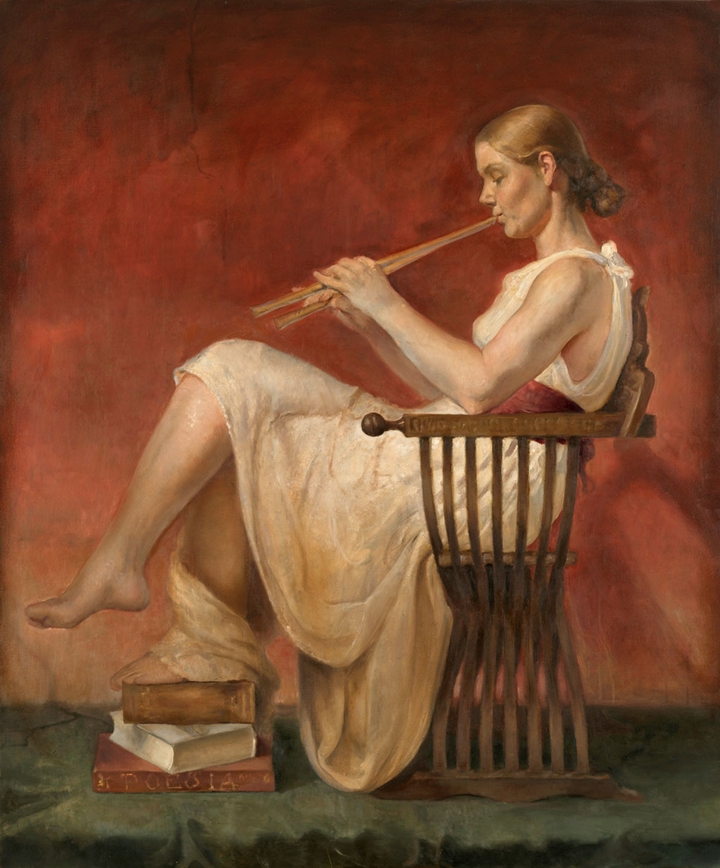
Euterpe - Apollo and the Muses - Helene Knoop 1979 - Norwegian Figurative painter - Tutt'Art@

EuterpeApollo and the Muses (2008 – 9)

Helene Knoop

________

if the piano sonata no 4 of Beethoven,
in E flat, opus 7, was academic, an
exercise, a display of technical
dexterity and some, admittedly,
even mighty, compositional verve,
it lacked, in my estimation, a centre,
a convincing motivating factor, a muse,
though ever ardent, ever entertaining,
it is ultimately arid, I think, trite, I’m
not, one is not, keen on returning to it

but in the piano sonata no 7, in D major,
opus 10, no 3
, Beethoven hits, I submit,
his stride, this sonata is enchanting

note the similarities of structure
between the two, the order of the
movements with identical, essentially,
tempo patterns, notably the middle
slow movement, in the first a largo,
con gran expressione,
slow with
great expression, in the latter, a
largo e mesta, slow with sadness,
where Beethoven plumbs, evidently,
the limits of pacing, the time lapse
between two notes, the capacity for
silence of this new instrument, the
pianoforte, of which he’ll look into
also, and even vigorously, its
capacity for volume, the crashing
introduction to his celebrated 8th,
for instance, to establish the
instrument’s new perimeters

you’ll note you can listen to the later
largo, the opus 10, no 3, forever, you
can get lost in its aural world, I can’t
think of anywhere else right now a
more profound largo

the other movements are dazzling
in their thrilling prestidigitation, all
organically sound, and, crucially,
motivationally centred, I think, this
is indeed music, magisterial music,
Beethoven’s not just kidding
anymore, he’s hitched onto his
proper inspirational deity, his own
private Euterpe, music’s muse, and
we’re in for something, from here
on, of a ride

note the cool riff closing off the last
movement, Beethoven in the guise
of Gene Kelly stepping in for a
breezy good-bye, prefiguring, of
course, XXth-Century music, and
the serendipitous extrapolations
of jazz

Richard

psst: incidentally, the headings, largo,
con gran expressione, largo e
mesta,
are entirely Romantic
musical notions, notations,
Classical composers would’ve
been too sedate, formal, courtly,
for such flagrant sentiment

Beethoven – piano sonata no 4, in E flat major, opus 7

though Beethoven’s piano sonata no 4,
in E flat major
, opus 7 has never been
one of my favourites, I’m finding this
particular renderin
g completely
enchanting

the opus 7 is, of course, early, when
you consider Beethoven reached into
the late 130s for his opuses, his opera,
not counting his, as bountiful, WoOs,
works without opus numbers

the sonata is steeped in Classical
conditions that are becoming ossified
at this point, about a decade after the
French Revolution, 1796 – 7, and that
have yet to be culturally overturned,
put to rest, you can hear it, you hear
the Classical form – formality, repetition,
congenial tonalities still – in the sonata,
brilliantly displayed by a composer
of ripe and rich imagination, but at
the service of structure rather than
the music itself, style over substance,
a student’s musical submission for a
composition exam

you’ll hear the repeat of the opening air
in the first movement more times than
you think is necessary, though the tune
be ever jaunty, never unpleasant, just
essentially trite, the second movement,
is a largo, a largo indeed, you’ll think,
about to fall asleep, even, at the wheel,
the later movements keep you
entertained in most interpretations,
not much, however, inspired, music to
pass the time, to check your watch by,
it needs what Beethoven will later
deliver in spades, miracles and
majesty, conviction

the opus 7 is long as well, nearly
interminable, I think, second only in
length to the sublime however
Hammerklavier, the 106, impudent
therefore, to my mind, if not outright
arrogant, in the mode of lesser artists,
Salieri, Clementi, for instance, who
never manage to transcend their,
however impressive, technical
expertise

but in this commanding account
maybe I’ve grown into the piece, or
maybe the performance itself is more
inspired – Joel Schoenhals finds
something that’s had me listen for
hours and hours, rapt, mesmerized

listen

Richard

psst: I needed this sonata for a course
I’m taking at Coursera, an Internet
learning site, on the Beethoven
piano sonatas
, the opus 7 is the
first one we’re looking at, this
performance
was the best one I
could find

join me

“Meditations”, Book 3 – Marcus Aurelius‏

“If thou workest at that which is before thee, following right reason seriously, vigorously, calmly, without allowing anything else to distract thee, but keeping thy divine part pure, as if thou shouldst be bound to give it back immediately; if thou holdest to this, expecting nothing, fearing nothing, but satisfied with thy present activity according to nature, and with heroic truth in every word and sound which thou utterest, thou wilt live happy. And there is no man who is able to prevent this.”

Meditations“, Book 3, 12

Marcus Aurelius

_________

the idea of the virtuous man, or the
interpretation of Marcus Aurelius of
such a person, goes back of course to
Socrates by way of Plato, 427 – 347
B.C., who’s ideal was primarily
political, what to achieve within a
political order, rather than a private
meditation, an advice rather than
a contemplation as in Marcus
Aurelius, 121 – 180 A.D., 550,
not inconsequential, years later

other moral perspectives meanwhile
applied, Epicureanism, for instance,
notably, after which the stranglehold
of Christianity produced not philosophy
but dogma, for a subservient and,
biblically labeled, fallen people,
nearly fifteen hundred years spent
trying to figure out how many angels
fit through the eye of a needle,
essentially, how many irrationalities
could prove the existence, and
authority, of a mandated God

René Descartes inadvertently in this
very quest, but not before 1637, put
an end to that, introduced a new, and
revolutionary, perspective, I think,
therefore I am
“,
which put the individual
instead of the Church in the driver’s seat,
this, if it didn’t bring on the Renaissance,
at least gave it a significant push

but because of his famous scientific
method
, studies afterwards in what
we now know as the humanities
became more empirical than
specifically moral, how do we
perceive rather than how do we live
according to what is right or wrong,
Nietzsche‘s Beyond Good and Evil“,
1886, reoriented that investigation,
as it happened, ominously, in an age
where any kind of god had become
irrelevant, Beethoven would be
transformed into a Hitler, an
uncomfortably fateful Übermensch,
Superman

now philosophy is concerned with
language, what do we mean when
we say what do we mean, and can
anybody understand that

our closest moralist, our modern day
Marcus Aurelius, is at present Miss
Manners
, whom I wholeheartedly
recommend

as well as, of course, Marcus Aurelius

Richard

psst: Miss Manners‘ question and answer
format, incidentally, is not at all unlike
what Plato does in his Socratic dialogues
,
she just has a larger, more flip audience

Mozart piano sonata no 11, in A major, K 331

again my especially musically erudite friend,
Norm, has returned with a catchy morsel, a
popularized version this time of the third
movement, the Alla Turca“, of Mozart’s
piano sonata no 11, in A major, K 331
,
possessed by the glitzy spirit, in this
outing
, of Las Vegas

these whet my appetite always for the entire
meal, the source from which these playful
tidbits originate, like an ebullient tributary
returning to its more elementary, and
profound, as it were, spring, a lost child
needing to return to its place of origin
for direction and validation

Mozart, you’ll note, is not Beethoven, though
he might be a not inconsequential Mozart, I
think of his stuff as music for the nursery,
toy soldiers and rocking horses, dairy maids
and cuckoo clocks, not at all to inform but to
delight, the musical structure is foursquare,
lilting ever, and entirely comprehensible,
Mozart just wants to have fun, with here
and there a nod to melancholy, perfect, I
would think, for a powdered and pampered,
though pilloried eventually, indeed
guillotined then, court

the first movement, you’ll remark, is a set
of variations, a bit of a novelty still during
this period, 1778 to 1783 approximately,
the date of composition is not precisely
known, which allowed for, of course, a
variety of styles, voices, to be flaunted
in one only section of a work, instead
of the usual call and response of,
ordinarily, the traditional movement,
extending already, incidentally, the
possibilities of the sonata form, which
later composers would make much
use of

neither of the next movements are
slow, Mozart, as I said, just wanted
to essentially enjoy himself, or his
sponsors did, music did, that’s
what they payed him for

but the times they were a’ changing

as indeed they still are

Richard

psst: thanks Norm