up my idiosyncrasies – Albertine
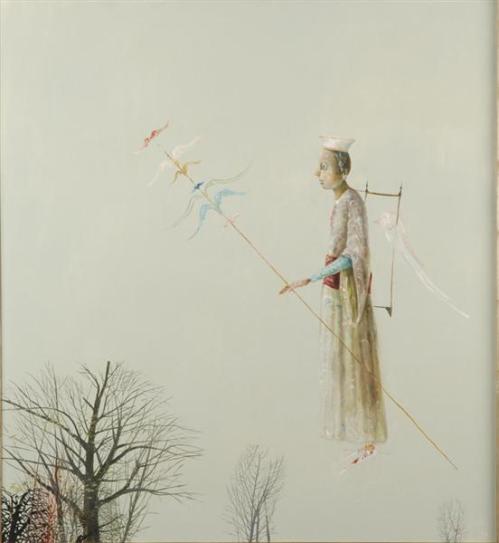
“Wing Seller“ (2006)
Stefan Caltia
_______

_______

_______


“A New Year’s Nocturne, New York“ (1892)
_________
for the past several days, I’ve been
humming the first two movements
of Beethoven’s First Piano Concerto,
the opus 15, being carried away by
the exhilarating energy of its
initial, adamant and authoritative,
dazzling and irresistible “allegro
con brio”, followed by the melting
beauty of its contrasting counterpart,
the meditative and enchanting “largo”,
the final “rondo – allegro sostenuto”
is coming along, but by that time I’m
out of wind and lost in wonder at
Beethoven’s already accomplishment,
the final movement is like the
strawberry on top once I’ve had the
prerequisite cheesecake, verging on
anticlimactic, however thrilling
his First is actually his second piano
concerto, written in 1797, but
composed after his opus 19, written
in 1787, not published until 1801,
either way a new voice was evident
Beethoven’s music was written for
a larger stage, no longer the salons
of the aristocracy, nor, for that matter,
the pews of the fragmenting Christian
Church, the growing middle class
was becoming able and willing to
spend and splurge on frivolities and
entertainment, theatres, concert halls
were popping up, and prospered
Beethoven had to dazzle a
heterogeneous crowd, no longer
just a circle of familiars
and watch, Leonard Bernstein is
spectacular
this is my New Year’s Eve Vienna
performance no matter who is
doing it there this year, nor, for
that matter, that it wasn’t even
performed for New Year’s Eve,
for me, it catches fire, inspires,
it is my New Year’s resolution
I hope it’ll do the same for yours
cheers
Richard
“Fairy Lake“ (1905)
________
for the recital season coming up,
my friend, the musicologist, has
once again been called upon to
write reviews of featured pieces
out of giddy exhilaration at his
playful essays, he sent me
several draughts he’d already
composed around piano and
cello pieces, of mostly familiar
enough faces, Schumann,
Beethoven, Strauss, but of Leoš
Janáček I’d only heard mention,
none ever of his compositions
his “Pohádka“, or “Fairytale“, is
a programmatic piece, which
means it accompanies a story,
like a soundtrack does a movie,
but “Pohádka“ is based on a tale
of Vasily Zhukovsky, a Russian
epic poet, and is not accompanied
by a film, nor a ballet for that
matter – see “The Nutcracker” or
“Sleeping Beauty” for that – but
lives and breathes on its own
merits
Kashchei, Lord of the Underworld,
objects to the union of his daughter
with a charming prince, represented
here by the piano and the cello
respectively
they run away and find refuge with
another potentate who prefers the
prince for his own daughter, and
casts a spell on him so that the
prince may love her, instead of
Maria, the princess, which he does
Maria, forsaken, in a pique at this
turn of events, turns into a blue
flower
o, to turn into a blue flower
whenever I’m in a pique, I thought,
I only wish, and succumbed
forthwith to the improbable story
the spell is lifted, however, from
both, of course, however much I
might prefer to remain a blue iris,
say, anemone, or hyacinth, when a
magician, don’t ask, turns up to
set everything aright, and they
live happily ever after
the version you’ll hear is
transposed for piano and double
bass, a somewhat deeper, thrilling
register, or that may be just the
bassist, but the magic entirely
remains, if it isn’t completely
enhanced, rendered definitive
by this superb performance
my friend says Janáček has
neither musical forebears, nor
descendants, but composes in
a world of his own, an utterly
enchanted world, I surmised
what do you think
Richard
psst:
“con moto”, by the way, means
“with conviction”
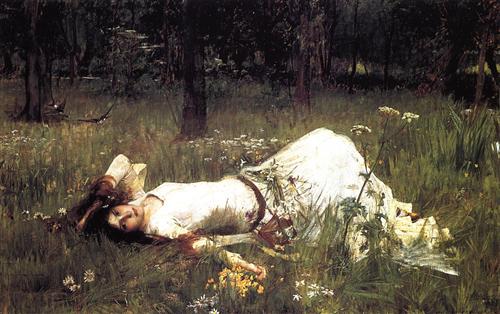
“Ophelia“ (1889)
___________
though death is not an especially
appealing topic for many, it was
nevertheless of fundamental
consideration during the
Romantic Period
Goethe, the German poet, had
already created a sensation
with his “The Sorrows of Young
Werther“, a young man,
disappointed in love, takes his
own life, a potent seed for the
new era, secularism was
overtaking theocracy, the
autocracy of the Christian
Church was giving way to the
prevalence of human rights,
a private opinion, well disputed,
was holding sway against the
rigidities of religious orthodoxies,
science and reason had been
chipping away at the very idea
of God
but with human rights there was
the question of personal
responsibility, if not an imposed
authority, then each man, woman
was in charge of his, her own
the fundamental question,
therefore, was Shakespeare’s
“To be or not to be“, or, for that
matter, Burt Bacharach’s and
Hal David’s “What’s it all about“
this is not me, this is Albert Camus
talking, who formalized the situation
in the 1940s
“There is but one truly serious
philosophical problem, and that
is suicide. Judging whether life
is or is not worth living amounts
to answering the fundamental
question of philosophy. All the
rest — whether or not the world
has three dimensions, whether
the mind has nine or twelve
categories — comes afterwards.”
after Werther, Madame Bovary followed,
Anna Karenina, suicide had become an
option, the penalty was no longer
opprobrium, castigation, as it had been
under unforgiving religious constraints
death itself, fatefully rather than
personally determined, was, of course,
no less considered when the era of
heartfelt declarations dominated,
Mendelssohn had written his
“Quartet no 6 in F minor, opus 80”
for his deceased sister, Beethoven
and Chopin, each his “Funeral March“,
either, incidentally, still iconic, and
perhaps the most poignant work
of all in this manner, Schubert’s
“Death and the Maiden“, a precursor
of his own much too premature
demise
this is music as if your life depended
on it
Richard
psst:
the Alban Berg Quartet, a group who
set the standard for several significant
string quartets in the ’80s, do no less
with this one
you’re not likely to see a better
performance of it ever, nor, for that
matter, of anything, pace even Glenn
Gould, a statement I think nearly
against my religion
you be the judge
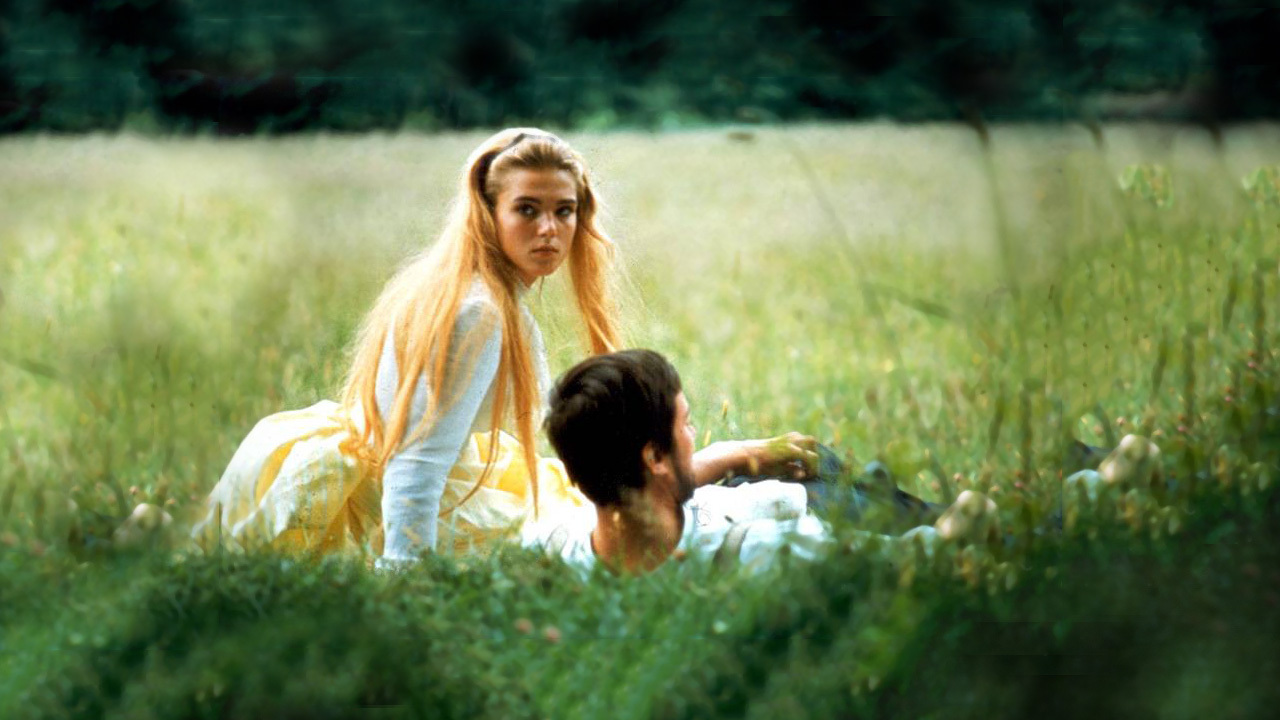
a still from the movie “Elvira Madigan”
________________
there’s been a second round of
recitals, enough to make you
weary of sonatas, unless you’re
stalwart, devoted, primed
the prizes have been awarded,
the results posted at the site,
so that any mystery, excitement,
has been chilled, had you been
in any way excited about your
choices
they certainly rained on my
parade
by now most of my favourites
have gone down, others have
been perfunctory, to my mind,
but three, which surely I’ll
cover, but presently let me
start with Maria Mazo, a
wonder, who’d wowed me
earlier with her
transcendental Beethoven
here, with an orchestra, she
takes on a monument of the
20th Century, Mozart’s 21st
Piano Concerto, better known
since the mid-20th Century as
the theme to the movie,
“Elvira Madigan“, a forgotten
film now, however enchanting,
but this is where a generation
learned about Mozart
Maria Mazo sets the new
standard here, this is how
you’ll hear this concerto from
now on, it is magical, it is
mystical, it is extraordinary,
it’s right up there with the
greatest, who are presently
handing over to her our
musical reins
thank you, Mitsuko Uchida,
with the greatest admiration
strangely Maria Mazo didn’t
even place
who could ‘a’ ever thunk it
Richard