Richibi’s Weblog

Just another WordPress.com weblog

Category: Beethoven

String Quartet in B flat, Opus 55, no 3 – Haydn
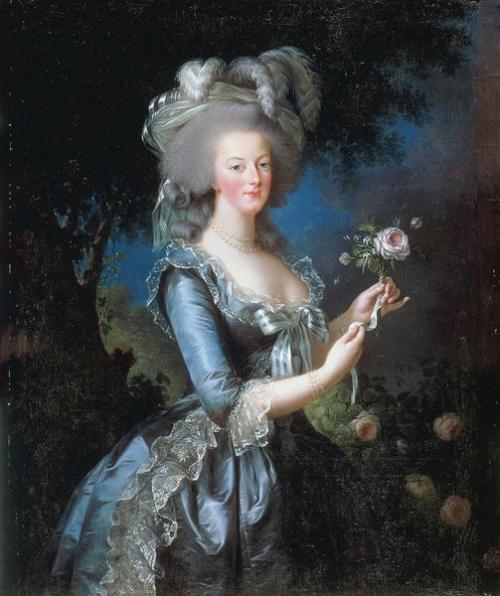
queen-marie-antoinette-of-france-1783.jpg!Large

                      “Queen Marie Antoinette of France (1783) 

                                Louise Élisabeth Vigée Le Brun

                                              ___________________

first of all, let me grievously repent an
egregious confusion I probably left
in my last diatribe, I said that the second
movement of the Opus 54, no 2 sounded 
to me like a minuet, I had, through 
embarrassing inattention, confused its,
however unmemorable, adagio with that
of this Opus 55, no 3, which I’d listened 
to in too quick succession, driven as I 
am by my thirst for epiphanies

the Opus 54, no 2 will do, but I’m not 
going back for seconds, nor to the 
Opus 55, no 3, though here’s where  
I flaunt nevertheless Haydn, not to 
mention Bach, Mozart, Beethoven, 
all the way to eventually Bruckner, 
Brahms, the extraordinary Richard
Wagner, passing through Schubert,
Mendelssohn, the Strausses, father
and son, and the unrelated Strauss,
Richard, another incontrovertible 
giant, and I nearly left out the 
unforgettable Liszt, all of them 
forefathers of our present music

you might have noticed that these 
are all Germanic names, obedient 
to the Hapsburg empire, with 
Vienna as its supreme cultural 
capital, and it was that 
Austro-Hungarian dynasty that
indeed nearly single-handedly 
secured our Western musical 
traditions

a few Italians are remembered,
from the 18th Century, Scarlatti 
maybe, Boccherini, Albinoni
but not many more 

no one from France, but they were 
about to have a revolution, not a 
good time for creative types,
though, incidentally, Haydn was 
getting Tost, to whom he was 
dedicating his string quartets for 
services rendered, to sell his stuff 
in very Paris 

then again, Marie Antoinette, I thought, 
was Austrian, an even archduchess, 
and would’ve loved some down-home 
music at nearby Versailles

so there you are, there would’ve been 
market

the English had Handel, of course,
who was, albeit, German, getting 
work where he could when you 
consider his competition, he was 
too solemn and plodding by half,
to my mind, for the more 
effervescent, admittedly Italianate, 
continentals, Italy having led the 
way earlier with especially its 
filigreed and unfettered operas

but here’s Haydn’s Opus 55, no 3
nevertheless, the best Europe had
to offer, socking it to them

Haydn’s having a hard time, I think, 
moving from music for at court to
recital hall music, music for a much
less genteel clientele, however 
socially aspiring, we still hear 
minuets, and obeisances all over 
the place, despite a desire to 
nevertheless dazzle, impress

then again, I’m not the final word, as
my mea culpa above might express, 
you’ll find what eventually turns 
your own crank, floats your own 
boat, as you listen

which, finally, is my greatest wish


R ! chard
String Quartet no 42 in C major, Opus 54, no 2 – Haydn

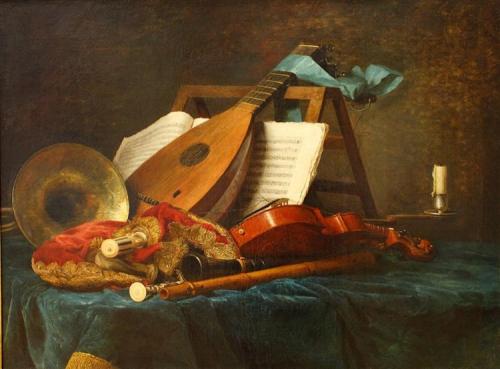
the-attributes-of-music-1770.jpg!Large.jpg

       “The Attributes of Music (1770) 

              Anne Vallayer-Coster

                      ___________

meanwhile back at Haydn, some nearly 
70 years after Bach’s Partita no 2
Haydn’s been freed by his sponsor, 
Prince Esterházy to sell his 
compositions to the highest bidder
and with the help of the Hungarian 
second violinist at the Esterházy 
courtfinds buyers in Paris

the Opus 54 is therefore associated 
with Johann Tost, as well as its 
companion Opus 55, and indeed 
Haydn’s later Opus 64 for string
quartet is decidedly dedicated to 
him

Haydn has been released from not
only contractual obligations, it
seems apparent, in his new, more
experimental phase, but from the
constraints of, verily, courtly music,
this is not dinner music for a coterie
of aristocrats, but demands attention,
Haydn is pulling out his showstoppers, 
musical eccentricities, to dazzle the 
crowd, pauses in the first movement, 
for instance, right off the top, for 
drama, of course, and musical 
tension

and the second movement sounds 
a lot more like a minuet to me

later in the last movement, he 
delivers a second, incongruous, I think, 
adagio, unusual at this point, the 
piece’s traditional cheery farewell,
interrupted by a presto, of all things,
right in the very centre of all that 
solemnity, you tell me if that ultimately 
works, thought not, and it ends, on 
top with of that, with whimper

but it opens the way for tempi 
prolonging the emotional impact of
the composition, six rhythms instead 
of four throughout the work makes 
the musical journey longer, more 
probing, more episodic, more 
narrative, eventually

wait till you hear what Beethoven 
does with that

but meanwhile, Haydn doesn’t 
disappoint, though you’ll have 
heard better, I think, and will, 
from him 


R ! chard

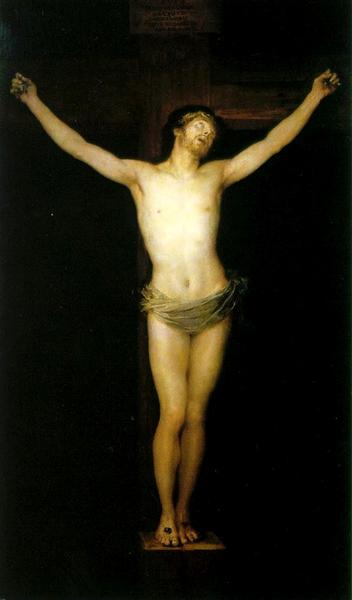
“The Seven Last Words of Our Saviour on the Cross”, opus 51 – Joseph Haydn

crucified-christ-1780.jpg!Large.jpg

                  “Crucified Christ (1780) 

                          Francisco Goya

                                 _______

Haydn’s Opus 51 was commissioned 
for the Oratorio de la Santa Cueva, the 
Holy Cave Oratoryin Cádiz, Spain,
church, as the name suggests, built 
partially underground, it would be
performed, the Opus 51, for the Good 
Friday service of 1787, Haydn therefore 
put his Opus 50 on hold, six string 
quartets, to finish this ecclesiastical 
work on time

what had been required was a work for 
small orchestra to inform the Seven 
Last Words of our Saviour on the 
Cross, it would therefore have at least
segments, movements, and would be 
divided by the elaboration of the 
bishop upon the significance of these 
individual “Words”, or, in fact,
statements, see this example 

Haydn added an introduction, and a 
finale in the form of an earthquake,
quite, I think, wittily and ever so 
appropriately

nearly simultaneously, Haydn 
composed the orchestral 
arrangement for string quartet, and 
later for orchestra and voice, for, in
other words, an oratorio

to my mind “The Seven Last Words 
of Our Saviour on the Cross” is 
Haydn’s crowning achievement, in 
all of its iterations

you’ll note that there is even first of 
all a title, and the title asks for 
something quite specific, indeed 
words, which the composer would
have to render musically, somehow, 
he’d need drama, something of a 
musical narrative, no minuets

all of the movements, apart from 
the end ones, are variations on 
slow – adagio, lento, largo, even 
grave – and how do you keep an 
audience, or in this case a 
congregation, happy, or even 
interested, with seven potentially 
lugubrious adagios in a row, all 
profoundly melancholy

only Shostakovich has managed 
to do that since, which I’ll talk 
about at some point later

Haydn also undoubtedly inspired 
Beethoven here with the 
consequences of so many 
movements, the possibility of 
extending a musical intention
into something resembling,
indeed, a book, a story, the 
introduction of narrative, 
essentially, into our musical 
history, which is to say, music
as literature 

the orchestral version of “The 
Seven Last Words” is performed 
here at the very Oratorio de la
Santa Cueva, the string quartet
version, played not only better 
than I’ve ever heard it played
before, but better even than any 
other quartet I’ve ever heard, 
period, includes the commentaries 
in German by an attendant prelate,
as intended in the original 
composition 

the movements’ “Seven Words” are 
indicated in Latin, not, incidentally, 
the  language of “Our Saviour”, and 
move from “Lord, why have you 
forsaken me” to “If it is Your will, 
then let it be done”

the last version presented here is 
the oratorio, for orchestra and
voice  

all of them, utterly inspiring

listen


R ! chard 

        (to be, incontrovertibly, continued,
         this piece is too loaded with 
         substance, it is transformational)

Quintet for Clarinet and String Quartet in B♭ Major, Op. 34 – Carl Maria von Weber

Carl-Maria-Von-Weber

              Carl Maria von Weber

                        ________

though I’d considered heading into 
later string quartets, later clarinet
quintets actually, an intriguing, I 
thought, divergence, it seemed a 
better idea to return to the 
Classical and early Romantic 
Periods to find an anchor for our  
formative musical idiom, again
rhythm, tonality, and recurrence

Carl Maria von Weber does an 
intermediate Clarinet Quintet
between Mozart’s and Brahms’,
which is noteworthy for especially
its Classical roots than its 
Romantic pretensions, I think, 
Weber sounds nothing like 
Beethoven, but is a nearly spitting
image of Mozart, which isn’t a bad
position at all to be in

listen for his courtliness, the staid,
though lively, musical interactions

you’ll note that the clarinet, though 
to one side, takes preeminence in
this composition – it’s nearly even 
a clarinet concerto – Weber called 
it a Quintet for Clarinet and Strings,
a perhaps more apt appellation

appellations, incidentally, remain 
the means by which we sharpen 
our understanding, however 
presumptuous might the term 
sound, appellations, in other 
words, count

though I could’ve used, I suppose, 
nomenclature, or something 


R ! chard

Clarinet Quintet in B minor, Op. 115 – Johannes Brahms

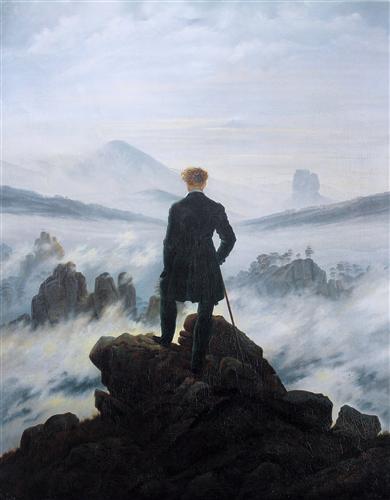
the-wanderer-above-the-sea-of-fog.jpg!Blog

    “The Wanderer above a Sea of Fog / 

            “Der Wanderer über dem Nebelmeer (1818)   

          Caspar David Friedrich

                     ___________

                              for Collin, who’ll appreciate
                                        especially, I’m sure, the 
                                             Chopin


while I’m on the subject of clarinet quintets,
since there are so few significant ones, let 
me pull Brahms’ out of my hat and celebrate 
it, a worthy challenge to Mozart’s own utter
masterpiece

but over a century has gone by, it’s 1891, 
Beethoven, the French Revolution, the 
Romantic Era is reaching its end, ceding 
to Impressionism, after the disruptions of 
rampant industrialization, and its 
consequent effects on the social contract

Marx has proposed a theoretical master 
plan to equitably protect the rest of us 
from the 1%, however too politically 
fraught, eventually, such a system – see
Communism

furthermore, Darwin had suggested that 
we weren’t all descended from Adam and 
Eve, but from larvae, which is to say, 
millennially morphed, modified, through
time, genetically, leading to festering still 
ideological  objections

Elizabeth Barrett Browning had written 
her unadulterated love poems to her 
husband, RobertCaspar David 
Friedrich had shown us his wanderer’s 
back while facing the mountainous 
challenges of the upcoming world, 
godless now after NietzscheAnna 
Karenina had thrown herself in front 
of a train, Madame Bovary had taken 
poison, and Ibsen‘s Nora had left her 
husband for a fraught, if not even 
dangerous, life on her own, to escape 
his safe but insufferable dominance, 
while Jane Eyre was finding ghosts
in her cobwebbed, and insufferable, 
to my mind, though admittedly  
aristocratic, attic 


you’ll note the clarinet is not sitting
centre stage, but has nevertheless 
a place at the table, by this time, 
though not not honoured, familiar,
and is more integrated to the 
conversation, the idea of democracy 
has taken hold, with everyone having
an equal, and even a vociferous, say

Brahms modelled his Clarinet Quintet,
on Mozart’s, the Classical structure is 
still the same, movements, tonality, 
musical recurrence, all to wonderful 
effect

that he would do that is not a given, 
but a tribute to the power of that form, 
take the waltz for instance, alive from 
even before Strauss, not to mention 
Chopin, to approximately the middle 
of the Twentieth Century

think about it, who waltzes anymore,
though they might’ve enchanted still, 
residually, the  50’s – see Patti Page
for instance – its lustre having 
dissipated, with the wind, as it were, 
the gust, before us, of the unending 
ages 


R ! chard

String Quartet no 1, Opus 18, no 1 – Beethoven

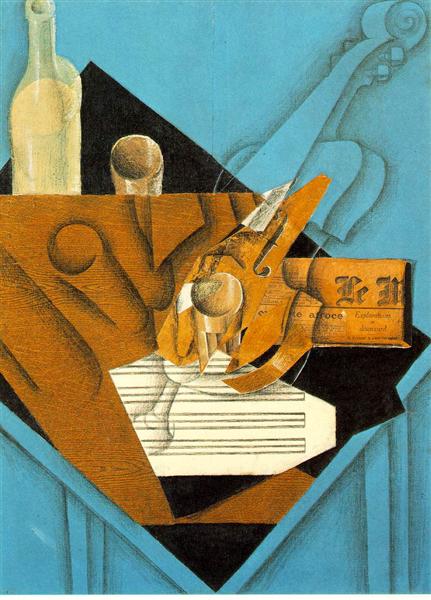
musician-s-table-1914.jpg!Large.jpg

      “Musician’s table (1914) 

            Juan Gris

                _____

Beethoven’s First String Quartet came 
out much around the same time as 
Haydn’s Opus 76, no 1among six of 
them in his set, Beethoven also had 
six in his, however junior still, first
collection, his Opus 18, Beethoven 
would’ve been going on thirty, Haydn
nearly seventy, though his spirit hadn’t
in any manner flagged, listen

but their differences are evident if you
lend a thoughtful ear 

the format is the same, four movements,
inarguably contrasting, with formal 
adherence to Classical norms, tonality,
tempo, and return, but the style is, in 
Beethoven, being overtaken by the 
substance, again inarguably

at dinner together, if I may continue my
earlier allegorical conceit, by the second
movement, Beethoven has already 
entered politics, essentially, religion, 
these four, the players, have a bone to 
pick, and their conversation gets heated, 
there’s a pause, a reconciliation, before 
the third movement, dessert, as it were, 
which is merrier initially, but later 
remains contentious, liqueurs later, in 
the final movement, are still not enough 
to allow for a comfortable exit, however 
might’ve been the serenity of the 
intoxicating sherries, cognacs

Haydn would never have done that, 
having grown up in the proprieties
of the Esterházys, his aristocratic
sponsors, courtesy would’ve been 
of their essence

Beethoven’s is a call to arms, a 
consequence of the French 
Revolution, the birth of the 
Romantic Period

you can hear it in the music


R ! chard

on string quartets – Opus 76, no 1 – Joseph Haydn

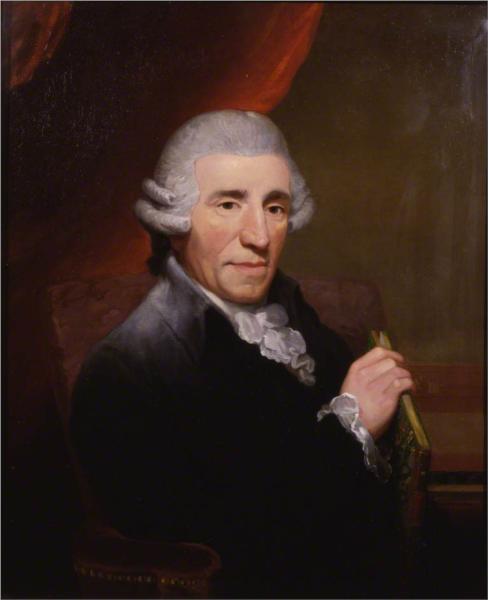
joseph-haydn-1791.jpg!Large.jpg

                                   “Joseph Haydn (1791) 

                                          Thomas Hardy

                                                 ______

to not consider other musical forms of
Shostakovich would be unfair, his
symphonies are mostly propaganda,
however often, though somewhat 
culturally specific, riveting

my favourite works of his, works I 
consider iconic, are mostly chamber 
pieces, piano solos, string quartets

a string quartet, after a symphony, is
like sitting down to dinner with four,
at the very least, acquaintances, 
rather than being a guest at a party,  
the conversation is more intimate,
every person plays hir part, everyone
is heeded, if even only with courtesy,
a social, a Classical, an aristocratic,
prerequisite 

movements can be compared to 
courses, distinct and identifiable for
their particular culinary, musical, 
propriety

later variations on this reflect the 
variations in social mores, where 
restaurants, the modern way of
socializing, allow for disparate 
choices, often superimposed, 
throughout the meal for any,
every, occasion

dim sum, tapas, celebrate this, not
unhappily 


but string quartets can be tricky, I 
thought I’d start from the beginning,
with some Haydn, their recognized 
Father, you’ll understand when you
hear this, his Opus 76, no 1, an 
outstanding string quartet to live 
up to

Haydn set the standard for string 
quartets when the norms of Western 
music were being established, Bach
had given us the alphabet, the
well-tempered clavier, Mozart, the 
grammar, the structure of music,
tempo, tonality, repetition, Beethoven 
gave us the literature, the poetry, the 
philosophical, the transcendent

Haydn is somewhere between these 
last two, but decidedly, still, the king  
of the string quartet, though Beethoven  
does a good job of trying to best him,  
and so does Shostakovich, you’ll have 
to pick

but first, let’s start with Haydn, that’ll
be already, you’ll see, or hear, enough

later, I’ll get into it


R ! chard

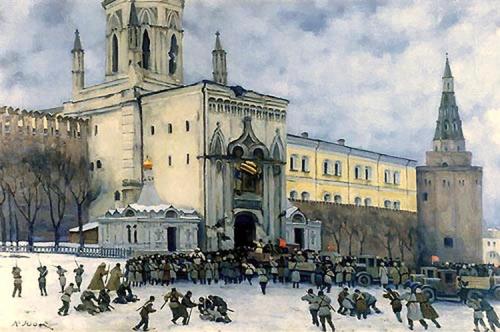
Symphony no 12 in D minor, opus 112 (The Year of 1917) – Dmitri Shostakovich

assault-on-the-kremlin-in-1917-1951.jpg!Large

 Assault on the Kremlin in 1917 (1951)

               Konstantin Yuon

                    __________

the Twelfth Symphony of Shostakovich, 
“The Year of 1917”, is a lot more of the 
Eleventh, “The Year 1905”, both 
commissioned, both celebrating 
significant events of the Russian 
Revolution, both therefore steeped in 
references that now elude many who 
aren’t Russian, and certainly those who
generations elsewhere later never lived 
through these particularly local events 

but the Twelfth is shorter by nearly 
half, thankfully, I also found it to be 
unconvincing, plastic, formulaic, 
neither original, nor enthusiastic, 
tedious and uninspired, musically 
speaking, of course

or maybe I’m just getting cranky

also a music honouring a system that 
is now defunct, debunked, discredited, 
couldn’t long survive but historically
among the works of an otherwise 
extraordinary composer, think of 
Confederate monuments still standing 
in the Southern United States, or of 
those of oppressors of First Nations, 
for instance, in our very own Canada, 
though these might’ve been  
sculpted by even Michelangelos,   
an irresolvable cultural confusion,
predicament


the works are programmatic, both 
have titles to indicate a particular
referent, and should be evocative 
of, therefore, those situations, 
music, in other words, for the 
movies, but in these instances, 
without the movie, I’ve talked 
about that before 

all the movements also have titles,
apart from the time signatures, 
adagio, presto, allegro, the like,
the Eleventh, “The Palace Square”, 
“The 9th of January”, “Eternal
Memory”, and “Tocsin”, a warning 
bell

the Twelfth, “Revolutionary Petrograd”,
“Razliv”, “Aurora”, and “The Dawn of 
Humanity”

I couldn’t help but refer to Beethoven’s
Sixth Symphony, the “Pastoral”, to
compare identical musical intentions,
his five movements are “Awakening of 
cheerful feelings upon arrival in the 
countryside“, “Scene by the brook“, 
Merry gathering of country folk“,
Thunder, Storm“, and “Shepherd’s 
song; cheerful and thankful feelings 
after the storm

compare the use of the flute, the 
oboe, the bassoon, Beethoven isn’t 
using any obbligatos yet, solos for 
particular instruments, but you still 
get the feeling of country folk 
dancing, spring taking hold


let me point out that you’ll have to be
patient with the link to the Sixth
Symphony, it’s Japanese, I think, and
will require you to push the arrow in 
the middle of the screen, then wait 
out a few movie ads, which’ll nearly
confound you, but then you’ll get the
best ever Sixth Symphony I’ve ever 
heard, Herbert von Karajan at the 
helm of the Berliner Philharmoniker,
proving why he is still Zeus among
conductors

and his thumbs, goodness, anyone 
with thumbs like that is bound to 
change history


R ! chard

psst: incidentally, Yevgeny Mravinsky 
          was the conductor, equally 
          illustrious, who premiered 
          Shostakovich’s Twelfth in 1961, 
          the same conductor as in the 
          presentation here

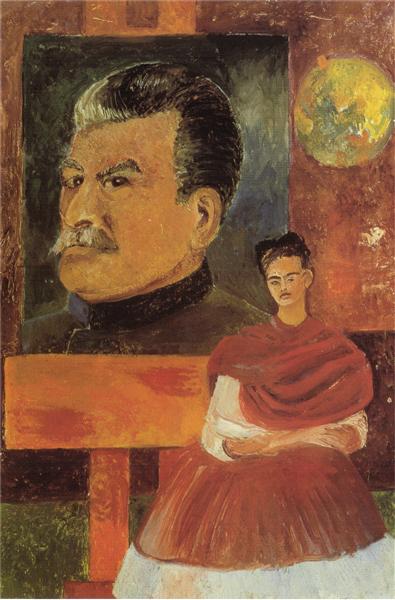
Symphony no 10 in E minor, op 93 – Dmitri Shostakovich

self-portrait-with-stalin-1954.jpg!Large.jpg

     “Self Portrait with Stalin (1954) 

             Frida Kahlo

                 ______

Shostakovich’s 10th Symphony was a
success from the moment I heard it, 
it resolved issues for me I found 
difficult in his earlier showpieces, for
that’s what symphonies are, indeed
blockbusters

from the very beginning, Shostakovich
gives a musical theme, a few notes 
played by a solo oboe, an obbligato
that is then repeated with variations by
other instruments, if not by the entire
orchestra, this is an old trick of 
Beethoven

later movements do the same thing 
with flute, piccolo, or bassoon
obbligati, a particular device of
Shostakovich to indicate a lone,
individual voice amidst the clamour 
of military brass and proletarian
violins

but the tactic of repeating a theme, 
like rhyming in poetry, gives one a 
sense of position, which is lost if 
there’s no reiteration, no reference 
point, it’s like wandering off into a 
forest instead of into a park you 
could safely be enjoying, that had 
trails at least to let you know you 
weren’t far from civilization, 
signposts pointing out directions, 
whereas a forest could be a tundra, 
vast for miles, one could walk for 
days without being found, that’s 
the role of repetition, rhyme, a 
refrain, in music, getting one’s 
bearings

and incidentally, one could be 
walking around in circles in that 
forest and atonality wouldn’t be 
any help at all 


the Tenth has, however, all the 
guideposts throughout, one can 
tell where the music ‘s going at 
each and every movement, it was 
like finding my way home, the, long  
even at nearly an hour, soundscape 
whipped by leaving me breathless, 
awestruck, Shostakovich has hit 
here, I thought, my big time, it took 
him long enough


it was first performed just after the 
death of Stalin, March, 1953, was 
thus probably composed somewhat 
earlier, belying the supposition that 
Stalin‘s demise had affected the 
spirit of his composition, which is 
uncharacteristically cheery for him, 
to my mind, seems to have unleashed 
in him the dogs not of war and 
disillusion, but of fun, something that 
was happening to the entire 20th 
Century, for that matter, especially 
after the Second World War, even, it 
appears, however grimly, in Russia, 
oops, in the U.S.S.R


an aside – Mrs Premise had said of 
Jean-Paul Sartre, the expositor of 
Existentialism in the Twentieth Century, 
implications of which he related to us,
of living in world without God, in his
magnum opusBeing and Nothingness“,
to her Monty Python counterpart, Mrs 
Conclusion, in a hilarious skit of theirs, 
that Sartre wasn’t receiving that day, he 
was, according to his housekeeper, 
especially moody

is he free, asks Mrs Premise, he’s been 
investigating that one for years, the 
woman at the door replies, the kind of 
joke – in musical terminology, a scherzo – 
utterly cherishwitty, pithy, trenchant, 
if you’ll pardon my giddy digression

but I sense Russian counterpart in the
dour Shostakovich

 
it should be noted here, that the 
orchestra in the link I provide, is
the Simon Bolivar Youth Orchestra
of Venezuela, a country with its 
own political history of oppression, 
under the direction of the deservedly 
celebrated conductor, Gustavo 
Dudamelhimself a Venezuelan 

the struggle doesn’t stop, the oracular 
hits must keep on coming, go, Gustavo
Dudamel, go, Simon Bolivar Youth
Orchestra, go, Shostakovich


 R ! chard

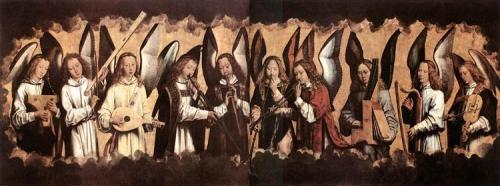
Shostakovich – intermission

five-angels-playing-musical-instruments-left-hand-panel-from-a-triptych-from-the-church-of-1490.jpg!Large

  Five Angels Playing Musical Instruments (c.1487 – 1490) 

         Hans Memling

            __________

the Quartet for the End of Time by 
Messiaen, which I lauded in my last
transmission, is perhaps a wonderful 
place to take a break, an intermission,
from the central Shostakovich, mighty
and imperial as he is, perhaps even 
overbearing, compared to the more 
introspective meanderings of Messiaen, 
bird calls, philosophical, if more organic 
explorations, a radically different musical 
reaction to the tyrannical tribulations of 
Shostakovich, but not in the least less 
viable, convincing, you can decide 

Beethoven’s 14th String Quartet in
C# minor, here, seems an apposite
musical counterpart also, a model 
for the tortured movements, implicit 
in either other incendiary work

note how the several movements in
either quartet hold together neatly, like
a bespoke suit, made to order, you can 
follow the line of the cut in all of its 
detail, and the suit fits everywhere like, 
well, a glove

there are too many extra, unnecessary 
ruffles, flounces, frills, excess material
to distract from the essential garment 
up until now, to my mind, in Shostakovich, 
one gets lost in the kerfuffle, one drifts
away, all except for his Fifth Symphony

neither do the ebb and flow of the 
movements, from largo to prestissimo 
and throughout the tempo ledger, lead
to distinct, personal, statements from 
the individual parts in Shostakovich
as they do in MessiaenBeethoven
when they slip from one chapter to
the next

Shostakovich seems to return to, rely
on, the same, however magisterial  
technique – the guy ‘s an obvious 
symphonist, an orchestrator of 
instruments of the very highest order
– but with the same melodic matter
variations on a single complaint, too 
often reiterated to maintain rapt 
attention from start to finish, one
wanders 

it might be noted that comparing 
string quartets and symphonies is
like comparing apples and oranges 

but listen to any Beethoven symphony
for an array of unforgettable musical 
airs, dances, dirges, marches, lyrical 
romps through Elysian fields, you’re 
transfixed through to the very end,
always, everywhere


nevertheless there is indeed the 
splendid, and thoroughly 
successful Shostakovich Fifth  

and alone, the first movement of his 
Seventh, which I’m still singing in 
the streets 

to eternally validate Shostakovich as
the greatest composer of the Twentieth
Century, along with Messiaen


R ! chard