Richibi’s Weblog

Just another WordPress.com weblog

Category: Beethoven

Cello Suite no 5 in C minor – J.S. Bach
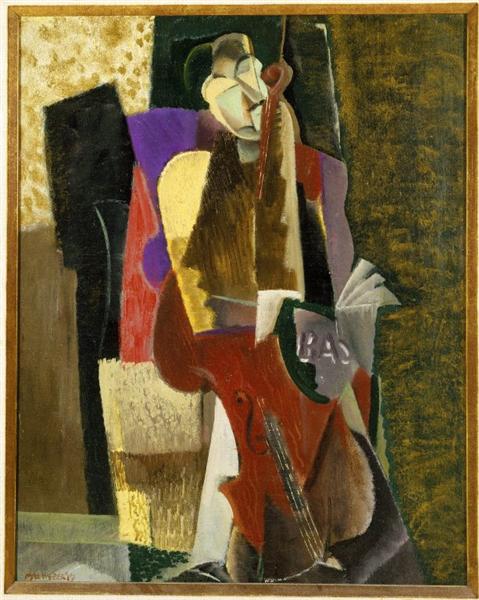
the-cellist.jpg!Large

        The Cellist (c.1917) 

              Max Weber

                 ______

what struck me immediately upon hearing
the bow’s very first strokes on the violin in 
this Fifth Cello Suite of Bach was that the 
mood was not only brashly Romantic, but 
quite specifically Russian Romantic, right 
up there with Dostoyevskyand Fiddler 
on the Roof, dark brooding colours at 
first, followed by long plaintive musical 
phrases, you can even hear the sound of 
the steppes, I thought, stretching out into 
the endless distance, this performance,  
surmised, is not, other than 
compositionally, Baroque, not to mention 
not even German 

yet as played by Mischa Maisky, it’s one 
of the best versions of the Fifth I’ve ever 
heard, and if it works, who’s to complain

but more context – Bach never gave not 
only textural indications, but not even 
tempos to his pieces, apart from the 
very dance terms that identify the 
movements, so what, therefore, is the 
specific pace, you’ll ask, of a courante, 
for instance, you tell me, I’ll reply

in other words, the modular terms were 
significantly looser in the early 18th 
Century than later, when metronome 
markings would begin to demand more
accurate replication of the artist’s 
explicit specifications – Beethoven 
especially made sure of that, by 
requiring accurate renderings of his   
mood or pace indications, largo,  
allegro, andante, for instance, still less  
strict than the stipulation later for exact 
musical beats per minute – trying to 
keep pace with a prerecorded tape, for 
example, as in again the industrially 
driven, which is to say emotionally 
indifferent, context of the seismic 
Different Trains“, masterpiece of a 
more technically conditioned era

I don’t think that Bach would at all have
been disappointed that the heirs of his 
fervent, though more genteelcreations 
might’ve morphed into something 
profound for other groups, be they 
national, or of a class, or of even a 
generation, of people, which is to say 
that these works have superseded 
their merely regional intent, and have 
reached beyond space and time, the 
very purview of music, to speak a 
common and cooperative, indeed a
binding, language

I said to my mom the other day that if
we all sang together, we could save
the world


R ! chard

psst: Maisky’s encore,, incidentally, is from  
          the Bourrée” of Bach’s Third Cello  
          Suitenote this contrastingmore  
          courtly – more refinement, more 
      reserve – rendition, you can even 
          hear, not to mention see, in this
          particular instance, not Russian 
          steppes, but European trees on 
          their baronial estates, if you lend  
          an attentive ear

Cello Suite no 3, in C major – Bach

narcissus(1)-1.jpg!Large.jpg

        “Narcissus (c.1599)

                Caravaggio

                     ______

what struck me about this most extraordinary
performance of Bach’s Third Cello Suite was 
nothing to do with the Suite itself, but with 
the work of the camera, right out of 
Caravaggio, I thought, a bona fide Baroque
artist also, what could the cameraman have 
known

stark contrasts, an absolute focus on the 
subject without much set decoration, no
consideration for extraneous, though 
perhaps effective, decorative elements 
to cloud the pictorial issue 

this is not at all Bach, incidentally, who 
relies on accompaniment, feeder notes, 
to shed light on the essential melody, 
often even nearly indistinguishable 
from the main statement 

both are considered Baroque, Bach,
Caravaggio, but I won’t be getting into 
it right nowit’s a long, and tortuous 
story

otherwise note, indeed, in Bach, the 
reiteration of clusters of music, forward 
propulsions, with incremental tonal 
variations, moving the melody forward, 
something lost during the later, more 
frivolous, Classical Period, but recovered 
eventually, two generations down, by 
Beethoven, kind of like children resemble 
their grandparents much more than they 
do their actual folks

eventually that becomes Minimalism, see,
for instance, Steve, Different Trains“, 
Reich


R ! chard

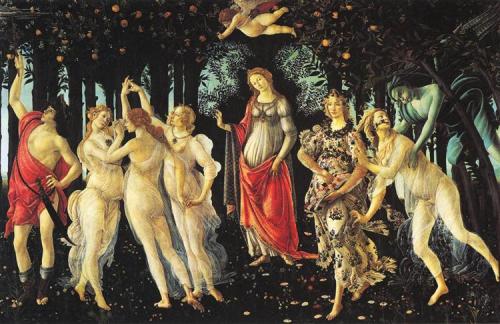
to spring

primavera-1478(1).jpg!Large.jpg

     Primavera” / “Spring (1478) 

              Sandro Botticelli

                   _________

according to long tradition, the 21st of March
has been the first day of spring, but yesterday,
the 20th, two people in separate encounters,
told me that spring had started that very day,
throwing my entrenched supposition out the 
window, for better or for worse

regardless, spring has now, surely decidedly, 
sprung

here’s Beethoven celebrating it, though the 
title, Spring“, was probably not his, others 
mostly gave his works their nicknames, for 
their own, usually associative, reasons – his
“Moonlight” Sonata also, for instance – but  
that’s been ever enough for me, it’s the 
music that ultimately matters, I think

the “Spring” Sonata, opus 24 then is for 
violin and piano, his 5th such, written in 1801, 
it is an early piece, full still of the verve we’ve 
heard here already in his Opus 5, no 1 for Cello
and Piano, with his musical phrases flying 
right through the bar lines and off the very
page

Kyung Wha Chung plays the violin, she 
remains after all these years my very 
favourite violinist 

enjoy

and have the greatest of springs, 
whenever you might want to start it


R ! chard

French Suite no 3 in B minor – Bach

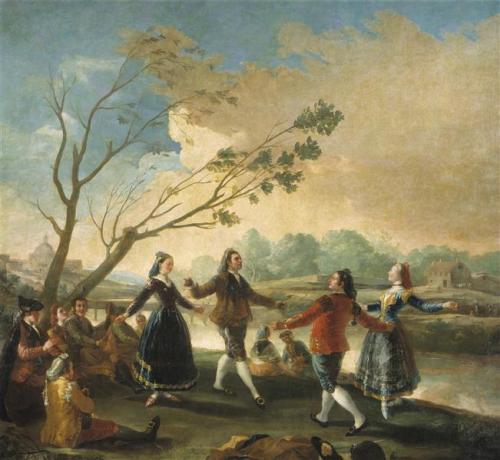
dance-of-the-majos-at-the-banks-of-manzanares-1777.jpg!Large.jpg

   “Dance of the Majos at the Banks of Manzanares (1777)

           Francisco Goya

                _________

upon reading up somewhat on the different
Bach Suites, I’ve provisionally concluded
that the earlier English Suites, 1715 to 1720,
were a modification of the established form 
of the suite, which would not have included 
a prelude, which isn’t, indeed, a dance

the Cello Suites follow, ahem, suit

but by the French Suites, 1722 to 1725, Bach 
is eschewing – Gesundheit – the prelude, but 
inserting, however, an air in his Fourth – an  
air is not either a dance – and mixing up  
their order in the later Suites, a minuet, for 
instance, in the last one of them, his Sixth,  
coming up after the gigue, which sports even
also a polonaise, where in his Fifth, Bach adds  
a loure, I ask you, a slow French gigue, to his  
bristling concoction

the terms French and English, incidentally, 
were added only after Bach’s demise, for 
diverse and uncorroborated reasons, so 
that these titles probably don’t mean much 
to a contemporary audience, who can’t tell, 
anyway, our gavottes from our bourrées

the music of Bach is like that of no other 
composer, he owns essentially the Baroque
Period, having, in fact, wrenched the Era 
from the painters, who’d established it in 
art to such a degree that it defined its
earlier historical phase

with Bach, the torch is handed over to 
music, from then on until the 
Impressionists, the period is defined 
by composers, both Classical, then 
Romantic, with some poets holding 
some sway 

the technique that dominates the music 
of Bach is that of counterpoint, where 
a tune is repeated in the harmonization
a few beats from its first iteration, 
vocally, we call that singing in canon

his music is introspective, as though 
the player were privately meditating,
it has the playfulness of Mozart, but
Mozart is expressive, not interior,
therefore nowhere near as spiritual,
Beethoven will return with a 
profundity that matches Bach’s, but 
with much more Sturm und Drang, 
tempestuous moral struggle, much  
less resignation, ouch, watch

listening to Bach for me is like getting 
on a train, and just letting the rhythm
of the wheels sustain me, as I watch,
indeed introspectively, the surrounding 
countryside, stopping at the musical 
journey’s several halts, its intervals, 
until its final destination, which 
despite, or even because of, taking 
sometimes hours, is nevertheless  
endlessly satisfying, and never  
ever less than, however improbably, 
inspiring

here’s Bach’s Third French Suite
you’ll note it includes an idiosyncratic 
“trio”, not strictly a recognized dance
either – leave it to the saucy French, I   
say, to consider interpolating a trio


R ! chard

English Suite No 3 in G Minor – Bach

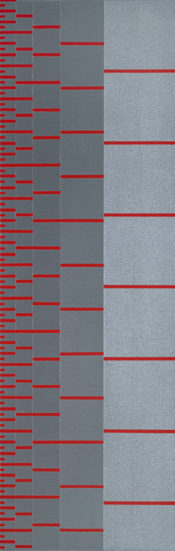
suite-fibonacci-2003.jpg

   “Suite Fibonacci (2003) 

           Charles Bezie

               ________

 
before I say much more about his Cello
Suites, let me point out that Bach has
some French Suites, some English 
Suites, on top of similarly structured 
Partitas and Toccatas, the French have 
their tout de suites, and hotels have, 
nowadays, their so named luxury 
apartments 

musical suites are sets of dance pieces, 
by the early 18th Century much stylized, 
with an introductory prélude, an allemande, 
followed by a courante, which is to say, folk 
dances, the first German, the next French, 
then a sarabande, Spanish, followed by a 
couple of galanteries, court dances, 
minuets, gavottes, bourrées, then a final 
English gigue

all of the markings are in French, which
leads me to believe that all of these 
dances must’ve originated at the court 
of Louis XlVth, the Sun King, 1638 to 
1715

but the suggestion is that Europe was 
becoming an integrated community
all of these dances were eclipsed by
the Classical Period, of Haydn and 
Mozart, apart from the minuet, which 
more or less defined, nevertheless, 
that new era

the minuet will die out by the time of
Beethoven, you’ll note, to be replaced
by the waltz, which had been 
considered much too racy until 
transformed by Chopin into a work 
of ethereal art

the Strausses, father and son, gave it,
only a little later, celebratory potency,
but that’s another story


here’s Bach’s English Suite, the 3rd
for context, the French ones are a 
little too salty, as it were, they do not 
quite conform to prescribed suite 
notionshowever might their 
propositions have been, ahem, 
sweet 

meanwhile, enjoy this one


R ! chard

what’s up in Pyeongchang / Bach

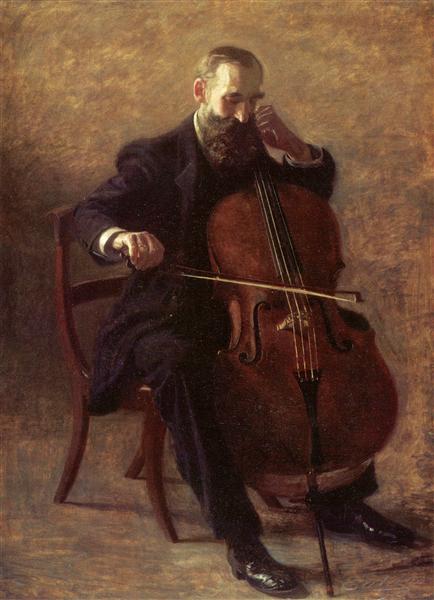
the-cello-player-1896.jpg!Large.jpg

      “The Cello Player (1896) 

              Thomas Eakins

                   ________

though I’d considered presenting all six
of Bach’s Cello Suites – your one stop
shopping for these extraordinary 
compositions – even one only of these
masterpieces floored me each time I
individually listened  

why the Suites, cause I couldn’t follow 
up on Beethoven’s Opus 5, for cello
and piano accompaniment, without 
saying more about the cello, by then 
an instrument of some significance, 
and who could argue, it’s resonance 
thrills you in your bones, in your very 
being

Frederick ll, King of Prussiaplayed it, 
earning for him tailored compositions, 
however controversial, from both 
Mozart and Haydn, but even earlier, 
Bach had composed definitive pieces 
for it, much as he’d done for the 
harpsichord, precursor to the piano, 
students of either still go to Bach for 
their basics, their intricate, exquisite, 
technical proficiency

the cello can play one note only at a
time, which means that, like a voice, 
you’re working without harmony, 
you need to make your own, 
otherwise your performance is 
boring, no one else, as far as I know,
has ever written anything else for 
unaccompanied cello, not even 
Beethoven

I find most performers lend Bach a 
more Romantic air, torrid emotion,
excesses of volume, pauses to the 
pace, ritardandos, rallentandos, 
which aren’t appropriate to the 
more genteel Baroque period,
something I usually find 
unwelcome

but in this performance, I’m sure 
not even Bach would object

I’m offering up first the Sixth Cello
Suite, D major, played by Jian Wang
someone I’d never heard of, in a 
dazzling performance in Pyeongchang
place I’d neither ever heard of, until 
only very recently

it appears both of these new kids on 
the block ought to be on the map


R ! chard

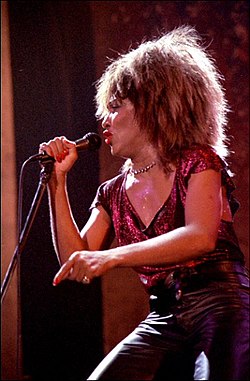
by special request, more Tina

250px-Tina_turner_21021985_01_350

  Tina Turner performing in Norway, 1985

             __________

                                                  for Norm

shortly after my most recent post, a 
friend, as avid as I am about Classical
music, but who also lived through our
own golden age of music, and throbbed 
as I did to its pounding rhythms, sent 
me this video of one of Tina’s greatest 
hits, Proud Mary

not to mention that my inbox lit up at 
the same time with equally corroborative 
applause from a host of other, apparently
also fervid, admirers


it was the best of times, it was the worst 
of times, everyone did everything with
anyone then, and was impeded only    
by hir own personal inhibitions

therefore Studio 54and even more 
glamorous Manhattan party outlets, 
the Paradise Garage, Les Mouches, 
warehouses full of carousers, and 
Bette Midler was showcasing at the
Continental Bathsif you were 
wanting a less frenzied, though not 
at all uneventful, evening, or night
  
London had it’s comparable Heaven, 
nowhere was not having its bacchanals

the era would come down crashing, 
never to be put back together again,
of course, as a soothsayer I knew 
was then prophesying, but while it 
lasted we revelled, and had Tina 
Turner, among other, as incendiary, 
oracles telling it like it was, is, listen

 
Beethoven would’ve been proud of 
Tina, incidentally, note the adherence 
to Classical conditions, tonality, tempo, 
and repetition, art is about doing your 
own stuff around those imperatives, or, 
if you can, busting through them

Tina might not have burst through, but  
she sure knew what to do with her 
perimeters, which is to say, knock them
right out of the ballpark   

wow, watch, what a woman


R ! chard

psst: thanks Norm

what’s up in Düsseldorf / Beethoven

tn_705x705_3

          the “Altstadt“, Düsseldorf, Germany

                  ______

from Düsseldorf, a city I’ve called 
Düsseldon’t, Düsseldreary, 
Düsselneverbother, comes a 
performance there to change, utterly,  
my mind about it, though I’d always 
known that every European city has
its extraordinary wonders, count ’em

watch this, for instance, one of those

Beethoven didn’t write string quartets
until he was ready, following in the 
footsteps of Haydn wouldn’t’ve been
easy, but Beethoven wasn’t wasting 
his time in the meanwhile, or, 
alternately, his while in the meantime
– while you consider that, listen

in his Opus 5, no 1, the first to leave  
me with much of an impression, as 
began to explore Beethoven 
chronologically, the first four 
opuses – a word I deplore, but its
equivalent plural, opera, seems 
to me so pretentious – seemed, 
indeed again, to me long, tedious 
and academic, a student delivering 
exercises  

then the Opus 5, no 1 hit, and blew 
me right out of the water, he verily, 
Beethoven, thrust the metre right  
out of the ballpark, propelled the  
music – who ‘ld ‘a’ ever thunk it –  
right off the page 

marvel, I urge


there was also a restaurant in 
Düsselwhatever I really loved,
it served an improbable 
assortment of schnitzels, the 
Altstadt 

we embraced, the staff and I, 
when I had to eventually, and 
finally, leave, to go back home, 
to Canada, I’ll always remember, 
never ever forget, their grace


R ! chard

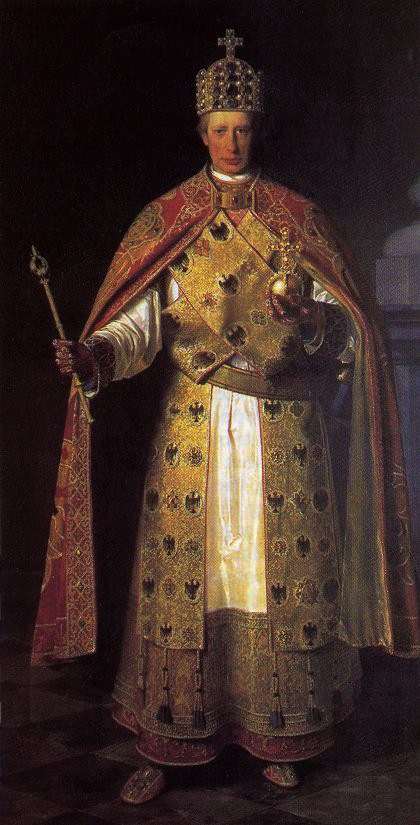
String Quartet in C major, opus 76, no 3, “Emperor” – Joseph Haydn

Ludwig_Streitenfeld_001.jpg

    Francis II as Holy Roman Emperor (1874)

          Ludwig Streitenfeld

               _____________

Haydn’s String Quartet, opus 76, no 3
is nicknamed the Emperor cause the 
second movement, the poco adagio;
cantabile, is a recapitulation of an 
anthem Haydn had earlier written for 
Francis ll, the Holy Roman Emperor
– not, incidentally, for Napoleon, the 
Emperor of the moment, who was to 
defeat Francis lleventually, at the 
Battle of Austerlitz, December 2, 1805, 
thereby dissolving that Holy Roman 
Empire, which had been established 
by Leo, the very Pope, lll when, on 
December 25th, 800, which is to say 
preceding Austerlitz by a thousand 
years, he crowned Charlemagne its 
Emperor 

Haydn must’ve been a monarchist


you’ll recognize that second movement
as the present day anthem of Germany

but listen to how Haydn makes it glisten, 
explicitly, with articulations and filigree 
that render it utterly irresistible

the adagio is usually the moment that
remains immutable, if the composer
is doing hir stuff, it’s the one you walk 
home singing, the faster movements,
however histrionic, are nearly a dime 
a dozen, though ever nevertheless 
often dazzling 

this adagio is utterly Romantic, though
I’m sure Haydn didn’t know what he 
was doing, cause despite their push
against the democratic surge, even 
monarchists, princes, dukes, dutiful 
composers, were finding, and voicing, 
their personal, and individual, which 
is to say, their democratic, opinions, 
however aristocratic their pedigree

artists had done a similar thing when 
their personalities began to single 
themselves out as especially gifted 
when the Renaissance was 
happening, it was now music’s hour, 
individual voices were staking their 
claim, Haydn’s manifestly superior 
based on talent and, after widespread 
economic affluence, audience appeal, 
Haydn’s commercial boots were made 
for walking, and he filled them both
magnificently and incontrovertibly

the poco adagio; cantabile is not 
courtly music, it reaches for not
merely elegance, but the heart,
we’ve entered another 
transformational generation, 
something like the revolution 
that triggered change in the 
cultural upheaval of the1960s 

our first step then was the Beatles, 
theirs was Haydn, or rather Elvis
Presley shoring up the Beatles, 
Beethoven was more aptly John,
Paul, George and Ringo 


but watch the rapture on the players’ 
faces, Francis ll would’ve been 
appalled, much like parents in my 
generation facing the pill, drugs, 
unorthodox sexual couplings, and, 
of course, raucous and unruly rock 

music

today, under the spell of the 
Romantic Period, and encouraged
by that very Sexual Revolution, the
Calidore String Quartet’s Elysium
their evident blissemotionally 
manifest, and utterly arresting, sells 
tickets, for better orhopefully not, 
for worse

but you call the shots, to decorum or 
not to decorum, that is the question

watch, wonder, listen 


R ! chard

Mozart / Haydn in 1790

fullsizeoutput_3fe.jpeg

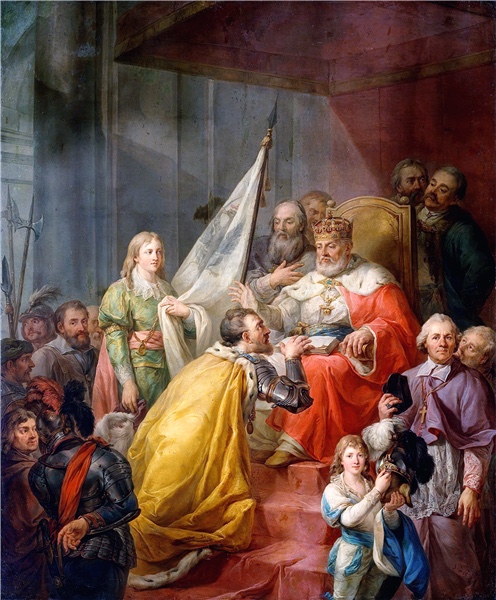
                                 “Prussian Homage (1796)

                                       Marcello Bacciarelli

                                           ____________

it’s 1790, a year after the French Revolution, 
and both Mozart and Haydn are peddling 
their wares, Mozart to the King of Prussia, 
Friedrich Wilhelm ll, who’d commissioned 
some string quartets, as well as piano 
works for his daughter, but wasn’t paying 
Mozart off for them, where Haydn with the
help of Johann Tost, was hustling his stuff
in very, of all places, Paris 

Haydn’s, incidentally, own Prussian Quartets,
dedicated to the same King of Prussia, were  
sold to two different publishers, one in
Vienna, the other in England, commercial
transactions left essentially, for all it might 
matter to us, for lawyers, and potentates, I
expect, eventually to have resolved

it is my habit to juxtapose two things always
to be able to see each more critically, 
determining my favourite sharpens my 
aesthetic pencil, one looks more closely at
what distinguishes one work from the other

therefore Mozart’s String Quartet no 22 in 
B flat major, KV 589, up against Haydn’s 
no 53 in D major, opus 64, no 5, “The Lark”, 
both written in the same year

it’s like comparing apples with oranges,
different fruit from the same nevertheless
genus, my favourite being lichee, so go 
figure

it’ll be up to you to find your especially
preferred nutrient 

I‘ll just point out a few differences that
immediately set apart these, however 
similar, masterpieces for me, Mozart 
remains utterly Classical, relying on 
the established, by now, conditions of 
the string quartet, an entertainment for 
nobility, nothing at all controversial, 
where Haydn with his soaring notes 
for the first violin, followed by 
arabesques that define a personal 
agony, introduces drama into the 
equation, a music that speaks of 
sentiment, is pointing already towards 
the future, though I suspect he could 
never have imagined where, in the 
very next generation, Beethoven 
would take it

to look back, to look forward, that is 
the question, it’s not always an easy 
one 

but this is where art speaks to us, 
reminding us of our tendencies, 
defining, truly, eventually, who we 
veritably are, according to our 
individual choices, preferences, 
for better or for worse, rendering 
the world an ever effulgent garden 
rather than a dour mausoleum


R ! chard