Richibi’s Weblog

Just another WordPress.com weblog

Category: a poem to ponder

Pablo Picasso/Gertrude Stein
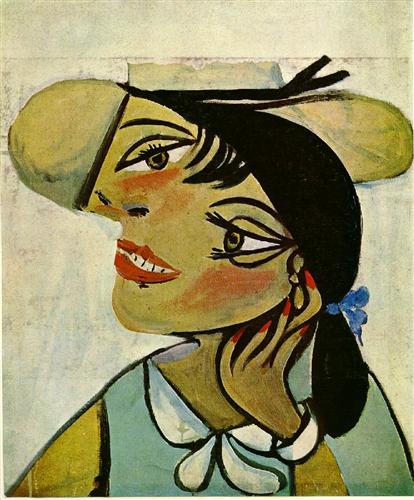
Pablo Picasso - "Untitled" (1923)

Untitled (1923)

Pablo Picasso

________

Gertrude Stein was a friend of Pablo Picasso,
you can see it in her prose, a disordering of
traditional practices, perspectives and
proportions

in loving repeating she writes

As I was saying loving repeating being is in a way earthly being. In some it is repeating that gives to them always a solid feeling of being. In some children there is more feeling and in repeating eating and playing, in some in story-telling and their feeling. More and more in living as growing young men and women and grown men and women and men and women in their middle living, more and more there comes to be in them differences in loving repeating in different kinds of men and women, there comes to be in some more and in some less loving repeating. Loving repeating in some is a going on always in them of earthly being, in some it is the way to completed understanding. Loving repeating then in some is their natural way of complete being. This is now some description of one.

Gertrude Stein

_________________

in my poetry course the Modernists keep on
coming, quite a few I’ve found impenetrable
and obtuse, I can see their points, but find
them pedantic and trivial

similar sentiments greeted the Impressionists
when they came out, so I’m watching myself

it’s easy to digest Picasso‘s painting now,
but even when I was a boy he was
controversial, now everyone admires him

Gertrude Stein not so much, writing is not
painting

they are both, I believe, returning to the
language of innocence, putting together
their world as children do, getting their
information in overlapping concepts,
trying to make their way through the
muddle

a five-year-old would talk like that, a
five-year-old would paint like that,
both are sorting out their new world,
the world that had been so profoundly
disturbed, disjointed

they were returning to the disarray,
and consequent irregular grammar,
of children, making their own kind
of common sense, trying to get their
bearings, after all, even God had
died, see Nietzsche on that

and, for better or worse, finally,
they’ll leave you behind, the children,
whose world, then, is it worth attending

Richard

psst: as a boy I asked my dad, while
interminably, I thought, fishing,
how long it would take the
minnow to grow into the
required fish, how’s that for
not illogical observation
Bill and Flossie Williams

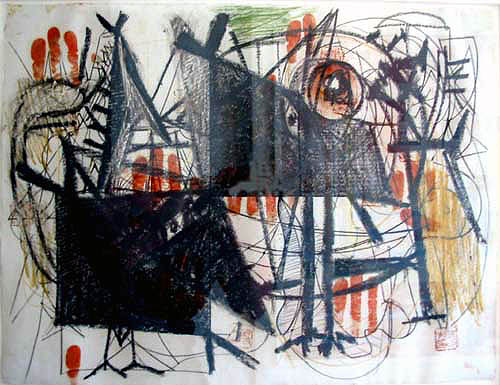
Arshile Gorky - "Hitler invades Poland" (1939)

Hitler Invades Poland (1939)

Arshile Gorky

________

it must be understood that World War l
changed everything, the old order,
orders, had been discredited, new
states were formed, territories allotted,
-isms proliferated, the arts had to, of
course, reflect that, and did, as many
-isms were hatched in the art world
as in the political world, indeed,
many more

which is why much of it at first
seems questionable, practitioners
were learning anew how to talk, paint,
make music, they were creating a new
conceptual universe to replace the one
that had been roundly discredited, the
one that had been around in the West
for the last two thousand years

therefore Schoenberg, therefore
Picasso, and therefore Finnegan’s
Wake
“,
for instance

we’ve been studying American
Modernists in the classes on the
Internet I’m taking
, none of whom
I find interesting, and I’m, contrary
to all expectations, losing even my
early enthusiasm for the much too
thorny, I think, Emily Dickinson

but here’s another abstruse poet
that I like in this poem

though I much prefer his wife
Flossie’s sardonic reply
, which
follows

________________

This Is Just To Say (1934)

I have eaten
the plums
that were in
the icebox

and which
you were probably
saving
for breakfast

Forgive me
they were delicious
so sweet
and so cold

William Carlos Williams

________________

Flossie’s Reply (1934)

Dear Bill: I’ve made a
couple of sandwiches for you.
In the ice-box you’ll find
blue-berries–a cup of grapefruit
a glass of cold coffee.

On the stove is the tea-pot
with enough tea leaves
for you to make tea if you
prefer–Just light the gas–
boil the water and put it in the tea

Plenty of bread in the bread-box
and butter and eggs–
I didn’t know just what to
make for you. Several people
called up about office hours–

See you later. Love. Floss.

Please switch off the telephone.

Florence Williams

____________

go Florence, I say, but you can
see, of course, why I’d say that

Richard

what is a philosopher‏

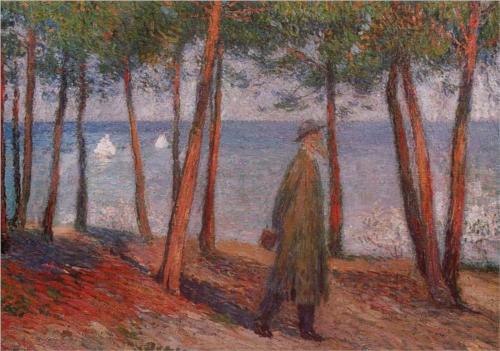
Henri Martin - "Philosopher"

Philosopher

Henri Martin

________

considering the response below too
forthright for a discussion we were
having on a university course website,
interactively dealing with the question
of free will, I nevertheless found worthy
my opinion of what a philosopher is,
which I deign to mount here on my,
less discreet, canvas

if you’ll allow

it is evidently a dramatic monologue

Richard

__________

what is a philosopher

you are not a philosopher, sir, to take
offence so quickly, a philosopher is
objective, and wouldn’t allow for
emotion to get in the way of even an
offensive argument

but with irrefutable logic simply
expose his, her sound position

indeterminacy would be encountered
with humility first, then grace, only
ever consummate deference

if you’ll allow

cheers

Richard

psst: see, for more on indeterminacy,
Socrates, ever catering to objections

Visconti’s Death in Venice‏

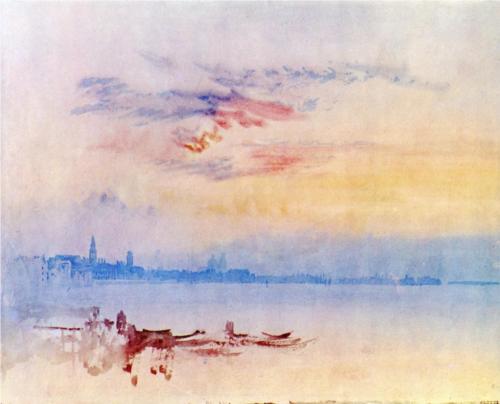
  William Turner -  "Venice Looking East from the Guidecca, Sunrise" (1819)

Venice Looking East from the Guidecca, Sunrise (1819)

William Turner

_______

Death in Venice is perhaps the most
beautiful film I’ve ever seen, just click

Visconti suffuses his masterpiece with
all the colours and textures of Monet,
Renoir, Seurat, Toulouse-Lautrec, and
a host of other Impressionists, and
settles them all upon, nearly inevitably,
the splendours of a Canaletto Venice

Dirk Bogarde has never been better,
his von Aschenbach is definitive,
Silvana Mangano is every single inch
an aristocrat, the epitome of poise,
elegance and propriety, Tadzio is
throughout the very incarnation of a
Botticelli

all is given stately motion by the art
of film and made thereby into another
equal and haunting form of poetry

enjoy, marvel

Richard

psst: Visconti even makes Mahler sound
profound

as does Leonard Bernstein, incidentally,
in the accompanying clip, who is
manifestly transported throughout his
evidently otherworldly experience,
just as you might even be, just click

a merely theoretical dilemma, a poem


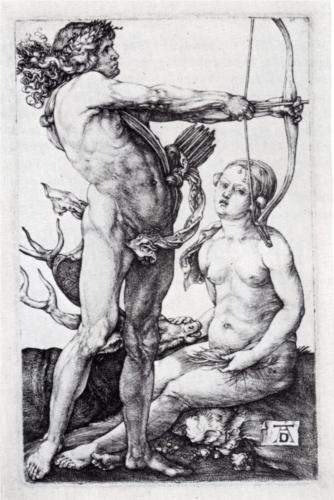
Albrecht Dûrer - "Apollo and Diana(" (1502)

Apollo and Diana (1502)

Albrecht Dürer

________

in the tradition of Elizabeth Barrett Browning,
a forthright, personal poem

a merely theoretical dilemma

yesterday, I had lunch with Vickie,
she said she admired our relationship,
despite the fact, which I’d interjected,
that there was no sex

she didn’t find that unacceptable

I found her concern more personal,
revealing, than strictly theoretical

then gave up the improbable
thought

I dream, however, ever, Apollo, and
irrepressibly, of your genitals,
knowing that your spawn would
transform me, ineradicably, into
a constellation, its crystallization
our progeny, into immortal stars

but that would mean leaving you,
Apollo, behind

could I, would I, do that

love

me

parsing art – John Yau, wow


Jackson Pollock - "Number 1 (Lavender Mist)"

Number 1 (Lavender Mist) (1950)

Jackson Pollock

_________

in the introduction to my Coursera poetry
class, the professor read out this poem
that just blew me away, the chaos of
inspiration, he compared it to the works
of Jackson Pollock

Richard

____________

830 Fireplace Road

When aware of what I am in my painting, I’m not aware
When I am my painting, I’m not aware of what I am
When what, what when, what of, when in, I’m not painting my I
When painting, I am in what I’m doing, not doing what I am
When doing what I am, I’m not in my painting
When I am of my painting, I’m not aware of when, of what
Of what I’m doing, I am not aware, I’m painting
Of what, when, my, I, painting, in painting
When of, of what, in when, in what, painting
Not aware, not in, not of, not doing, I’m in my I
In my am, not am in my, not of when I am, of what
Painting “what” when I am, of when I am, doing, painting.
When painting, I’m not doing. I am in my doing. I am painting.

John Yau

____________

psst: listen to my professor read it, at
15:05 on the introductory video,
just click

finding poems

Jennifer Bricker

Jennifer Bricker

_______

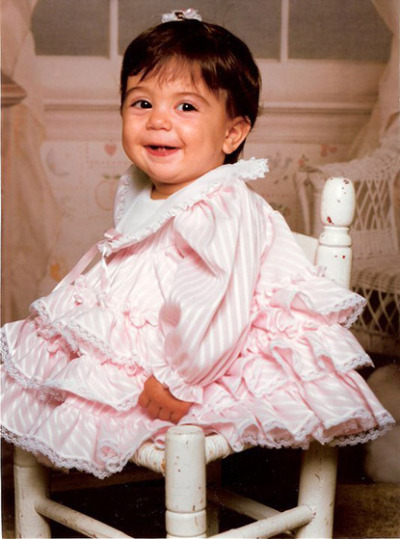
you look for poems, you find poems

this morning a friend sent me this one

can a person be a poem

you tell me

Richard

“Morning Poem” – Wojciech Siudmak‏

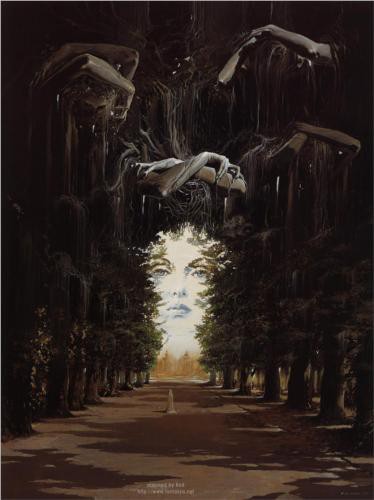
Wojciech Siudmak  - "Morning Poem"

Poème matinal (“Morning Poem“)

Wojciech Siudmak

__________

looking for a poem this morning among an
array of poem paintings, I came across this
morning one
to start my day, evidently also
to share

this could be any street in Vancouver right
now, where the trees overwhelm the streets,
where branches like arms bless even the
very pavement, where magic lurks in every
indentation of the leaves

you look for poems, you find poems, I say,
even in paintings, even in innocent trees

Richard

“Six Pictures for Piano” – Arno Babajanian‏


Paul Gauguin "Poèmes barbares" (1896)

Poèmes barbares (1896)

Paul Gauguin

_______

if you thought that Arno Babajanian was
done with synesthetic investigations,
seeing sounds, hearing colours, here’s
his Six Pictures for Piano“, which he
plays, all of them, himself

can a piano paint, take pictures

you tell me

something else interesting is happening
here, the six are individual pieces despite
being part of a common whole, as the title
suggests

this is the opposite of trying to integrate
movements to a continuous and unfolding
conception, something Beethoven, for
instance, pursued, indeed ardently, in his
own sublime music

dissociation seems a context, a XXth-,
a XXlst-Century, context, in our presently
more polarized world, according to, of
course, Babajanian

what might hold us together then

maybe music

incidentally, the movements to the
Six Pictures here are

1 – Improvisation
2 – Folk Song
3 – Toccatine (a little toccata)
4 – Intermezzo
5 – Choral
6 – Sasoun Dance (don’t ask),

should you not be able to read Russian

note, none of these themes are
photographic

don’t either miss Babajanian‘s
Sonata for Violin and Piano
as played by, here again,
himself, it’s rapturous

Richard

psst: see Gauguin above paint poems

“Poem for Piano in C# minor” – Arno Babajanian‏

Corneille - "Music" (1949)

Music (1949)

Corneille

______

in the spirit of unusual juxtapositions,
the very stuff, let me suggest, of art,
here’s a Poem for Piano, in C# minor“,
by Arno Babajanian, an Armenian
composer, 1921 to 1983, played by a
countryman of his, Armen Babakhanian

a Poem for Piano begs the question,
what is a poem, can a poem be devoid
of stanzas and words, can music be a
poem

you tell me

Richard

psst: can music, incidentally, be a painting,
see here, or above