Just another WordPress.com weblog
_____
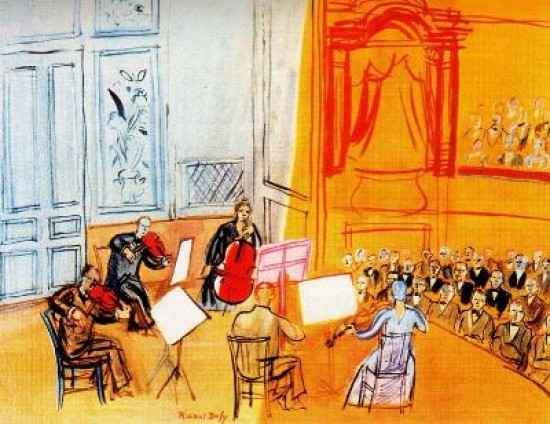
if a trio is a sonata written for three instruments,
a sonata, a piece of music consisting of more
than one segment, or movement, written for
four instruments, is called a quartet
a quartet is also what we call the group itself
of four players
quartets can play more than just quartets, they
can also play waltzes, nocturnes, rhapsodies,
for instance, just as trios, groups of three, can
play more than just trios
but quartets, the form, have had a long and
glorious history, from Mozart and Haydn,
the Classicists, through Beethoven, an
ardent Romantic, to the more political
Shostakovich, enemy, for a time, of his
repressive Soviet state, and on to
Messiaen, who composed his own
concentration camp
let me start with the Messiaen, now that I’ve
whetted your appetite, and work our way back
to Mozart to see where we came from, and
how
there are seven movements in Quartet for
four, atonality abounds, discordant, not
unexpectedly, progressions, repetition also
takes its punches, not easily identifiable
throughout, but tempo, the third pillar of
Western music, more or less holds its
own, keeping the tradition, however
precariously, together, listen
it’s 1941, we’re in a concentration camp,
Messiaen is caught between hope and
despair, give the guy a break, he hasn’t
many absolutes to hold onto, tempo
might be one of them, the heartbeat,
pulse, perseverance, an actual human
pace, a rhythmic instinct, by which
eventually, hopefully, meaning
transpires
hope is in one’s creativity, he says, each
individual answer can be a tribute to
one’s own tribulations, our responses
can be poetry, lessons rather than
invectives, epiphanies rather than
agonies, may the Force, in other words,
be with you, in the face of even the most
trying difficulties, honour can supplant
trials, he concludes, given grace and
integrity
Beethoven says pretty much the same
corroboration
R ! chard

 Richibi's Weblog