Just another WordPress.com weblog
November / Month of the Sonata – 18
by richibi
________
though there are other, and quite significant,
composers who fit into this category,
Beethoven, Schubert, and Chopin pretty
much define, all by themselves, the
Romantic Period
Chopin composed only two sonatas of note,
plus one more that is overlooked for being
an early, student effort, not up to the
standard of his later ones, Chopin, rather,
wrote mostly shorter pieces, nocturnes,
études, preludes, polonaises, and more,
that later became the very stuff of his
reputation
Schubert wrote enough sonatas that he
could be compared to Beethoven, indeed
it can be difficult to tell one from the other,
much as it can be difficult to tell Haydn
from Mozart, products in either case of
being both of their respective eras
when I was much younger, a guest among
a group of academics, where I’d been invited
by the host’s wife, a co-worker, what I knew
of Classical music, in the large sense, which
is to say comprising all of the musical periods,
Classicism, Romanticism, Impressionism,
and beyond, was all self-taught
is that Beethoven, I asked the host, about
a piece of music he’d put on
that’s Schubert, he replied, aghast, as
though I’d just farted
I blushed, deep red, confounded
Schubert, having great admiration for
Beethoven, took on many of the older
composer’s lessons, four movements
instead of the Classical three, for
instance, and many of the technical
tricks of his forebear
but there’s an essential component of
their styles that marks one from the
other, an easy way to tell them apart,
Beethoven always composes against
the beat, Schubert following it
listen to the first few notes of Beethoven’s
“Pathétique”, for instance, the beats are
erratic, confrontational, the mark of a
revolutionary, Beethoven was brashly
proclaiming his worth, he had something
to prove
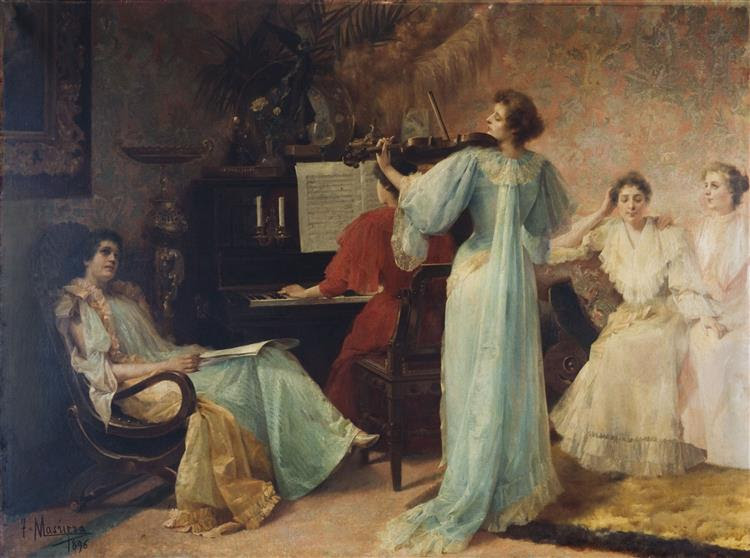
Schubert, who was essentially playing
for friends, just wanted to entertain
them, which he did in spades, without
bombast or bluster
D959, for example, no swagger, no
ostentation, delivering nevertheless
something quite, and utterly,
enchanting, everything following,
unobtrusively, the beat
enjoy
R ! chard
 Richibi's Weblog